Early Life and Military Formation
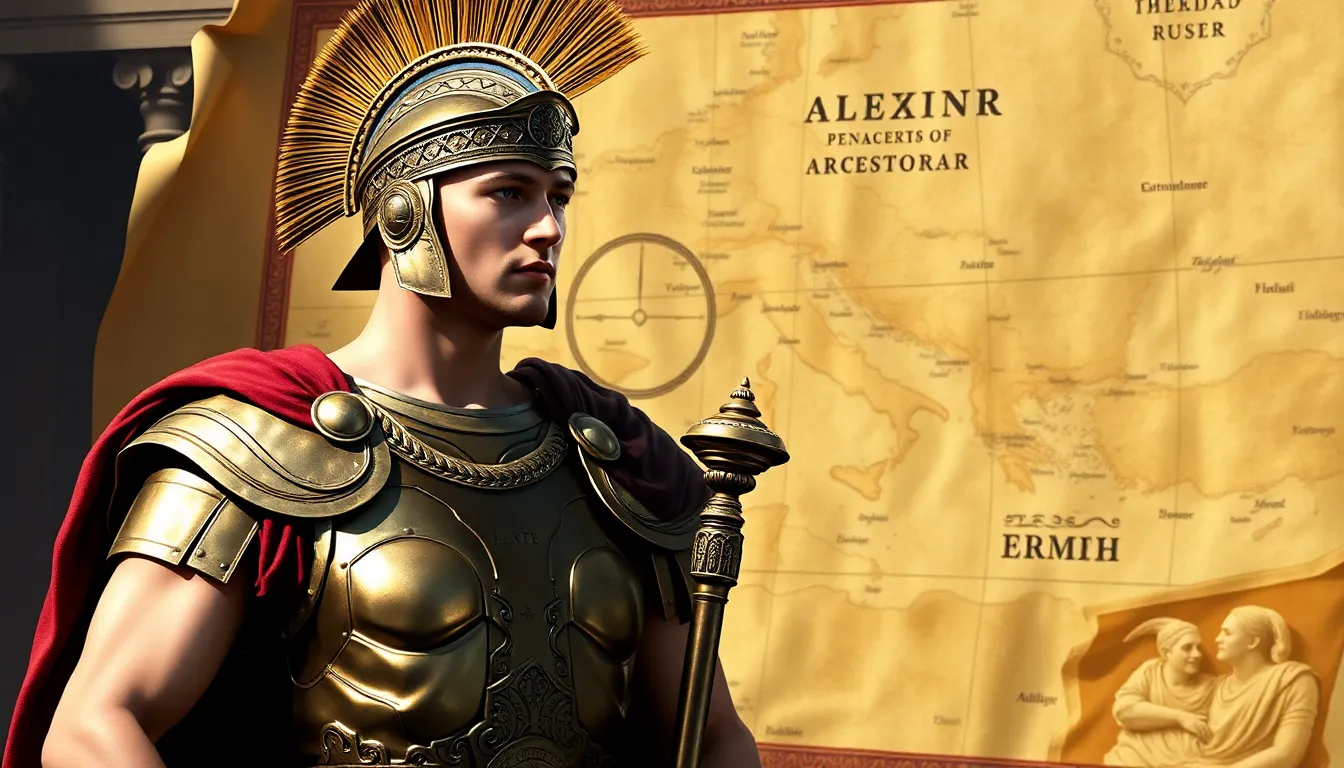
Alexander was born in July 356 BC in Pella, the capital of the Kingdom of Macedon. He was the son of King Philip II and Olympias, a Molossian princess from Epirus. The royal household was a key arena for political intrigue; Philip’s consolidation of power through military reforms and diplomatic marriages shaped the environment in which Alexander grew up.
From an early age, Alexander received a rigorous education. At the age of 13, the philosopher Aristotle was appointed his tutor, providing instruction in literature, philosophy, science, and geography. Aristotle’s emphasis on Homeric epics, especially the Iliad, instilled in Alexander a heroic self‑image and a belief in destiny.
Philip’s military innovations—most notably the development of the sarissa‑armed phalanx and the integration of cavalry with infantry—were directly experienced by Alexander. By his mid‑teens, Alexander participated in campaigns against the Illyrians, Thracians, and the rebellious city of Thebes, gaining firsthand exposure to battlefield command. In 340 BC, at the age of sixteen, he was left in charge of Macedon while Philip campaigned in Thrace, demonstrating early trust in his leadership abilities.
Wartime Context and Role
Philip II’s assassination in 336 BC precipitated a crisis. Alexander, then twenty‑four, was proclaimed king by the assembled army and the Macedonian aristocracy. The new monarch inherited a well‑trained professional army, a network of alliances, and the unresolved threat of Greek city‑states that had previously resisted Macedonian dominance.
His immediate task was to secure his rule. He swiftly punished the conspirators responsible for Philip’s murder, subdued a potential rebellion in Thrace, and secured the allegiance of the crucial Greek leagues through a combination of diplomatic overtures and decisive force. By the end of 335 BC, Alexander had re‑established Macedonian hegemony over most of Greece, positioning himself to launch the ambitious campaign that would define his reign.
Major Campaigns, Battles, and Decisions
Campaign against Thebes (335 BC) – As part of consolidating control over Greece, Alexander ordered the destruction of Thebes after the city revolted. The razing served both as punishment and as a stark warning to other potential dissenters.
Invasion of the Persian Empire (334–330 BC) – Alexander crossed the Hellespont with an army of roughly 35,000 men. His first major engagement was the Battle of the Granicus River, where his cavalry broke the Persian left flank, securing a decisive victory and opening Asia Minor to Macedonian control.
Subsequent key battles included:
- Siege of Halicarnassus (334 BC) – Alexander’s engineers employed siege towers and mangonels, demonstrating the integration of engineering into his tactical repertoire.
- Battle of Issus (333 BC) – Facing King Darius III with a numerically superior force, Alexander exploited the narrow coastal plain to neutralize Persian numbers, delivering a strategic victory that forced Darius to retreat.
- Siege of Tyre (332 BC) – Overcoming a well‑defended island city required the construction of a massive causeway, reflecting logistical innovation.
- Battle of Gaugamela (331 BC) – Often regarded as Alexander’s masterpiece, he employed a oblique order and decisive cavalry charge to break the Persian center, leading to the collapse of the Achaemenid Empire.
Following the collapse of Persia, Alexander pursued Darius into Babylon, Susa, and Persepolis, where he ordered the famous burning of the royal palace—a symbolic act that has been interpreted variously as vengeance, political theater, or opportunistic looting.
Campaigns in Central Asia (330–327 BC) – After securing the western territories, Alexander turned eastward, subduing Bactria and Sogdia. He founded the city of Alexandria Arachosia (modern Kandahar) and attempted to integrate local elites through marriage alliances, notably his marriage to Roxana of Bactria.
Indian Expedition (327–326 BC) – Crossing the Hindu Kush, Alexander entered the Indian subcontinent. The Battle of the Hydaspes (326 BC) against King Porus showcased his use of combined arms and his willingness to accept vassalage rather than annexation when faced with extended supply lines and mounting troop fatigue.
Following mutinies at the Hyphasis (Beas) River, Alexander’s army refused to march further east. He turned back, undertaking a grueling desert retreat that decimated many troops but ultimately returned to Babylon in 324 BC.
Leadership, Courage, and Controversies
Alexander’s leadership style blended personal bravery with charismatic authority. Contemporary accounts, such as those of Arrian and Plutarch, emphasize his habit of leading the charge, sharing hardships with his men, and rewarding loyalty with land grants and honors.
Nevertheless, his career was fraught with controversy. The destruction of Thebes and the burning of Persepolis have been cited as acts of excessive retribution. His policy of Hellenization—founding cities, promoting Greek culture, and installing Macedonian officials—often clashed with local customs, leading to uprisings in Bactria and Sogdia. Moreover, the rapid pace of conquest strained his army’s morale, culminating in the mutiny at Opis (324 BC) and the eventual abandonment of the Indian campaign.
From a strategic perspective, Alexander’s use of the Macedonian phalanx in conjunction with heavy cavalry created a flexible combined‑arms system that dominated battlefields across varied terrains. His logistical solutions—such as establishing supply depots, employing local resources, and the creation of a “Royal Road” spanning his empire—were unprecedented for the era.
Ethical assessments differ among scholars. Some view him as a visionary unifier who spread Hellenistic culture, while others criticize the imposition of foreign rule and the heavy casualty toll among both combatants and civilian populations. The historical record reflects both admiration for his military genius and caution regarding the human cost of his conquests.
Later Life, Memory, and Legacy
Alexander fell ill in Babylon in June 323 BC and died at the age of thirty‑two. The exact cause of death remains debated; theories range from malaria or typhoid fever to poisoning, though modern scholarship leans toward natural disease aggravated by exhaustion.
His sudden death left a power vacuum. The empire fragmented into several Hellenistic kingdoms ruled by his former generals, the Diadochi, who fought protracted wars to claim territories. Despite this political disintegration, the cultural diffusion he initiated—known as the Hellenistic Age—profoundly influenced art, science, architecture, and philosophy across the Mediterranean and Near East.
Alexander’s legacy has been reshaped through centuries. In antiquity, poets and historians glorified him as a demigod; in the Roman period, he was a model of virtus and conquest. Medieval and Renaissance writers revived his image as a chivalric hero, while modern historiography emphasizes both his strategic innovations and the complexities of imperialism.
Monuments to Alexander survive in varied forms: the city of Alexandria in Egypt, the Roman mosaics depicting his battles, and busts in museums worldwide. Contemporary military academies study his campaigns for lessons on leadership, logistics, and adaptability.
Historical interpretation continues to evolve. Recent scholarship highlights the perspectives of conquered peoples, reassessing the impact of Macedonian rule on local economies and societies. By integrating archaeological data with ancient texts, scholars aim to balance the heroic narrative with a nuanced understanding of the socio‑political consequences of his empire‑building.