Early Life and Military Formation
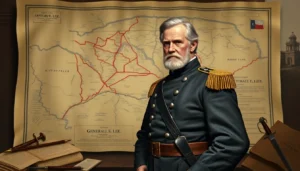
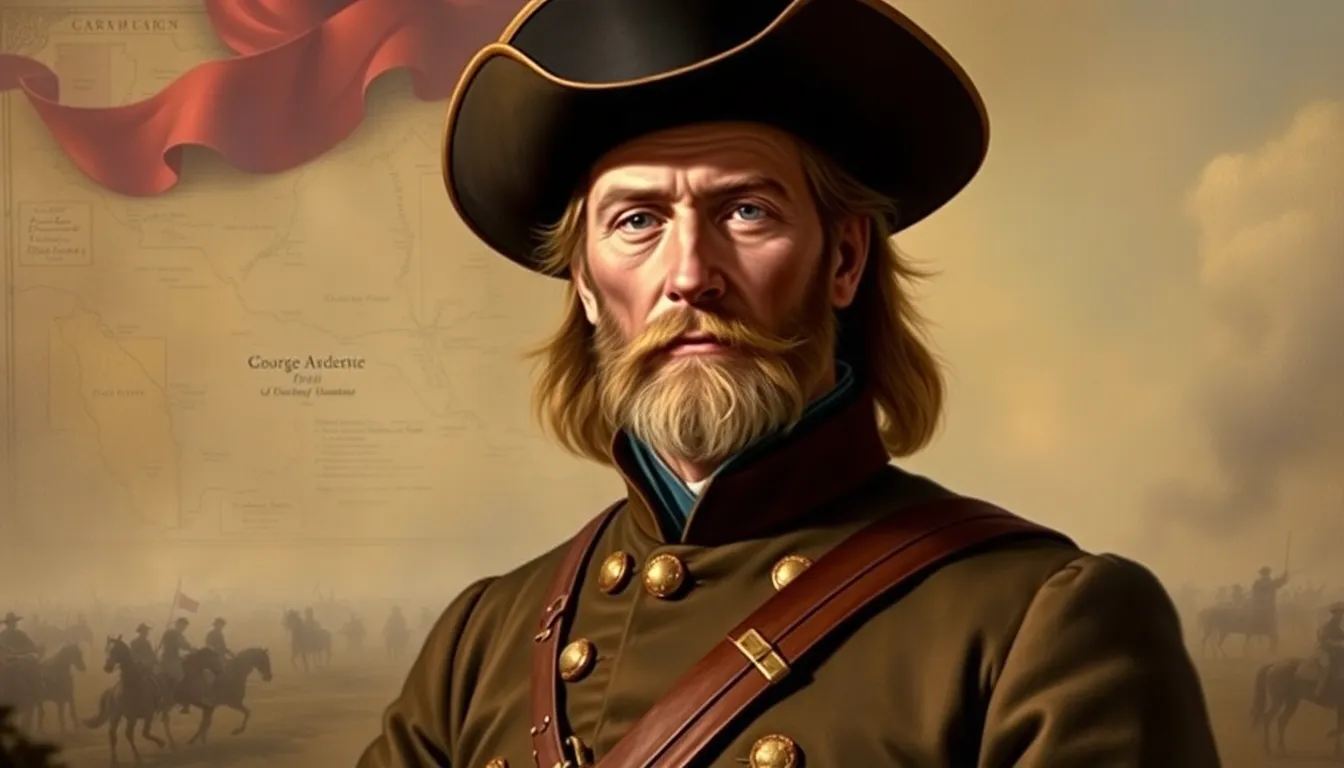
George Armstrong Custer was born on December 5, 1839, at the family farm near New Rumley, Ohio, to Emanuel and Marie Custer. His parents were of German descent, and the family moved to New York State when Custer was a boy. He attended a local school and, at age 15, entered the United States Military Academy at West Point, largely through the patronage of a family friend. Custer graduated on June 24, 1861, ranking 19th in a class of 34, just weeks after the outbreak of the American Civil War.
At West Point, Custer distinguished himself in mathematics and engineering, but his personality—marked by ambition, bravado, and a flair for self‑promotion—set him apart from many of his classmates. Upon commissioning as a second‑lieutenant in the 2nd Cavalry, he was assigned to the Union Army’s Department of the Potomac, where he would quickly experience the war’s intensity.
Wartime Context and Role
The American Civil War (1861‑1865) pitted the Union states against the seceding Confederate states. Cavalry units performed reconnaissance, raiding, and screening operations, but the war also saw the emergence of large‑scale cavalry engagements. Custer’s early assignment placed him under the command of Major General George B. McClellan, but his reputation was forged after he was transferred to the Army of the Potomac’s Cavalry Corps, commanded by General Alfred Pleasonton.
In his role as a cavalry officer, Custer was responsible for gathering intelligence, protecting supply lines, and conducting raids behind enemy lines. By 1863, he had risen to the rank of brigadier general of volunteers, a promotion that made him the youngest general in the Union Army at age 23. His youthful rank gave him considerable autonomy but also attracted scrutiny from senior officers.
Major Campaigns, Battles, and Decisions
Peninsula Campaign (1862) – Custer saw his first combat during the Union’s attempt to capture Richmond. He participated in the reconnaissance at the Battle of Williamsburg and earned his first commendation for gallantry.
Gettysburg Campaign (1863) – As commander of the Michigan Cavalry Brigade, Custer played a pivotal role on July 3, 1863, during Pickett’s Charge. His brigade charged down the Pennsylvania Turnpike, striking the Confederate flank and contributing to the repulse of the charge. Contemporary reports credit his aggressive action with helping secure the Union victory at Gettysburg.
Overland Campaign (1864) – Custer’s forces were engaged in a series of cavalry battles, including the Battle of Trevilian Station on June 11, 1864, the largest all‑cavalry battle of the war. Though the Union failed to destroy the Confederate supply depot at Trevilian Station, Custer’s aggressive tactics inflicted significant casualties on Confederate forces.
Sheridan’s Raid and the Shenandoah Valley (1864‑1865) – Under General Philip Sheridan, Custer participated in the campaign to wrest control of the Shenandoah Valley. His brigade executed rapid raids, cutting rail lines and disrupting Confederate logistics.
After the Civil War, Custer was assigned to the newly formed 7th Cavalry Regiment, stationed at Fort Riley, Kansas. The post‑war United States shifted its military focus westward, engaging in a series of conflicts with Native American nations resisting forced relocation.
Black Hills Expedition (1874) – In a campaign authorized by President Ulysses S. Grant, Custer led a scouting expedition into the Black Hills of present‑day South Dakota. The expedition confirmed the presence of gold, triggering a rush of settlers and heightening tensions with the Lakota Sioux and Cheyenne.
Great Sioux War (1876‑1877) – Custer’s 7th Cavalry was a central component of the U.S. military effort to force the Lakota and Northern Cheyenne onto reservations. On June 17, 1876, after a series of engagements at the Rosebud River, Custer’s unit pursued a large encampment of Lakota, Northern Cheyenne, and Arapaho along the Little Bighorn River.
The resulting battle—commonly known as the Battle of Little Bighorn—ended in a decisive defeat for Custer’s forces. Over the course of a single day, Custer, approximately 210 of his men, and several civilian scouts were killed. The defeat shocked the nation and became a focal point of American mythmaking.
Leadership, Courage, and Controversies
Custer’s military record reflects a pattern of aggressive, often daring tactics. His contemporaries praised his personal courage; he was wounded multiple times, notably at the Battle of Opequon (Third Battle of Winchester) where he received a brevet promotion for gallantry. However, his leadership style also attracted criticism. Senior officers questioned his habit of dividing his forces into smaller detachments, a tactic that left his troops vulnerable at Little Bighorn.
Historians debate whether Custer’s decisions on June 25‑26, 1876, were driven by overconfidence, inadequate intelligence, or a combination of both. The failure to coordinate with supporting units, such as Colonel James G. Harney’s column, contributed to the isolation of his immediate command. Some scholars argue that the cultural attitudes of the era toward Native Americans—viewing them as obstacles to westward expansion—shaped Custer’s willingness to engage a numerically superior force.
In addition to tactical controversies, Custer’s personal conduct has been scrutinized. Accounts from subordinate officers describe a flamboyant demeanor, a penchant for elaborate uniforms, and a tendency to seek public recognition. These traits amplified his posthumous fame, but they also fueled contemporary and later critics who portrayed him as a reckless aristocrat.
Despite the defeat, Custer received posthumous honors: the U.S. Congress awarded him a post‑war brevet promotion to major general of volunteers, and he was later commemorated with numerous monuments, the most famous being the statue on the Custer Battlefield in Montana. The balance between genuine battlefield bravery and the mythic “last stand” narrative continues to be a point of contention among scholars.
Later Life, Memory, and Legacy
George Custer’s death at age 36 ended a career that spanned two major American conflicts. In the immediate aftermath, the U.S. government used his death to justify a more forceful military campaign against the Lakota, culminating in the surrender of Chief Sitting Bull in 1881.
Throughout the late 19th and early 20th centuries, Custer became a symbol of American frontier heroism. Literary works, including Mark Twain’s “The Great Revolution in the West,” and later Hollywood films such as “They Died with Their Boots On” (1941), portrayed him as a gallant but tragic figure. These portrayals often omitted the broader context of Native American resistance and the political motivations behind U.S. expansion.
In recent decades, revisionist historians and Native American scholars have reevaluated Custer’s legacy. They emphasize the consequences of the Black Hills expedition, the violation of the 1868 Fort Laramie Treaty, and the role of military aggression in the systemic displacement of Indigenous peoples. Additionally, the iconic “Last Stand” narrative is critiqued for romanticizing a military disaster and obscuring the strategic competence of the Lakota and Cheyenne forces.
Public memory of Custer remains divided. Some monuments have been removed or contextualized with additional interpretive signage that acknowledges the perspectives of the Native American nations involved. The National Park Service’s Little Bighorn Battlefield National Monument now includes exhibits that present both the U.S. military viewpoint and the Indigenous experience of the battle.
Scholarly assessment of Custer acknowledges his noteworthy contributions to cavalry tactics during the Civil War while also recognizing his miscalculations during the Indian Wars. His career illustrates the transition of the United States Army from a war‑fighting force in a civil conflict to an instrument of westward expansion, with all the attendant moral and strategic complexities.