Early Life and Military Formation
Arthur Wellesley was born on 1 May 1769 at Dangan Castle, County Meath, in the Kingdom of Ireland, then part of the Kingdom of Great Britain and Ireland. He was the second son of Garret Wesley, 1st Earl of Mornington, a prominent Irish politician and composer, and Anne Hill, the daughter of a British Army officer. The Wellesley family belonged to the Anglo‑Irish gentry; their Protestant religious affiliation and land‑owning status placed them within the British imperial elite.
Wellesley’s early education was irregular. He attended a school in Dublin for a brief period, then was sent to the Royal Academy in Paris in 1784 as part of a broad cultural education typical for aristocratic youths. After a short stint at Eton College in England, he entered the military by purchasing a commission as an ensign in the 73rd Regiment of Foot (Highland Light Infantry) in 1787, a common practice for young gentlemen seeking a career in the army.
His first posting sent him to Gibraltar, where he served as a junior officer for three years. During this time he studied French and observed European military practices. In 1790, at the age of 21, he obtained a transfer to the 33rd Regiment of Foot, stationed in Ireland, and later to the 76th Regiment of Foot, which was posted to Indian service. The experience of serving in diverse garrisons, combined with his exposure to French revolutionary ideas, shaped his early military outlook.
Wartime Context and Role
The French Revolutionary Wars (1792‑1802) transformed the European strategic environment. Britain, fearful of revolutionary contagion and French expansion, entered a series of coalitions against France. Wellesley’s first active combat experience came in the Low Countries during the 1793–1794 Flanders Campaign, where he served under the Duke of York. Although the campaign ended in withdrawal, it provided valuable logistical and staff experience.
In 1796, Wellesley was sent to India, where the British East India Company sought to consolidate its foothold against French and regional rivals. He served under Sir Arthur Blossom, the Governor‑General, and later under Sir David Baird during the Fourth Anglo‑Mysore War (1799). At the Battle of Seringapatam, Wellesley’s brigade played a critical role in storming the fortress, earning him commendation and a promotion to major.
Returning to Europe in 1800, Wellesley found a continent dominated by Napoléon Bonaparte’s rapid rise. Britain’s strategic priority was to contain French hegemony while preserving a balance of power. Wellesley’s appointment as a brigadier‑general under Sir Ralph Abercromby in the 1801 Egyptian campaign further honed his operational planning skills. The eventual peace of Amiens (1802) provided a brief lull, but hostilities resumed in 1803, and Wellesley soon became a central figure in British attempts to counter French dominance on the continent.
Major Campaigns, Battles, and Decisions
Portugal and the Peninsular War (1808‑1814) – In March 1808, Wellesley was appointed commander of the British expeditionary force sent to aid the Portuguese against French occupation. Landing at Porto, he made a swift march northward, culminating in the Battle of Vimeiro (21 August 1808), where his troops repulsed Junot’s forces. The subsequent Convention of Sintra, which allowed the French to evacuate with their loot, provoked criticism in Britain, but the victory at Vimeiro secured Wellesley’s reputation as a capable field commander.
Given the strategic importance of Portugal, Wellesley, now a lieutenant‑general, oversaw the construction of the defensive Lines of Torres Vedras in 1809‑1810. The fortifications, designed with the aid of Portuguese engineer Colonel James L. Y. Graça, proved decisive when Marshal Masséna’s 100,000‑man French army besieged Lisbon. The British‑Portuguese forces, numbering around 30,000, withstood the siege without engaging in a pitched battle, forcing the French to withdraw—an early example of Wellington’s use of defensive depth and logistics to blunt superior numbers.
Talavera and the 1812 Campaign – In July 1812, after a series of hard‑fought engagements—including the battles of Busaco (1810) and Albuera (1811)—Wellington coordinated with Spanish General Blake and Marshal Beresford to confront Soult’s army at Talavera. Though the battle ended with high casualties on both sides, it demonstrated Wellington’s ability to integrate multinational forces under a unified command structure.
The decisive 1812 campaign saw Wellington execute a series of rapid maneuvers across central Spain, culminating in the capture of Salamanca (22 July 1812). At Salamanca, Wellington employed a deft use of terrain, positioning his infantry on the ridgeline of the ridge of the Huerta, and launching a double‑envelopment that shattered French lines. The victory forced Marshal Marmont to retreat, opening the road to Madrid, which Wellington entered peacefully in August 1812.
Vitoria and the Invasion of France – In June 1813, Wellington’s forces met and defeated Joseph Bonaparte’s army at the Battle of Vitoria, a comprehensive victory that ended French control over Spain. Wellington’s tactical use of flanking columns and artillery firepower inflicted severe losses, leading to the eventual withdrawal of French forces from the Iberian Peninsula.
Following Vitoria, Wellington pursued the French across the Pyrenees, culminating in the battles of the Nivelle (10 November 1813) and the Nive (9–10 December 1813). By early 1814, Wellington’s army occupied southern France, and after the fall of Paris in March 1814, Napoleon abdicated, temporarily ending hostilities.
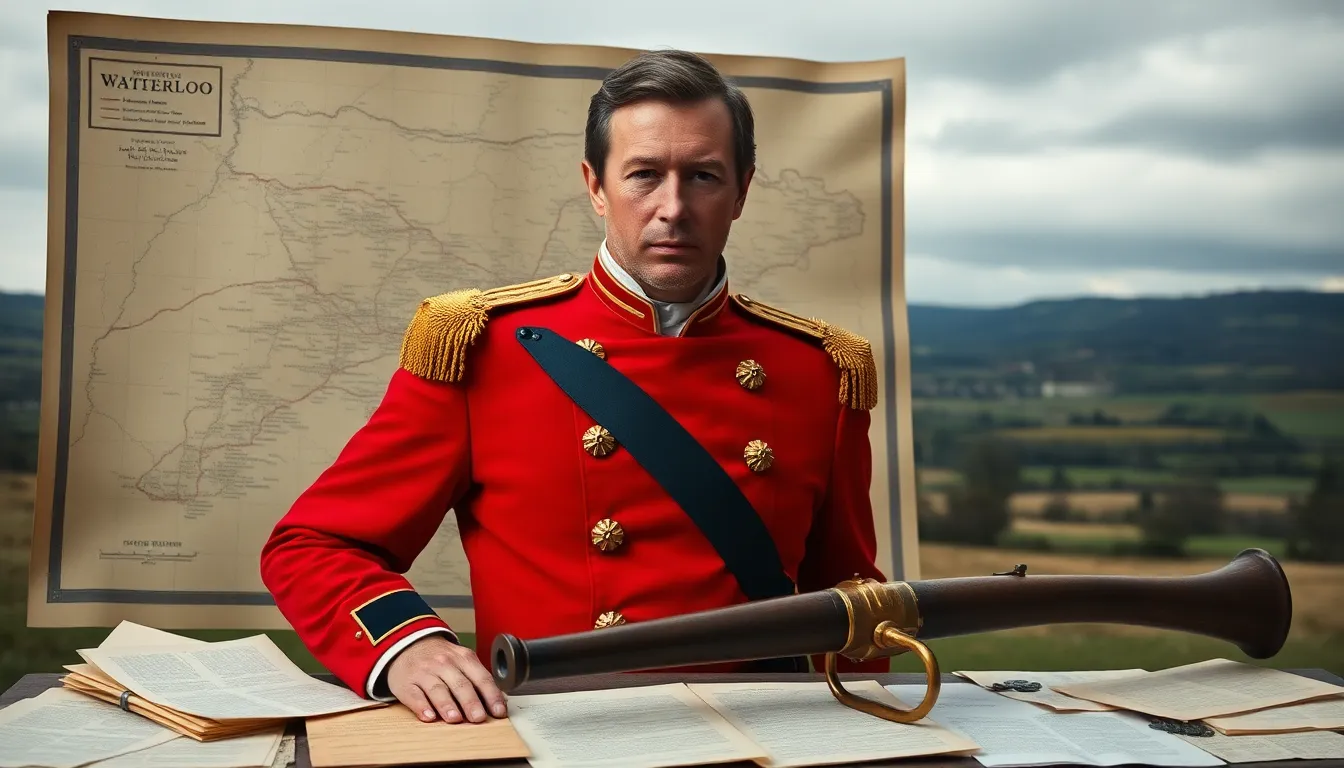
The Hundred Days and Waterloo – After Napoleon’s escape from Elba in March 1815, the European powers quickly mobilized. Wellington, now a Field Marshal, was appointed commander of the Anglo‑Allied army in Belgium. He chose a defensive position near the village of Waterloo, atop a ridge known as Mont-Saint-Jean, with the aim of forcing Napoleon to attack under unfavorable conditions.
On 18 June 1815, the Battle of Waterloo unfolded. Wellington’s deployment relied on a strong centre anchored by the infantry squares of the British “Light” Brigade and the Dutch‑Belgian troops, with the left flank protected by the robust cavalry reserves. Throughout the day, he managed to absorb repeated French assaults, including D‑E‑E‑S‑E‑M‑E‑N‑T‑S (the French infantry columns) and the massive cavalry charge of the French Imperial Guard. Wellington’s disciplined use of terrain, the strategic placement of artillery, and his coordination with the Prussian forces under Blücher were pivotal in shifting the battle’s momentum. By late afternoon, the French army collapsed, and Napoleon’s final defeat was sealed, ending the Napoleonic Wars.
Leadership, Courage, and Controversies
Wellington’s leadership style combined meticulous planning, personal discipline, and an insistence on logistical robustness. He was known for insisting on proper supply lines, the use of terrain for defensive advantage, and a cautious approach that often drew criticism for perceived timidity. Nevertheless, contemporaneous accounts, such as those of Sir Charles James Napier, note his personal courage: Wellington was often present on the front lines, exposing himself to enemy fire to assess the battle’s progress.
His reputation for “the iron Duke” originates from his stoic demeanor and the steady resolve he displayed under pressure. Yet, the moniker also masks the complex interplay between his military acumen and the political dimensions of his career. Wellington served as Master-General of the Ordnance (1827‑1828), and later as Prime Minister (1828‑1830), wherein his conservative stance on Catholic emancipation and his opposition to parliamentary reform drew sharp criticism from liberal factions.
Controversies surround several operational decisions. The Convention of Sintra (1808) was perceived as overly generous to French forces, prompting a parliamentary inquiry. Later, his conduct during the 1815 campaign has been debated: some historians argue his choice of a defensive position at Waterloo was a prudent response to limited strategic resources, while others claim his delayed on‑the‑day coordination with Prussian forces almost jeopardized the Allied victory.
Ethical questions also arise regarding his role in colonial contexts. During his Indian service, he participated in the suppression of the Vellore Mutiny (1806) and the siege of Seringapatam (1799), actions that resulted in significant loss of life among both combatants and civilians. While contemporary British narratives praised his effectiveness, modern scholarship critiques the imperial aggression underlying these campaigns.
Later Life, Memory, and Legacy
After Waterloo, Wellington returned to Britain a national hero. He received numerous honors: the Order of the Bath (GCB), the Order of the Garter, and foreign decorations such as the French Order of St Louis (awarded post‑humously after the restoration of the monarchy). He was elevated to the peerage as the Marquess of Wellington and later created Duke of Wellington in 1814.
Wellington retired from active military command but remained influential in political and military affairs. He served two terms as Prime Minister (1828‑1830, 1834), oversaw the passage of the Catholic Emancipation Act (1829), and contributed to the reform of the British Army’s recruitment and training practices. His memoirs, published posthumously in 1852, provide insight into his strategic thinking, though scholars note that they reflect the Victorian tendency toward self‑justification.
The Duke died on 14 September 1852 at Apsley House, London, and was interred at St Paul’s Cathedral, an honor reserved for the nation’s most distinguished figures. His memory has been memorialized through numerous statues, place names (e.g., Wellington, New Zealand, and Wellington County, Ontario), and the preservation of his former residence, Stratfield Saye House.
Historical interpretation of Wellington has evolved. Early 19th‑century accounts emphasized his triumphs and portrayed him as a model of British resolve. Twentieth‑century scholarship, particularly after the World Wars, reassessed his strategic innovations, highlighting his emphasis on combined arms and the importance of coalition warfare. Contemporary historians view Wellington as a complex figure: a master of defensive tactics, a cautious yet decisive commander, and a product of his empire‑building era, whose legacy continues to influence military doctrine and collective memory.