Early Life and Formation
Gertrude Margaret Lowndes Bell was born on 14 July 1868 in Washington, County Durham, England, into a prosperous Anglo‑Irish family. Her father, Hugh Bell, was a wealthy industrialist and philanthropist; her mother, Margaret Hellicar, came from a well‑educated background. The Bells encouraged intellectual curiosity and provided their children with a first‑class education. Gertrude attended the newly founded Lady Margaret Hall, Oxford, where she studied modern history, archaeology, and literature, graduating with a First Class Honours degree in 1893—an uncommon achievement for women of her era.
While at Oxford, Bell developed a lifelong fascination with the ancient Near East. Influenced by the writings of Sir Austen Henry Layard and the burgeoning discipline of archaeology, she resolved to travel to the region herself. A brief stint teaching at a girls’ school in England was followed by a scholarship‑funded trip to the United States, where she refined her research skills and began publishing articles on ancient art.
In 1895 Bell secured a scholarship from the Society of Arts to study Arabic and Persian languages in the Levant. She spent two years in Jerusalem, where she learned Arabic under the tutelage of local scholars and visited the archaeological sites of the Holy Land. These early linguistic and cultural foundations equipped her for the complex fieldwork and diplomatic negotiations that would dominate her career.
Exploration Context and Ambitions
The late 19th and early 20th centuries were a period of intense European interest in the Ottoman Empire’s Arab provinces. Archaeology, imperial politics, and commercial enterprises converged as Britain and France vied for influence over a region newly opened by railway construction and the fading power of the Ottoman administration. Scholars such as T. E. Lawrence and explorers like Sir Wilfred Thesiger sought both scientific data and strategic intelligence.
Bell entered this milieu with a distinctive set of ambitions. She aimed to document and preserve the region’s archaeological heritage, to map poorly understood desert routes, and to serve British diplomatic interests by cultivating relationships with local tribal leaders. Unlike many contemporaries, Bell emphasized careful ethnographic observation, recognizing that the living cultures of the Iraqi plateau were as crucial to her work as ancient ruins.
Her ambition was also personal: as a woman without the formal military or civil service career paths available to men, she carved a niche by blending scholarly rigor with diplomatic skill, hoping to prove that a woman could operate effectively in the male‑dominated world of exploration and statecraft.
Major Expeditions and Journeys
First Mesopotamian Survey (1905‑1908)
In 1905, with a grant from the Royal Geographical Society and the patronage of Sir William Mackenzie, Bell embarked on her first extended field expedition to Mesopotamia (modern‑day Iraq). Accompanied by the French archaeologist Ernest Renan’s assistant, Claude de Michele, and a small Syrian guide crew, she traveled from Basra up the Euphrates, documenting caravan routes and ancient sites such as Hatra, Nimrud, and the ruins of Nippur.
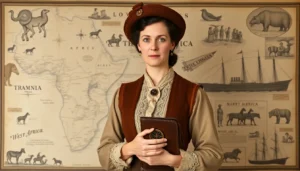
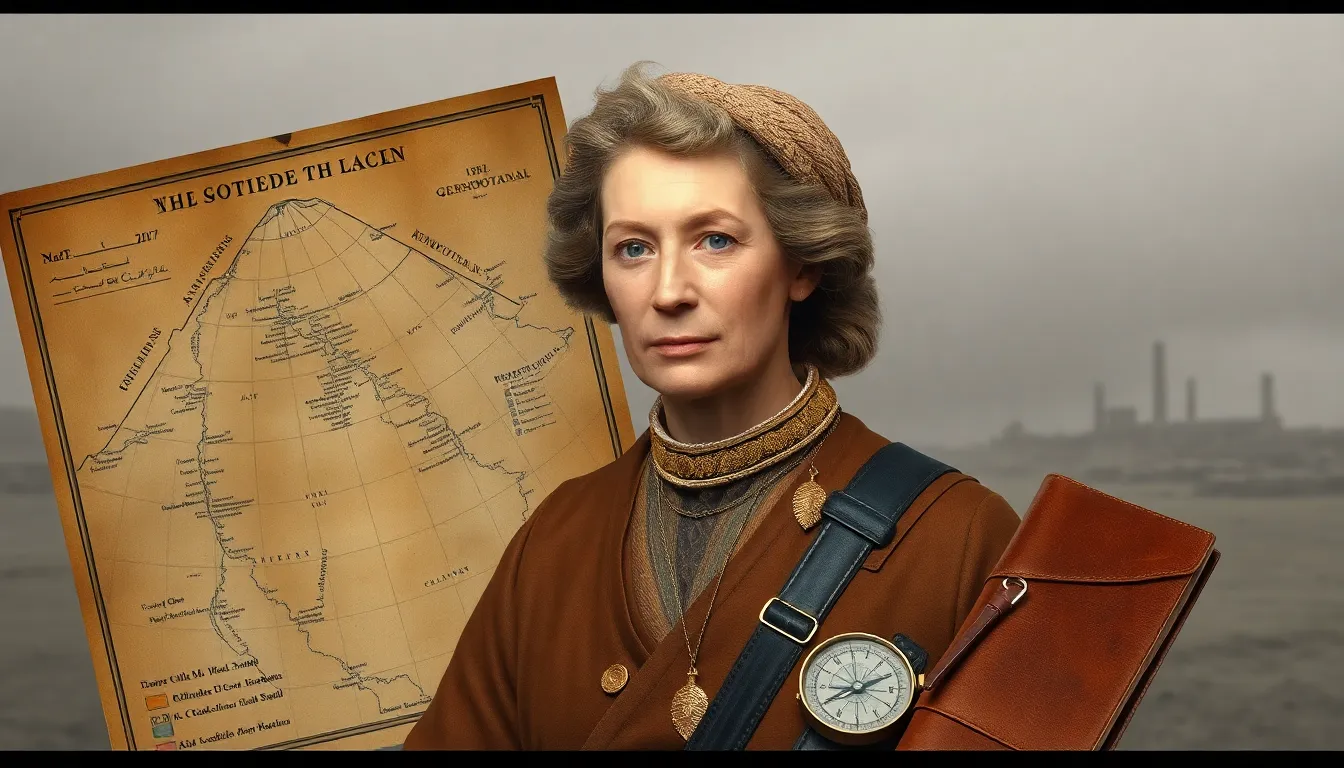
Bell produced a series of meticulous field sketches, measured plans, and a comprehensive topographic map that corrected earlier British surveys. Her journal, later published as Travels in Mesopotamia (1910), combined archaeological description with observations of tribal customs, water management, and the impact of the Ottoman land reforms on nomadic peoples.
Archaeological Missions for the British Museum (1910‑1914)
Following the success of her first survey, Bell was commissioned by the British Museum to lead a series of rescue excavations at sites threatened by modern development, especially the construction of the Baghdad Railway. In 1911 she directed the excavation at Tell Baba (ancient Eridu), uncovering temple foundations dated to the Ubaid period. Her work at Tell Abu Sufra (ancient Shamshi‑Adad) in 1913 revealed a well‑preserved palace complex, yielding tablets that illuminated early Assyrian administration.
Bell’s systematic recording methods—photography, scaled drawings, and precise stratigraphic notes—set new standards for British field archaeology. She also recruited local laborers, training them in basic excavation techniques and thereby fostering a nascent cadre of Iraqi archaeological assistants.
World War I Intelligence and the Formation of Iraq (1914‑1919)
With the outbreak of World War I, the British government recognized Bell’s deep knowledge of the region. In 1916 she was appointed “Assistant Political Officer” in the Mesopotamian Expeditionary Force. Working closely with T. E. Lawrence, she negotiated with tribal leaders in the Mosul and Al Jazira regions, securing the allegiance of the Shammar and the Dulaim confederations to the British war effort.
Bell’s greatest diplomatic achievement came at the 1918 Paris Peace Conference, where she advocated for an Arab‑administered state under British oversight, arguing that a “balanced federation” would preserve local customs while ensuring stability. Her recommendations heavily influenced the 1920 Treaty of Sèvres and the subsequent establishment of the Kingdom of Iraq under King Faisal I.
Later Travels and Scholarly Work (1920‑1925)
After the war, Bell continued to travel across the Iraqi plateau, mapping the remote plateau of Hatra, the deserts of the Syrian steppe, and the mountainous regions of Kurdistan. Her 1923 survey of the Tigris – Euphrates confluence produced the most accurate map of southern Mesopotamia until the advent of aerial photography.
In addition to fieldwork, Bell authored several influential books: Baghdad Gazette (1921), a collection of essays on contemporary Iraqi politics; and The Desert and the Sphinx (1924), a comparative study of Arabian desert cultures. She also donated her extensive photographic archive to the British Museum, where it remains a primary source for scholars of early 20th‑century Middle Eastern history.
Risks, Companions, and Controversies
Bell’s expeditions were fraught with physical and political hazards. The desert heat, sandstorms, and outbreaks of malaria claimed several members of her early caravans. In 1907 a cholera epidemic broke out along the Euphrates, forcing Bell to abandon a planned excavation at Al‑Qurnah. She survived through the care of an Ottoman physician, a fact she later cited to illustrate the importance of cross‑cultural medical cooperation.
Companions played a crucial role in her success. Among them were the Kurdish guide Sheikh Mahmud Janes, whose knowledge of regional tribal dynamics proved indispensable during the 1916 negotiations; the French photographer André Muller, who documented Bell’s archaeological work; and the British officer Sir John Hubert, her official patron within the Iraq Commission.
Bell’s dual role as archaeologist and political agent generated enduring controversy. Critics argue that her archaeological excavations were entangled with imperial objectives, facilitating British control over cultural heritage and reinforcing the narrative of a “civilizing mission.” Moreover, Bell’s involvement in the 1920 Iraqi revolt—where she was accused of “colluding with rebel tribes”—has been reassessed by contemporary scholars who note her attempts to mediate rather than suppress local aspirations.
Ethical considerations also arise from her collection practices. While Bell documented and preserved many artifacts, she exported a substantial portion to the British Museum, contributing to the ongoing debate over the repatriation of cultural property. Recent Iraqi scholars have called for the return of items from Tell Abu Sufra, citing Bell’s original field notes as evidence of the artifacts’ local significance.
Legacy and Historical Impact
Gertrude Bell’s legacy is multifaceted. As an explorer, she produced some of the most accurate cartographic records of Mesopotamia prior to the aerial survey era. Her maps were used by both military planners and civilian scholars throughout the 20th century. As an archaeologist, she pioneered systematic excavation techniques in the Near East, establishing standards for recording, photography, and artifact conservation that persisted long after her death.
Politically, Bell’s influence on the formation of the modern Iraqi state remains a subject of scholarly debate. While she is credited with helping to shape the borders and administrative structures of the Kingdom of Iraq, some historians argue that her vision of a “British‑guided” federation ultimately constrained the development of indigenous political institutions.
In popular culture, Bell has been dubbed “the Female Lawrence of Arabia,” a nickname that reflects both her diplomatic acumen and the gendered lens through which her achievements have been viewed. Recent biographies, such as Karen Jowitt’s *Gertrude Bell: A Woman in the Middle East* (2022), have sought to re‑evaluate her contributions without the romanticized “adventuress” trope.
Her personal papers—correspondence, field journals, and photographs—are housed at the British Library and the University of Oxford’s Bodleian Library. These collections continue to provide primary source material for scholars of Middle Eastern history, archaeology, gender studies, and imperial policy.
Bell’s life also inspired institutional foundations: the Gertrude Bell Institute of Middle Eastern Studies, established in Baghdad in 1999, promotes research on Iraqi heritage and serves as a repository for artifacts and archival material associated with her work.
Overall, Gertrude Bell exemplifies the complex interplay of exploration, scholarship, and empire during the early 20th century. Her meticulous documentation, diplomatic skill, and pioneering role for women in field research endure as significant contributions to both the historiography of the Middle East and the broader narrative of global exploration.