Early Life and Education
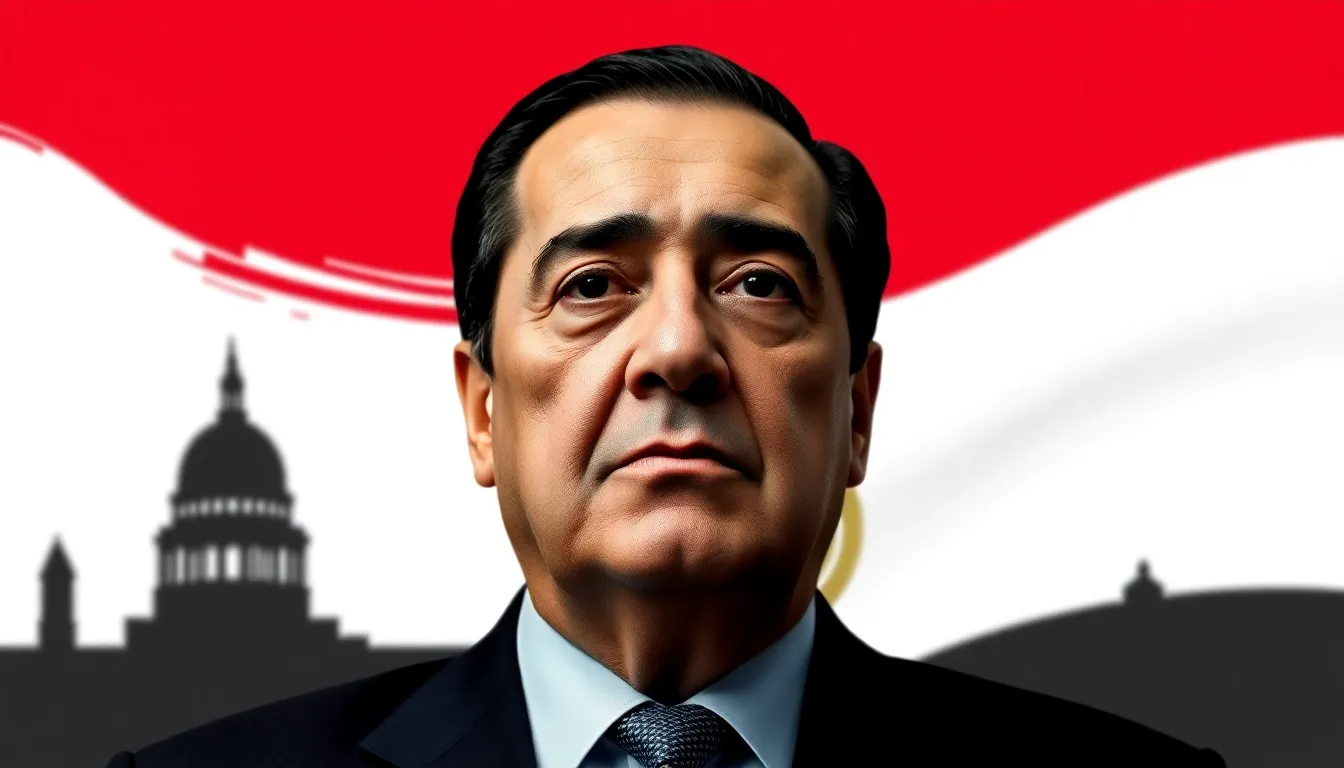
Hosni Mubarak was born on 4 May 1928 in the small town of Kafr El‑Mesa, in the Monufia Governorate of the Kingdom of Egypt. He came from a modest family; his father, Muhammad Hammad, worked as a senior accountant for the Ministry of Agriculture, while his mother, Aisha, was a housewife who emphasized the importance of education. Mubarak attended the local primary school before moving to Cairo for secondary education at the prestigious Al‑Ahly School, where he excelled in mathematics and the sciences.
In 1948, Mubarak entered the Royal Egyptian Air Force Academy (later renamed the Egyptian Air Academy) and graduated as a second lieutenant in 1950. He continued his military training in the United Kingdom, attending the Royal Air Force College at Cranwell, where he earned a diploma in aeronautical engineering. His time abroad exposed him to British parliamentary traditions and gave him a lifelong interest in Western military doctrines.
Following his return to Egypt, Mubarak pursued a master’s degree in engineering at the University of Cairo, focusing on aircraft systems. He also completed courses at the United States Air Force Academy in the early 1960s, further broadening his technical expertise. Throughout this period, Mubarak cultivated a reputation as a disciplined officer with a strong sense of loyalty to the state, traits that would later shape his political style.
Political Rise
Mubarak’s political ascent began within the Egyptian military establishment. He served as a fighter pilot during the 1956 Suez Crisis and later in the Six-Day War of 1967, where he survived a near‑missing during an Israeli airstrike. His performance earned him promotion to the rank of colonel and a reputation as an able commander.
In 1972, President Anwar Sadat appointed Mubarak as commander of the Egyptian Air Force, a position he held during the Yom Kippur War of 1973. Under his leadership, the Air Force achieved a surprise crossing of the Suez Canal, contributing to Egypt’s early successes in the conflict. Mubarak’s close working relationship with Sadat, especially during the war, positioned him as a trusted confidant.
After the war, Sadat embarked on a series of political reforms, including the Infitah (open-door) economic policy and a shift toward a limited multiparty system. In 1975, Mubarak was appointed Minister of Defense, becoming one of the youngest defense ministers in the Arab world. He also served as Vice President from 1975 until Sadat’s assassination in 1981, a role that placed him directly in the line of succession.
Offices and Leadership
Following the assassination of Anwar Sadat on 6 October 1981, Hosni Mubarak was sworn in as President of the Arab Republic of Egypt. He would remain in office for nearly three decades, winning four presidential elections (1981, 1987, 1993, 1999) and extending his rule through a constitutional amendment in 2005 that allowed multi‑candidate presidential elections, though these were widely criticized for lacking genuine competition.
Mubarak’s presidency was characterized by a centralized executive authority. He retained command of the military, continued to serve as Supreme Commander of the Armed Forces, and exercised extensive influence over the National Democratic Party (NDP), the ruling party that dominated Egyptian politics during his tenure. His cabinet appointments often reflected a blend of technocrats and loyalists, with key ministries like Interior, Foreign Affairs, and Finance being overseen by long‑time allies.
Internationally, Mubarak positioned Egypt as a pivotal ally of the United States and a mediator in Middle‑Eastern affairs. He signed the 1979 Egypt‑Israel Peace Treaty, which Sadat initiated, and maintained a strategic partnership with Washington, receiving substantial military and economic aid. Mubarak also played a role in the Gulf War (1990‑91), supporting the U.S.-led coalition against Iraq.
Policies, Crises, and Controversies
Economic Policy
Mubarak pursued a continuation of Sadat’s Infitah, encouraging foreign investment, privatization, and liberalization of trade. The 1990s saw the growth of a middle class and expansion of sectors such as tourism, telecommunications, and construction. However, economic gains were uneven; wealth remained concentrated among a small elite, while unemployment, especially among youth, persisted.
Security and Repression
The regime maintained a tight grip on political dissent through the State Security Investigation Service (SSIS) and a pervasive network of informants. Emergency law, first imposed in 1967, was renewed annually and granted police sweeping powers to arrest and detain without trial. High‑profile cases, such as the 1998 arrests of Muslim Brotherhood leaders and the 2002 crackdown on Coptic Christians during the “Al‑Aqsa” protests, highlighted the state’s use of force to quell opposition.
Human Rights Record
International organizations, including Amnesty International and Human Rights Watch, repeatedly criticized Mubarak’s administration for alleged torture, extrajudicial killings, and the suppression of free speech. The 1997 Luxor massacre, in which 62 tourists were killed by Islamist militants, prompted a harsh security response that further strained civil liberties.
Political Reforms and Elections
While Mubarak introduced limited political reforms—such as allowing independent candidates in parliamentary elections and permitting multiple presidential candidates in 2005—these measures were widely regarded as superficial. Elections were marred by allegations of voter fraud, intimidation, and state media bias. Opposition parties, especially the Muslim Brotherhood (which remained officially banned), faced systematic harassment.
Corruption Allegations
Corruption scandals emerged throughout Mubarak’s reign. Notably, the 1999 “Al‑Tazkira” scandal implicated senior officials in the embezzlement of public funds. Business magnates with close ties to the NDP accumulated vast wealth, leading to public perception of a “prince‑like” ruling class, a factor that would later fuel popular discontent.
Regional Crises
Egypt under Mubarak navigated several regional challenges, including the Iran‑Iraq war, the Gulf War, and the Second Intifada. Mubarak’s government balanced its alliance with the United States and its leadership role in the Arab League, often mediating disputes but also facing criticism for perceived subservience to Western interests.
Electoral Record and Legacy
Electoral History
‑ 1981: Won a referendum following Sadat’s death, receiving 98% of the vote.
‑ 1987: Re‑elected with 93% in a controlled presidential poll.
‑ 1993: Secured 96% in another referendum‑style election.
‑ 1999: Official results gave him 95% of the vote, though observers noted irregularities.
‑ 2005: First contested presidential election; Mubarak won 88% against former interior minister Ayman Sofi and former diplomat Nassar Al‑Sadr.
End of Rule
On 25 January 2011, massive protests erupted in Tahrir Square, part of a broader Arab Spring movement demanding political reform, economic justice, and an end to Mubarak’s rule. After 18 days of sustained demonstrations, Mubarak resigned on 11 February 2011, handing power to the Supreme Council of the Armed Forces (SCAF). He was later tried on charges of corruption, complicity in the killings of protesters, and abusing public funds. In 2012, he received a three‑year prison sentence, later reduced and eventually pardoned in 2017 by President Abdel‑Fattah el‑Sisi.
Historical Assessment
Hosni Mubarak’s legacy is contested. Supporters credit him with maintaining relative stability, fostering economic growth, and keeping Egypt out of large‑scale wars. Critics argue his authoritarian governance, corruption, and failure to address systemic socio‑economic inequalities sowed the seeds for the 2011 uprising. Scholars often view his presidency as a transitional period between Nasser’s pan‑Arab socialism and the post‑2011 era of political volatility.