Early Life and Education
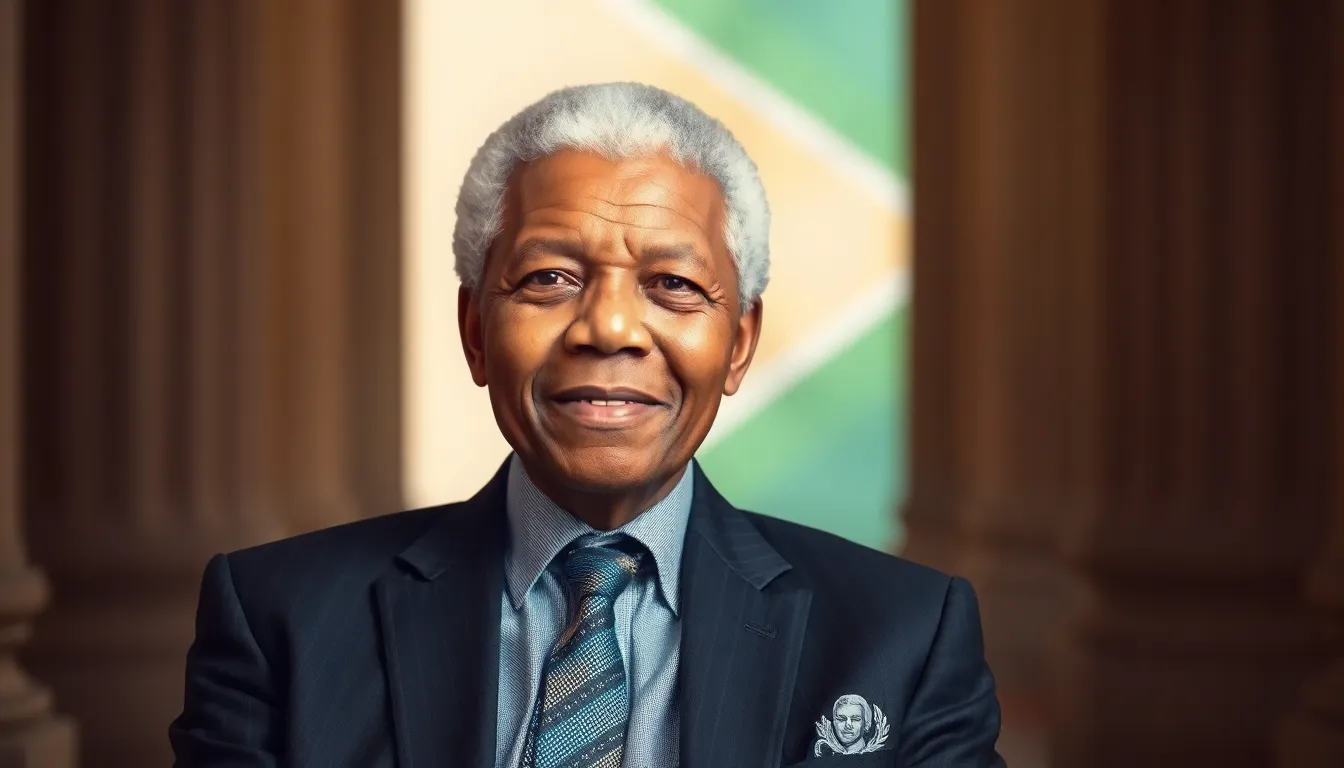
Nelson Rolihlahla Mandela was born on 18 July 1918 in the village of Mvezo, in the then‑Cape Province of the Union of South Africa. He belonged to the Thembu royal family; his father, Gadla Henry Mpahlwa, was a local chief and councilor to the Thembu monarch. Mandela’s Xhosa name, Rolihlahla, roughly translates as “pulling the branch of a tree,” an idiom for a mischievous child.
After his father’s death in 1928, Mandela’s mother, Nosekeni Fanny, moved the family to Qunu, where he attended a Methodist mission school. There he received a basic education in reading, writing, and arithmetic, while also being exposed to Christian teachings that later shaped his moral outlook.
In 1939, Mandela enrolled at the University College of Fort Hare, a premier institution for black Southern Africans, where he began studying law. Fort Hare was also a crucible of political consciousness; Mandela joined the African Students Association and participated in protests against racial discrimination. He was expelled in 1940 for participating in a student strike, an event that marked his first direct confrontation with authority.
Undeterred, Mandela completed his degree through the University of South Africa (UNISA) via correspondence, and later enrolled at the University of the Witwatersrand in Johannesburg in 1943 to pursue a Bachelor of Laws (LLB). While at Witwatersrand, he encountered a diverse urban environment and connected with other black intellectuals, labour activists, and members of the South African Communist Party (SACP). His legal training equipped him with a deep understanding of South Africa’s statutory framework, which would later prove essential in his anti‑apartheid advocacy.
Political Rise
Mandela’s formal political career began in 1944 when he joined the African National Congress (ANC), a multiracial organization committed to ending white minority rule. He quickly rose through the ranks, helped to form the ANC Youth League (ANCYL) in 1944, and advocated for a more militant, mass‑based approach to resistance.
In the late 1940s, Mandela, alongside Walter Sisulu, Oliver Tambo, and others, spearheaded the Defiance Campaign (1952), a large‑scale civil‑disobedience movement that encouraged non‑violent resistance to unjust laws. The campaign galvanized mass mobilisation across racial lines and established Mandela as a prominent national figure.
Mandela’s political philosophy evolved during this period. Influenced by Marxist analysis, he argued that apartheid could not be dismantled without addressing economic inequality. This stance led to the formation of the Congress of the People (1955), which drafted the Freedom Charter—a document calling for a non‑racial, democratic South Africa. Mandela was a key signatory and later faced charges under the infamous Treason Trial (1956‑1961), though he was acquitted after a protracted legal battle.
Confronted with increasing state repression, Mandela co‑founded Umkhonto we Sizwe (MK), the armed wing of the ANC, in 1961. He authored its first operational plan, which called for sabotage rather than loss of life. The first MK attacks, conducted in 1961, marked a decisive shift from non‑violent protest to armed resistance, and placed Mandela at the centre of the anti‑apartheid struggle.
Offices and Leadership
Mandela’s most consequential public office began on 10 May 1994, when he was inaugurated as the first black President of South Africa. The 1994 general election, the first in which citizens of all races could vote, resulted in an ANC victory (62 % of the vote). Mandela’s presidency (1994‑1999) was characterised by a focus on national reconciliation, constitutional reform, and socio‑economic reconstruction.
As President, Mandela chaired a multi‑party Cabinet that included former opponents, most notably the National Party’s F. W. de Klerk, who served as Deputy President until 1996. Mandela’s leadership style emphasized consensus‑building, moral authority, and a symbolic commitment to unity. He convened the Truth and Reconciliation Commission (TRC) in 1995, chaired by Archbishop Desmond Tutu, to investigate human rights violations committed by both the apartheid regime and liberation movements.
Internationally, Mandela positioned South Africa as a moral exemplar of peaceful transition. He cultivated relationships with world leaders, advocated for an African resurgence, and played a prominent role in the establishment of the New Partnership for Africa’s Development (NEPAD). Though his political career at the national level ended after a single term, Mandela remained an influential elder statesman, lending his voice to global health, education, and conflict‑resolution initiatives.
Policies, Crises, and Controversies
Mandela’s domestic agenda centred on three pillars: national reconciliation, socio‑economic development, and constitutional consolidation. He oversaw the drafting and adoption of the 1996 Constitution, hailed for its progressive bill of rights and inclusive language. The constitution enshrined equality before the law, gender parity, and protections for minorities.
Economic policy under Mandela continued the market‑oriented framework established by preceding administrations, yet sought to redress historic imbalances through affirmative‑action programmes and the Reconstruction and Development Programme (RDP). The RDP aimed to deliver basic services—housing, electricity, water—to previously marginalized communities. While ambitious, the RDP faced criticism for inadequate funding, bureaucratic inefficiency, and limited long‑term impact on poverty reduction.
Mandela’s foreign policy emphasized non‑alignment, anti‑colonial solidarity, and the promotion of human rights. He opposed the 1994 Rwandan genocide, though his government’s capacity to intervene was constrained. Critics note that South Africa’s diplomatic response to the crisis was cautious, reflecting the nation’s nascent foreign service.
Controversial aspects of Mandela’s legacy include his early advocacy of armed struggle, which some argue prolonged violence, and the perception that his conciliatory approach to the former white elite neglected deeper economic transformation. The 1996 “Growth, Employment, and Redistribution” (GEAR) policy, introduced under his successor Thabo Mbeki, has been retrospectively linked to the foundations laid during Mandela’s term, generating debate over its impact on inequality.
Electoral Record and Legacy
Mandela’s electoral record consists of the historic 1994 general election, in which the ANC secured 62 % of the vote, granting Mandela a decisive mandate. His popularity, reflected in opinion polls throughout his presidency, remained above 70 %—a testament to his moral authority and the symbolic importance of his leadership.
Mandela’s legacy is multifaceted. Domestically, he is revered for dismantling apartheid, fostering a democratic constitution, and initiating a national dialogue on reconciliation. Economically, scholars debate the extent to which his administration addressed structural inequities; while social services expanded, wealth distribution remains markedly unequal.
Internationally, Mandela became a global icon of resistance to oppression, influencing movements for civil rights worldwide. He received more than 250 honours, including the Nobel Peace Prize (1993, jointly with de Klerk). His autobiography, “Long Walk to Freedom,” published in 1994, offers a first‑person account of his struggle and remains a primary source for scholars.
After stepping down in 1999, Mandela continued to champion causes such as HIV/AIDS awareness, education, and conflict resolution through the Nelson Mandela Foundation. He passed away on 5 December 2013, drawing worldwide tributes that underscored his status as a moral exemplar of perseverance, forgiveness, and democratic leadership.