Early Artistic Beginnings
Zalmen “Zal” Yanovsky was born on June 19, 1944, in Toronto, Ontario, Canada, to Evelyn (née Sampler) and Michael Yanovsky, both of Eastern‑European Jewish descent. The family moved to the affluent neighbourhood of Rosedale when Zal was five, where he was exposed to a variety of cultural influences, from classical music on the radio to the burgeoning rock and roll scene of the 1950s.
Yanovsky received his first guitar at the age of twelve – a modest acoustic model that sparked an immediate fascination with the instrument. He taught himself chords by copying the sounds of early rock icons such as Chuck Berry and Elvis Presley. By his mid‑teens, he was performing at local teen clubs and school assemblies, often described by contemporaries as a charismatic presence with a natural flair for improvisation.
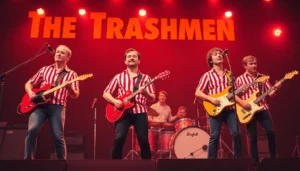
In 1962, while attending Harbord Collegiate Institute, Yanovsky formed his first semi‑professional group, The Rafters, a beat‑era band that played regular gigs at Toronto’s renowned “The Club” on St. Clair Avenue. The group’s repertoire blended British Invasion covers with original compositions, giving Yanovsky early experience in arranging and songwriting.
Influences and Creative Voice
Yanovsky’s artistic sensibilities were shaped by a convergence of musical traditions. Growing up in a household where traditional Klezmer music was occasionally played, he absorbed melodic structures that later informed his approach to folk‑rock phrasing. Simultaneously, the radio’s exposure to folk revivalists such as Bob Dylan, Peter, Paul and Mary, and the electric blues of Muddy Waters, added further layers to his evolving style.
During a 1963 trip to New York City, Yanovsky attended a performance by the folk‑rock group The Lovin’ Spoonful, then an emerging act led by John Sebastian. He was struck by their blend of jug‑band humor, acoustic textures, and pop sensibility. This encounter inspired him to relocate to Greenwich Village in early 1964, where he immersed himself in the vibrant cafe‑culture, collaborating with musicians from the Beat generation and absorbing the avant‑garde art scene.

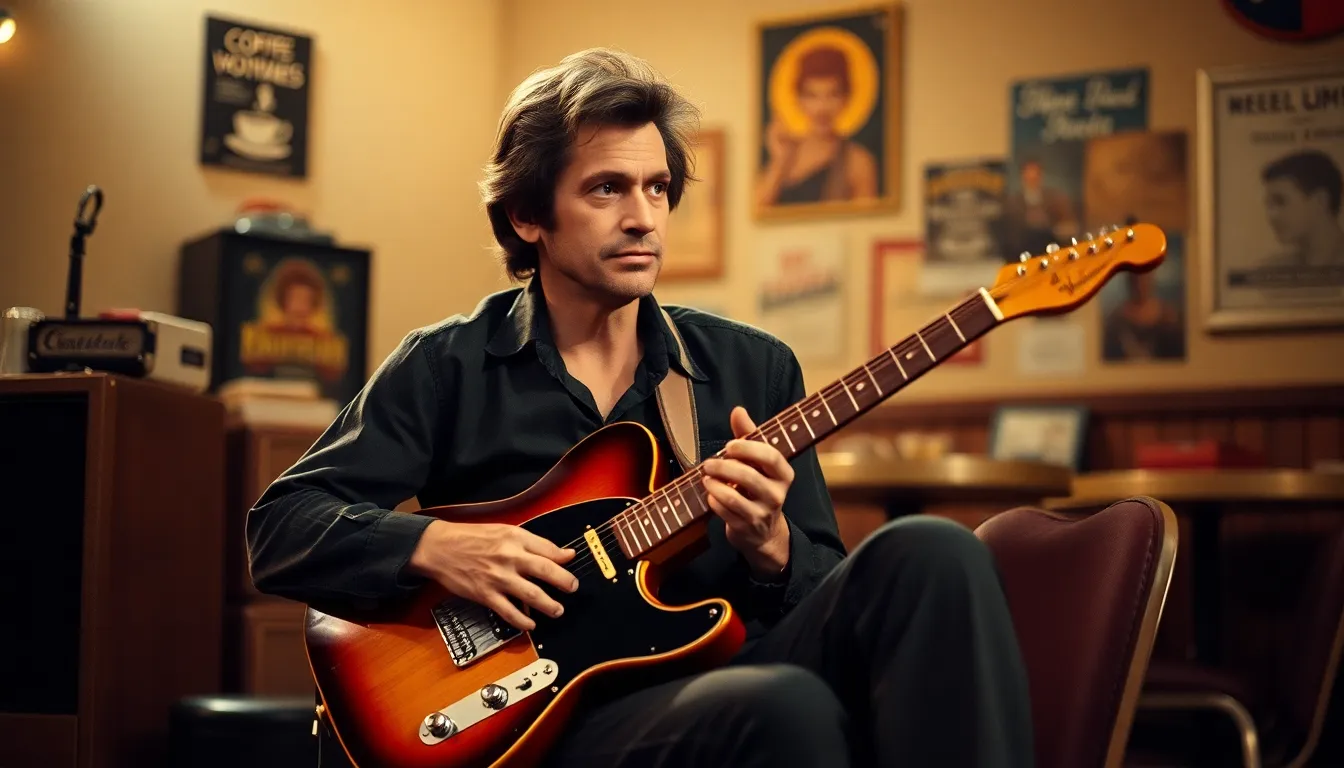
His signature guitar tone—bright, slightly over‑driven, and richly melodic—was largely a product of his use of a 1962 Fender Telecaster equipped with a Bigsby vibrato tailpiece, coupled with a Vox AC30 amplifier. Musicologists note that Yanovsky often employed open‑chord voicings and modal run‑throughs that gave the Lovin’ Spoonful’s recordings a distinctive “jangle” quality, later echoed in the power‑pop of the 1970s.
Major Works and Breakthroughs
In late 1964, Yanovsky officially joined John Sebastian, Steve Boone, and Joe Butler to form the Lovin’ Spoonful. The band quickly secured a contract with Kama Sutra Records, and their debut single, “Do You Believe in Magic” (1965), vaulted to No. 9 on the Billboard Hot 100. The song’s infectious hook and Yanovsky’s crisp rhythm guitar were pivotal to its success.
The Lovin’ Spoonful’s sophomore effort, “Summer in the City” (1966), became a number‑one hit and earned the group a Grammy Award for Best Contemporary (R&R) Recording. Critics highlighted Yanovsky’s tasteful lead fills, particularly a memorable slide‑guitar break that underscored the song’s urban lyricism.
During the band’s peak, Yanovsky contributed to three studio albums: Do You Believe in Magic (1965), Daydream (1966), and Everything Playing (1967). While John Sebastian was the primary songwriter, Yanovsky co‑wrote several tracks, most notably “Fading Light” and “You Didn’t Have to Be So Nice,” which showcased his melodic instincts.
The group’s third‑year tour itinerary included headline slots at the Hollywood Bowl and the Royal Albert Hall, exposing Yanovsky to both American and British audiences. Live recordings from the 1966 Carnegie Hall concert reveal his dynamic interaction with the crowd, often encouraging sing‑alongs and improvisational jams that prefigured later folk‑rock festivals.
Collaborations and Evolution
After departing the Lovin’ Spoonful in early 1967—partly due to legal issues surrounding an alleged drug possession charge and a desire to explore broader musical avenues—Yanovsky pursued a series of eclectic collaborations. He briefly joined the psychedelic outfit The Velvet Underground’s touring ensemble, contributing rhythm guitar on a handful of West Coast dates in late 1967. Though the stint was short, it exposed him to avant‑garde production techniques that would inform later studio work.
In 1968, Yanovsky formed the short‑lived group “The Wackers” with fellow ex‑Spoonful members Joe Butler and Steve Boone, releasing a self‑titled EP that blended folk-rock with emerging country‑rock elements. Though commercially modest, the EP received favorable reviews in Rolling Stone for its “unpretentious sincerity.”
Throughout the 1970s, Yanovsky migrated back to Toronto, where he collaborated with Canadian folk‑rock acts such as Gordon Lightfoot and Ian & Sylvia. He also produced recordings for emerging artists, most notably the folk‑blues duo “The Kinz” (1974), where his production emphasized acoustic instrumentation and sparse, reverberant mixes.
In the early 1980s, Yanovsky shifted focus from performance to entrepreneurship, co‑founding the iconic New York City restaurant “The Red Parrot” alongside his partner, actress and activist Yoko Kondo. While the restaurant was not a musical venture, it functioned as a cultural hub where musicians, writers, and visual artists gathered, reflecting Yanovsky’s enduring commitment to artistic community building.
Awards, Reception, and Legacy
The Lovin’ Spoonful was inducted into the Rock and Roll Hall of Fame in 2000, a recognition that posthumously honored Yanovsky’s contributions to the development of American folk‑rock. Music historians credit his guitar work for helping to define the genre’s early sound, particularly the seamless integration of folk melodies with rock backbeats.
Critical reception of Yanovsky’s solo efforts was mixed; while some reviewers praised his “intoxicating rhythmic sensibility,” others felt his work lacked the compositional depth of his earlier band material. Nevertheless, his influence can be traced through later guitarists such as Tom Petty, who cited the Spoonful’s “You Were Right” as an early inspiration.
In 2011, a documentary titled “The Sweetest Sound: The Story of Zal Yanovsky” aired on CBC, shedding light on his personal life, his battle with health problems, and his lasting impact on Canadian music culture. The film sparked renewed academic interest, resulting in several scholarly articles examining his role in transnational music exchange between Canada and the United States during the 1960s.
Yanovsky passed away on December 13, 2002, in New York City after a prolonged struggle with liver disease. Though his net worth was never publicly disclosed and remains unverified, his cultural capital endures through the continued popularity of the Lovin’ Spoonful’s catalogue and the many artists who cite him as an influence.
Overall, Zal Yanovsky’s career exemplifies the fluid cross‑border dynamics of North American popular music in the mid‑twentieth century. His early grounding in Canadian folk traditions, combined with a keen ear for American rock, positioned him as a bridge between two musical worlds—a legacy celebrated by scholars, musicians, and fans alike.