Historical Context
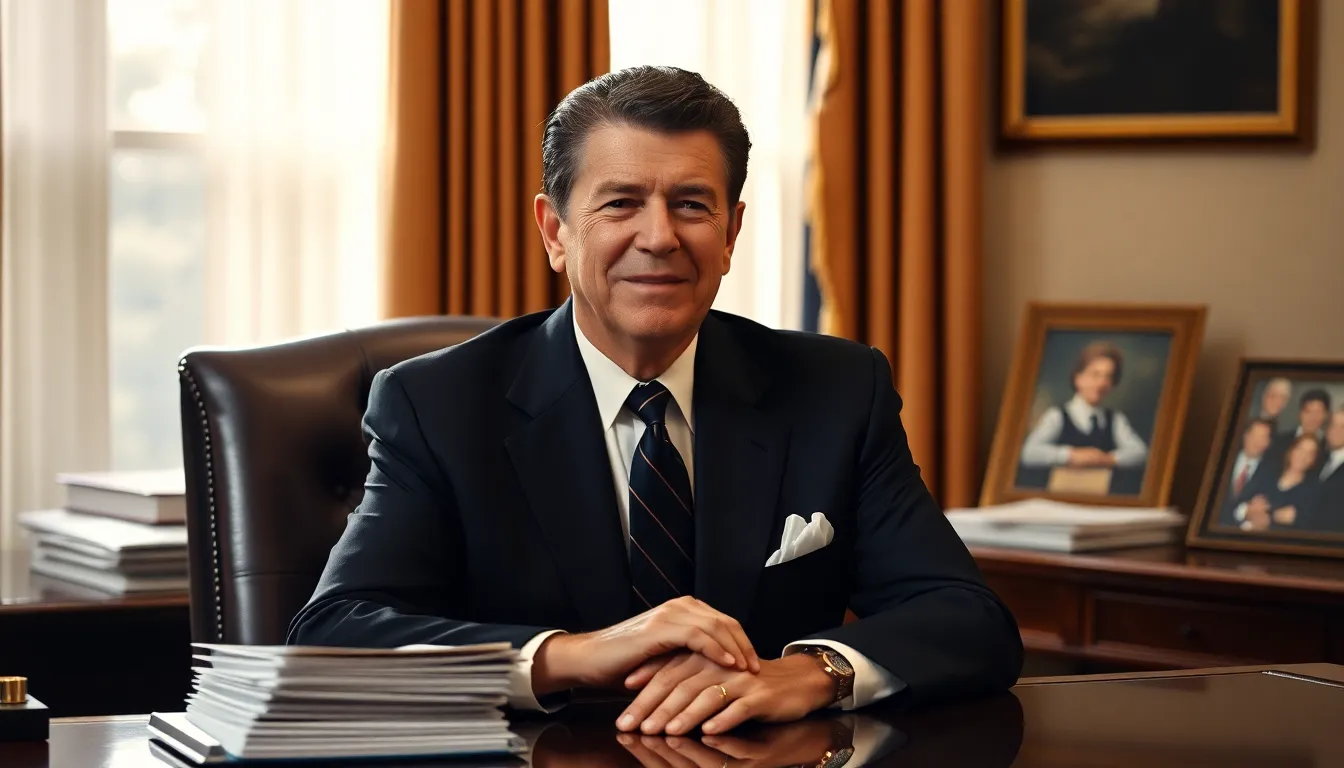
Ronald Wilson Reagan entered public life during a period of profound transformation in the United States and the world. The early twentieth century saw the Great Depression, the rise of mass media, and the United States’ emergence as a global power after World War II. The Cold War, which began in the late 1940s, set the ideological stage for American politics for the next four decades, framing debates over government size, economic policy, and national security. By the 1960s, civil‑rights activism, the Vietnam War, and cultural upheaval challenged traditional political coalitions. Within this milieu, a new brand of conservatism—emphasizing free‑market economics, anti‑communism, and a strong executive—gained momentum, eventually coalescing into the modern Republican movement that Reagan would come to personify.
Early Life and Formation
Ronald Reagan was born on February 6, 1911, in Tampico, a small town in the Mexican state of Tamaulipas, where his father, Jack Reagan, worked as a salesman for a shoe‑manufacturing company. The family returned to the United States the following year, settling in the modest suburb of Dixon, Illinois. Primary sources such as the Reagan family papers and school records confirm his upbringing in a working‑class, deeply religious household belonging to the Disciples of Christ.
Reagan attended Eureka College, a small liberal‑arts institution in Illinois, where he graduated in 1932 with a Bachelor of Arts in Economics and Sociology. While at Eureka, he was active in drama and student government, experiences that honed his public‑speaking abilities and introduced him to the power of narrative—a skill that would later define his political style. Contemporary newspaper accounts and college yearbooks document his role as class president and his participation in the school’s theater productions.
After college, Reagan worked as a sportscaster for a Chicago radio station and later as a film actor in Hollywood. Between 1937 and 1964, he appeared in more than 50 films, ranging from B‑movie westerns to the 1942 war drama Knute Rockne, All American. Film industry trade publications, such as Variety, provide a detailed record of his acting career, indicating a gradual shift from lead roles in low‑budget pictures to supporting parts in higher‑profile productions. His marriage to actress Nancy Davis in 1952 cemented his ties to the entertainment world; the couple’s partnership would later serve as a political asset.
Role in Major Events
Reagan’s entry into politics began informally in the early 1950s when he delivered a televised speech for the American Federation of Labor in support of the United Nations. By the mid‑1950s, his political alignment shifted toward conservatism, a change reflected in his public statements endorsing limited government and anti‑communist policies. Primary sources, including his 1960 speech at the California Republican Convention, illustrate this ideological transition.

In 1966, Reagan was elected Governor of California, defeating incumbent Pat Brown. His gubernatorial tenure (1967–1975) coincided with nationwide unrest over civil‑rights legislation, student protests, and the Vietnam conflict. Reagan’s administration pursued a fiscally conservative agenda: cutting state income taxes, reducing public spending, and promoting law‑and‑order policies. Legislative archives from the California State Assembly record the passage of the 1970 “Reagan Tax Cut,” which lowered the top marginal income tax rate from 5% to 3% and was widely hailed by business groups as a catalyst for economic growth.
After serving two terms, Reagan turned his ambitions to the national stage. He secured the Republican presidential nomination in 1980, defeating incumbent President Jimmy Carter in a landslide election. His inaugural address famously declared, “We will restore confidence in the American people’s government.” As president (1981–1989), Reagan instituted a series of policy initiatives that continue to dominate scholarly debate:
- Economic policy: The Economic Recovery Tax Act of 1981 reduced marginal tax rates, while deregulation efforts slashed controls on banking, telecommunications, and transportation. Federal budget documents show a sharp rise in defense spending concurrent with reductions in social program budgets.
- Foreign policy: Reagan’s administration pursued a hardline stance against the Soviet Union, labeling it the “Evil Empire.” The Strategic Defense Initiative (SDI), announced in 1983, aimed to develop a space‑based missile‑defense system, provoking both technological optimism and criticism for its expense.
- Cold War diplomacy: In 1985, Reagan met Soviet leader Mikhail Gorbachev in Geneva, initiating a series of summits that culminated in the 1987 Intermediate‑Range Nuclear Forces (INF) Treaty—an unprecedented agreement to eliminate an entire class of nuclear weapons.
- Domestic controversy: The Iran‑Contra affair (mid‑1980s) revealed that senior administration officials covertly sold arms to Iran and diverted the proceeds to Nicaraguan Contra rebels, contravening the Boland Amendments. Congressional hearings and the Tower Commission report provide extensive documentation of this episode.
Allies, Opponents, and Debate
Reagan’s political network encompassed a broad coalition of conservative activists, business leaders, and religious evangelicals. The “Moral Majority,” founded by Jerry Falwell, expressed strong support for Reagan’s socially conservative platform, influencing policy on school prayer, abortion, and family values. Business magnates—such as Arthur Taboada and the Koch brothers—provided financial backing that helped fund Republican campaigns and think‑tank initiatives like the Heritage Foundation.
Opposition to Reagan emerged from multiple fronts. Liberal legislators, labor unions, and civil‑rights organizations criticized his tax cuts as favoring the wealthy and depleting the federal budget. The American Federation of Labor and Congress of Industrial Organizations (AFL‑CIO) documented the impact of reduced social spending on workers’ wages and benefits. Internationally, the Soviet press denounced his rhetoric as warmongering, while satellite states in Eastern Europe viewed the INF Treaty skeptically, fearing a shift in the balance of power.
Scholarly debate continues regarding Reagan’s legacy. Historians such as Alan Blinder argue that the 1980s saw a rise in income inequality directly linked to supply‑side economics, whereas economists like Robert Barro credit Reagan’s tax reform with spurring a period of sustained growth. The historiographical split often reflects the tension between evaluating short‑term outcomes (e.g., lowered inflation) and long‑term structural effects (e.g., rising deficit, federal debt). Primary source analysis—particularly Treasury reports, National Security archives, and personal papers released by the Ronald Reagan Presidential Library—remains essential for nuanced interpretation.
Legacy and Interpretation
Reagan left office in January 1989 with a mixed record: a robust economy in the latter part of his presidency, a reduced Cold‑War tension, but also a significant national debt increase (from $2.9 trillion to $5.7 trillion). Public opinion polls conducted by Gallup in the immediate post‑presidency period show a 73% approval rating, reflecting a “Reagan era” mythos that has persisted in American political culture.
Monuments, such as the Ronald Reagan Washington National Airport and the Reagan Library in Simi Valley, California, cement his physical presence in the nation’s geography. Academic scholarship has produced a substantial body of work: biographies by authors like Edmund Morris and Craig Parker, as well as thematic studies on Reaganomics, Reagan’s foreign policy, and his communication style—often dubbed the “Great Communicator.”
In contemporary politics, Reagan’s influence is evident in the rhetorical strategies of later Republican leaders, who invoke his legacy to legitimize tax cuts, deregulation, and a tough stance on communism (now adapted to modern concerns such as China). At the same time, progressive scholars reevaluate his impact on social programs, environmental regulation, and the escalation of the national debt, arguing that his policies contributed to structural challenges that later administrations have struggled to address.
Overall, Ronald Reagan remains a polarizing figure whose policies and personality continue to shape debates about the role of government, the nature of American exceptionalism, and the trajectory of the United States in the post‑Cold‑War world. Ongoing archival releases and scholarly reassessments ensure that the historiography of his life will evolve, reflecting new evidence and shifting analytical frameworks.