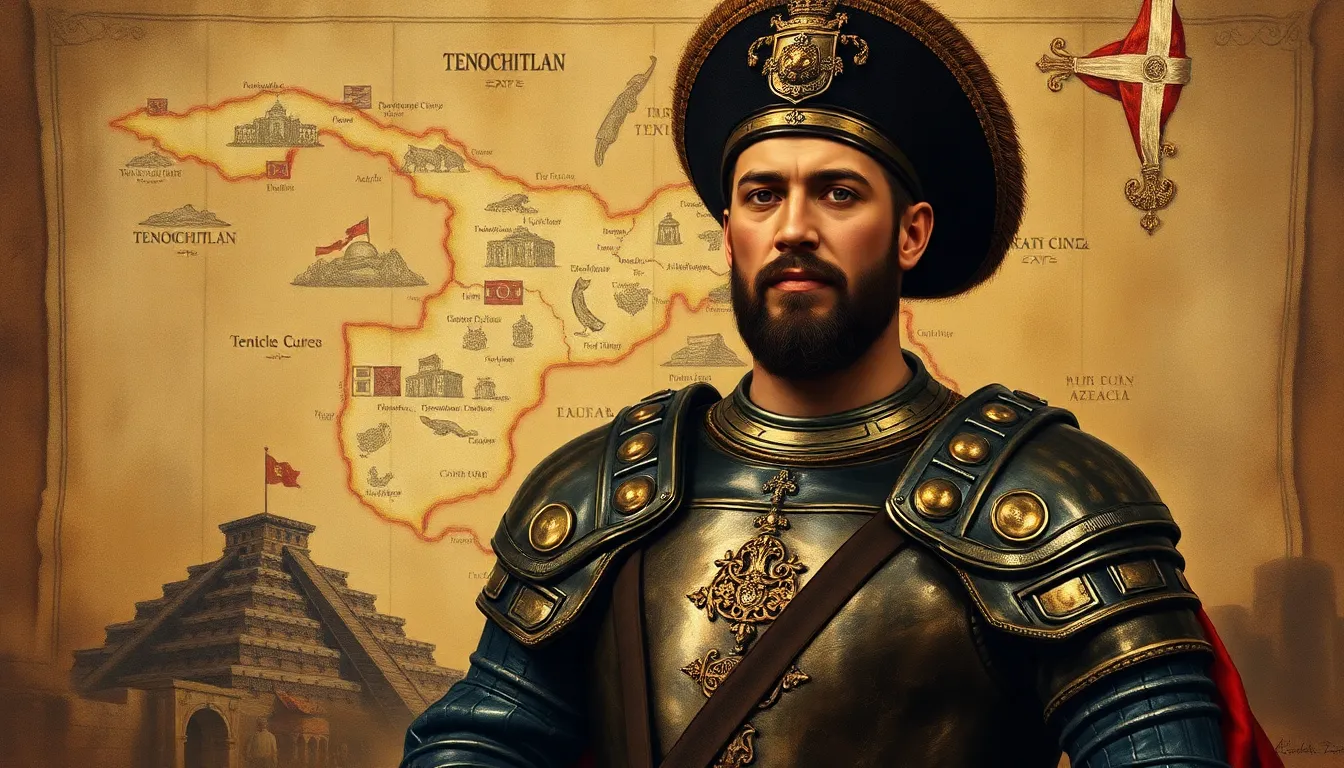
Historical Context
The early sixteenth century was a period of rapid expansion for the kingdoms of Iberia. Following the 1492 unification of Castile and Aragon under Ferdinand and Isabella, Spain embarked on a program of overseas exploration aimed at securing trade routes, spreading Christianity, and extracting wealth. The discovery of the New World by Christopher Columbus in 1492 created a fevered interest in the Americas, where European powers hoped to find gold, spices, and new lands for settlement. Within this broader geopolitical framework, the Crown of Castile granted a series of licenses called capitulations that authorized private individuals to finance and lead expeditions in return for a share of any treasure or territory they might acquire.
By 1519, the Spanish Crown, eager to capitalize on these opportunities, authorized the expedition of Hernando Cortés to the eastern coast of the Gulf of Mexico. The region was populated by a complex tapestry of indigenous societies, the most powerful of which was the Aztec Empire, ruled by the tlatoani (emperor) Moctezuma II. The Aztecs had built a tribute empire that demanded payments in goods, but European accounts often exaggerated their wealth and military might, creating a perception among Spaniards that a relatively modest force could subdue a vast civilization.
In addition to political and economic motivations, the conquests were framed by a religious agenda. The Catholic Monarchs and later the papacy promoted the idea of a “spiritual conquest” to bring Christianity to non‑Christian peoples. This ideological backdrop justified, in the eyes of many contemporaries, the use of force and the imposition of European institutions upon indigenous societies.
Early Life and Formation
Hernando Cortés was born in 1485 in Medellín, a small town in the province of Extremadura, then part of the Crown of Castile. His parents, Martín Cortés de Monroy and Catalina Pizarro Altamirano, belonged to the lower nobility; the family held modest estates and enjoyed limited military prestige. Exact records of his birth date are lacking, but most historians accept 1485 as the year based on baptismal registers and later legal documents.
Little is known about Cortés’s childhood education. In Extremadura, a region that produced many of Spain’s early conquistadors, the aristocratic youth received training in the rudiments of Latin, chivalric literature, and the art of warfare. Cortés likely learned to read and write, although his later correspondence shows a mix of formal and colloquial Spanish, suggesting a practical rather than scholarly education. He probably served as a page in a noble household during his adolescence, a common pathway for young men aspiring to a military career.
In 1504, at roughly nineteen years of age, Cortés entered the service of the Duke of Alba as a foot soldier. Over the next decade he participated in the war against the Kingdom of Navarre (1512‑1513) and the Italian Wars, thereby acquiring experience in siege warfare, cavalry tactics, and Spanish military organization. These campaigns also exposed him to the growing discipline of the Spanish infantry, the use of the tercio formation, and the logistical challenges of operating far from home.
By 1518, Cortés had returned to Spain, where he married Catalina Suárez, a woman of minor noble standing. The marriage produced two daughters, but the union soon dissolved, possibly as a result of Cortés’s ambitions and his frequent absences. The dissolution left Cortés financially strained, prompting him to seek better prospects in the New World.
Sources for Cortés’s early life are fragmentary and sometimes contradictory. The primary accounts—most notably the letters he wrote to King Charles I (the Cartas de Relación)—are self‑serving, emphasizing his noble lineage and magnanimous motives. Contemporary chroniclers such as Bernal Díaz del Castillo, who accompanied Cortés on the Mexican campaign, offer more anecdotal evidence, though their narratives too contain biases. Modern historians triangulate these accounts with archival documents (e.g., the capitulaciones granted to Cortés) to reconstruct a plausible early biography, while acknowledging the limits of definitive knowledge.
Role in Major Events
In early 1519, Cortés secured a capitulación from King Charles I, granting him the authority to explore, claim, and govern any lands he might discover between the Gulf of Mexico and the Pacific. The contract stipulated that he would retain a fifth of any wealth acquired, while the Crown would retain the remainder. Cortés assembled a force of roughly 600 men, including 16 horsemen, 20 artillery pieces, and a few hundred infantry, along with a modest number of indigenous allies (approximately 300 Tlaxcalan warriors who later joined his cause).
Departing from Cuba in February 1519, Cortés first landed on the Yucatán Peninsula, where he briefly interacted with the Maya city‑states, gathering intelligence about the interior. He then moved along the coast, founding the settlement of Villa Rica de la Vera Cruz near present‑day Veracruz. This settlement served both as a logistical hub and as a legal foothold by which Cortés could claim the newly discovered territories on behalf of the Crown, even though he had not yet received explicit royal approval for the venture beyond the coast.
In March 1519, Cortés and his men entered the valley of Mexico, encountering the tributary city of Tlaxcala. After a brief battle, the Tlaxcalans, resentful of Aztec domination, formed an alliance with Cortés, providing crucial local knowledge, additional troops, and a supply network. This alliance proved decisive throughout the conquest.
On November 8, 1519, Cortés reached the Aztec capital of Tenochtitlán, a metropolis of perhaps 200,000 inhabitants, built on an island in Lake Texcoco. He was received by Emperor Moctezuma II, who, according to Spanish accounts, offered hospitality and a considerable tribute. The motives behind Moctezuma’s reception remain disputed: some scholars argue that he believed Cortés was a divine emissary (the returning god Quetzalcoatl), while others suggest diplomatic pragmatism in dealing with an unforeseen foreign power.
During the winter of 1519‑1520, Cortés, emboldened by the wealth of gifts and the support of his Tlaxcalan allies, took Moctezuma hostage in the palace, attempting to govern through him. The situation deteriorated in early June 1520 when a massive uprising, known as La Noche Triste, erupted after the Spaniards attempted to seize the Aztec treasure. Cortés’s forces suffered severe losses, retreating to the coast via a harrowing night march that claimed the lives of many soldiers and allies.
Undeterred, Cortés regrouped at Tlaxcala, rebuilt his army, and forged additional alliances with other Nahua city‑states hostile to the Aztecs. In the spring of 1521, he launched a coordinated siege of Tenochtitlán, employing both European artillery and allied indigenous warriors. After a grueling three‑month siege, marked by intense fighting, famine, and disease (especially smallpox, which decimated the native population), the city fell on August 13, 1521. Moctezuma had died earlier under uncertain circumstances, possibly at the hands of his own people or from injuries sustained during the uprising.
The fall of Tenochtitlán marked the definitive end of the Aztec Empire and ushered in Spanish colonial rule over central Mexico. Cortés was appointed governor and captain‑general of New Spain, but his authority was continually challenged by both colonial officials and the Crown. In 1522, he founded the city of Mexico City on the ruins of Tenochtitlán, establishing the administrative center for the Viceroyalty of New Spain.
Over the next decade, Cortés continued to expand Spanish holdings, leading expeditions to the Yucatán, Honduras, and the Gulf coast. However, his tenure was marked by frequent conflicts with royal officials, particularly the newly appointed Viceroy Antonio de Mendoza, who arrived in 1535. Accusations of mismanagement, abuse of indigenous labor, and unauthorized fortifications led to Cortés’s recall to Spain in 1540, where he spent his final years defending his reputation before dying in 1547 in Castile.
Allies, Opponents, and Debate
Cortés’s success hinged on a complex network of alliances. His most reliable indigenous allies were the Tlaxcalans, who provided soldiers, supplies, and strategic counsel. Other Nahua city‑states—such as Huexotzinco and Cholula—also submitted to Spanish authority, often after witnessing the decisive power of European weapons and the devastating impact of smallpox.
Conversely, Cortés faced formidable opponents. The Aztec military, though ultimately overwhelmed, mounted fierce resistance and orchestrated several large‑scale battles. The most notable internal opponent was the emergence of the Hernán Pérez de Cuéllar faction among Spanish settlers, who contested Cortés’s claim to governorship and demanded a more direct royal administration.
Debates surrounding Cortés’s motives and morality have persisted since the sixteenth century. Contemporary Spanish chroniclers, such as Francisco López de Gómara (who wrote the official biography commissioned by Charles V) portrayed Cortés as a heroic civilizer, emphasizing his bravery and piety. In contrast, Bernal Díaz del Castillo, an infantryman under Cortés, highlighted both the heroism and the brutality of the conquest, documenting instances of violence against civilians, forced labor, and the exploitation of indigenous peoples.
Modern historiography has further nuanced these perspectives. Scholars like Matthew Restall and Inga Clendinnen argue that while Cortés displayed extraordinary military acumen and political shrewdness, he was also complicit in a system that resulted in massive demographic collapse—estimates suggest that the indigenous population of central Mexico fell by up to 90 % within a generation due to disease, warfare, and forced labor.
Source criticism remains essential because the primary documents—Cortés’s letters, the “official” histories, and the testimonies of indigenous allies (recorded later by Spanish translators)—are filtered through various agendas. The Cartas de Relación, for example, were intended to justify his actions to the Crown and to secure further funding. Thus, they often exaggerate achievements and downplay excesses. Conversely, indigenous codices and oral traditions, now being recovered and analyzed, provide alternative narratives that depict the conquest as an invasion fraught with deception and atrocities.
Legacy and Interpretation
The immediate legacy of Cortés was the establishment of Spanish colonial rule in Mexico, which would last for three centuries until the Mexican War of Independence (1810‑1821). The administrative structures he instituted—such as the encomienda system, which allocated indigenous labor to Spanish settlers—shaped the socioeconomic fabric of New Spain and contributed to the long‑term stratification of Mexican society.
In the centuries following his death, Cortés’s reputation oscillated between admiration and condemnation. In the eighteenth and nineteenth centuries, Enlightenment thinkers and early Mexican nationalists sometimes hailed him as a founder of modern Mexico, emphasizing his role in introducing European law, language, and Christianity. Conversely, liberal reformers and later revolutionary leaders criticized him as a symbol of oppression and as the origin of the colonial elite class.
In contemporary scholarship, Cortés is often examined as a case study of the broader processes of empire‑building, cultural encounter, and historical memory. His tactics of alliance‑building, psychological warfare, and exploitation of internal divisions are analyzed in comparative studies of conquest, ranging from the Spanish in the Andes to the British in North America.
Public memory of Cortés varies widely across cultures. In Spain, statues and streets bear his name, reflecting a traditional narrative of heroic exploration. In Mexico, his image is more contentious; some public spaces named after him have been renamed, and academic curricula increasingly incorporate indigenous perspectives that highlight the catastrophic consequences of his actions.
Finally, debates continue regarding the net worth and personal fortunes Cortés accumulated. While he received a substantial share of the treasure—estimated in contemporary records at over 100,000 gold pesos—much of this wealth was subsequently confiscated or lost due to legal disputes with the Crown. Accurate appraisal of his personal net worth is therefore impossible, and modern estimates vary widely, reflecting both historical uncertainty and the difficulty of converting sixteenth‑century treasure into present‑day values.