Early Life and Historical Context
Mary Jane Grant was born on 23 November 1805 in Spanish Town, the capital of the British colony of Jamaica. She was the illegitimate daughter of Robert Grant, a Scottish soldier stationed on the island, and Jennet (or Jane) Seacole, a free‑born woman of mixed African and European ancestry. The limited civil‑record evidence from early‑19th‑century Jamaica means that many details of her childhood rely on later oral histories and Seacole’s own memoir, which must be read with caution.
Jamaica at the time was a plantation society reliant on enslaved labour; the abolition of the British slave trade in 1807 and the eventual emancipation act of 1833 shaped the social landscape in which Seacole grew up. Her mother’s family owned a small hotel in Spanish Town, exposing young Mary to the hospitality trade and to a variety of Caribbean herbs and remedies used by enslaved and free people alike. This informal apprenticeship laid the foundation for her later reputation as a “Jamaican nurse.”
Education for mixed‑race women in the colony was scarce, but Seacole’s mother ensured her daughter could read and write, skills she would later employ in business records and her 1857 autobiography, The Wonderful Adventures of Mrs. Seacole in Many Lands. The paucity of archival documents from this period means that much of Seacole’s early life remains uncertain, and scholars must triangulate family records, parish registries, and contemporary travel accounts to reconstruct her background.
Work, Service, or Contribution
In the 1830s, after her mother’s death, Seacole inherited the family inn and began travelling throughout the Caribbean, the United States, and Central America. She earned a reputation as a skilled practitioner of herbal medicine, drawing on West African, Caribbean, and European pharmacopoeias. She served as a caretaker for the wounded and ill among the working classes, often providing free or low‑cost services.
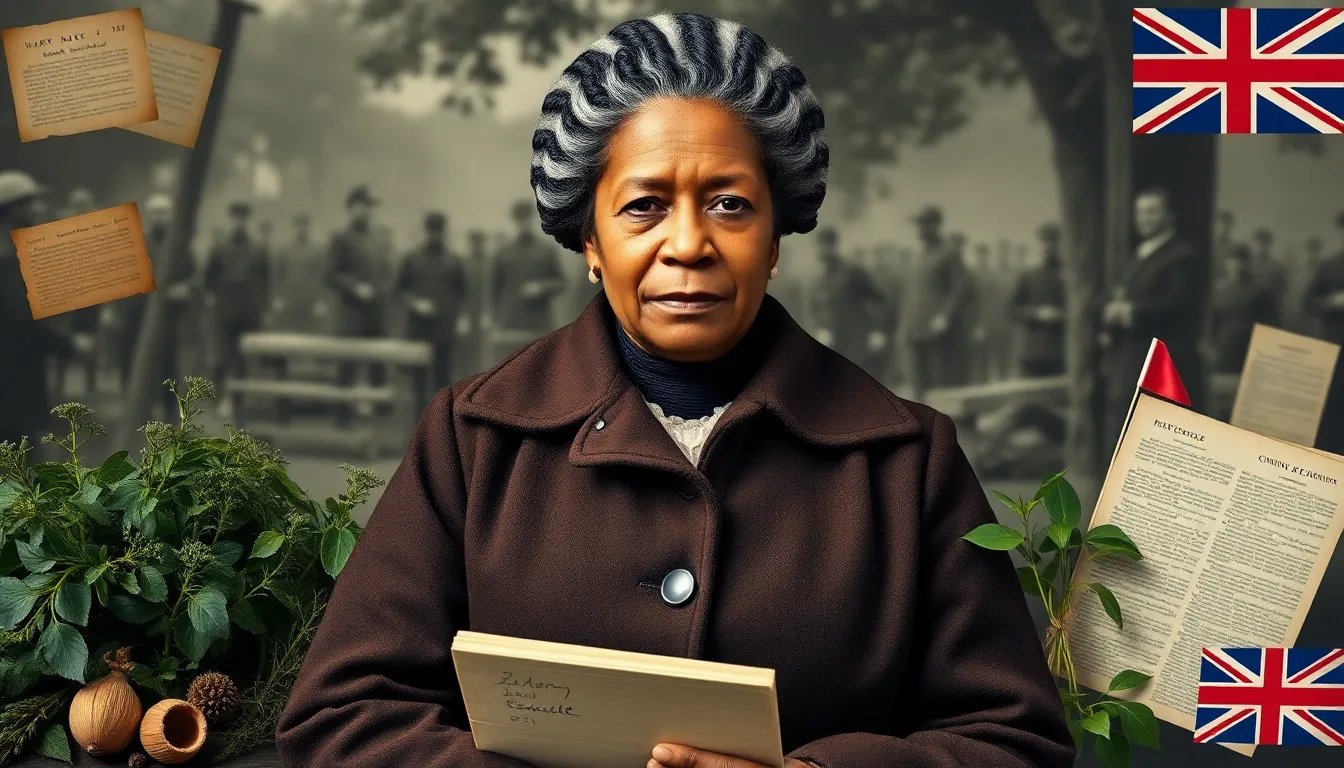
Seacole’s most notable public service occurred during the Crimean War (1853–1856). In 1855, motivated by newspaper reports of the suffering of British troops, she set sail for the Crimea with a camel‑loaded caravan of “M’Gusty’s Coolies” and a stock of supplies, including tropical medicines, brandy, and a portable kitchen. She intended to establish a “British Hotel” to provide comfort and medical care to soldiers near the front lines.
Upon arrival at Balaclava, Seacole found that the Royal Navy’s supply chain could not accommodate her caravan. Undeterred, she negotiated with the British authorities and obtained permission to set up a modest “British Hotel” near the battlefield, adjacent to the more formal military hospitals run by Florence Nightingale and the War Office. Seacole’s establishment functioned as a convalescent home, offering food, shelter, and basic medical treatment to soldiers of all ranks.
Her care was based on a combination of Western and traditional Caribbean practices: she applied poultices of mustard and camphor, used calomel and opium for fevers, and boiled broth with local herbs to strengthen patients. Contemporary soldiers’ letters and diaries frequently mention her kindness, the “home‑like” atmosphere of her hotel, and the practical efficacy of her treatments. While Nightingale’s hospital emphasized strict sanitation and regimented nursing, Seacole’s approach was more flexible, culturally inclusive, and responsive to the immediate needs of the troops.
Obstacles and Underrecognition
Despite her visible presence near the front, Seacole faced considerable barriers that limited contemporary recognition. As a Black woman from a colonial background, she occupied a marginal social position within the British imperial hierarchy. The medical establishment of the time was dominated by white, male physicians and nurses who often dismissed non‑European healing practices as “folk medicine.”
Florence Nightingale’s own writings make scant reference to Seacole, and the official reports submitted to the War Office omitted her contributions. Moreover, feminist and racial biases in Victorian Britain meant that the press largely ignored her, focusing instead on the “heroic” narrative of Nightingale and the male physicians.
Seacole’s own memoir, published in 1857, was marketed as a sensational adventure story, a genre popular with the reading public but which also led some critics to dismiss her as a self‑promoting entertainer rather than a serious health practitioner. The memoir’s mixture of factual account and anecdotal embellishment created a historiographical tension: scholars must parse the text to separate verifiable events from narrative flourish.
After the war, Seacole returned to London and continued to operate a small hotel and health‑care practice, but her finances were precarious. She eventually applied for a pension from the War Office; the request was denied, reflecting institutional reluctance to acknowledge the services of a non‑British, non‑white caregiver.
Recognition, Evidence, and Debate
Mary Seacole’s posthumous reputation began to shift in the late 20th century, coinciding with broader scholarly interest in the experiences of women, people of colour, and colonial subjects in British history. The first substantial academic biography, Hazel V. Carby’s 1998 article and later Angela Davis’s 2003 essay, highlighted Seacole’s role as a counter‑narrative to Nightingale’s dominance.
In 2004, a statue of Seacole was erected in London’s St. Thomas’ Square, the first monument to a woman of African descent in the United Kingdom. This public commemoration sparked both praise and controversy, with critics questioning the adequacy of the historical record to support such honor. Nonetheless, the statue reinforced a broader movement to recover and celebrate marginalized figures.
Primary sources that underpin Seacole’s biography include her own memoir, the ship’s log of the Trident (her transport vessel), British Army medical reports, and a collection of soldiers’ letters housed in the Imperial War Museum. Oral histories from Jamaican descendants of Seacole’s family also contribute, though they must be treated as supplementary rather than definitive evidence.
Scholars continue to debate the extent of Seacole’s medical expertise versus her entrepreneurial hospitality. Some argue that her success derived more from business acumen and cultural empathy than from professional nursing training, a claim supported by the lack of formal certification in her records. Others contend that the hybrid nature of her practice exemplifies a form of “indigenous nursing” that challenges Eurocentric definitions of the profession.
Legacy and Why the Story Matters
Mary Seacole’s legacy operates on multiple levels. At the individual level, she exemplifies agency within a colonial context, leveraging traditional knowledge to serve a diverse patient population under wartime conditions. Her story expands the historical understanding of what constituted nursing and health care in the mid‑19th century, foregrounding the contributions of people of colour.
Institutionally, Seacole’s post‑war struggles for recognition illustrate the systemic exclusion of Black women from official military and medical honors. The later re‑evaluation of her life has informed contemporary debates about curriculum inclusion, prompting schools in the United Kingdom and Jamaica to incorporate her narrative into health‑science and history lessons.
In the public sphere, Seacole has become an emblem of resilience for diaspora communities, especially within the Caribbean and Black British populations. Her image appears on commemorative stamps, in museum exhibitions, and as a subject of artistic works that aim to rectify the historical marginalisation of Black women’s contributions.
Finally, the scholarly process of reconstructing Seacole’s life underscores the importance of interdisciplinary research—combining archival documents, oral tradition, medical history, and post‑colonial critique—to retrieve hidden figures from the past. Her story reminds historians and the public alike that history is not a static record but a contested field where many voices remain unheard.