Early Life and Historical Context
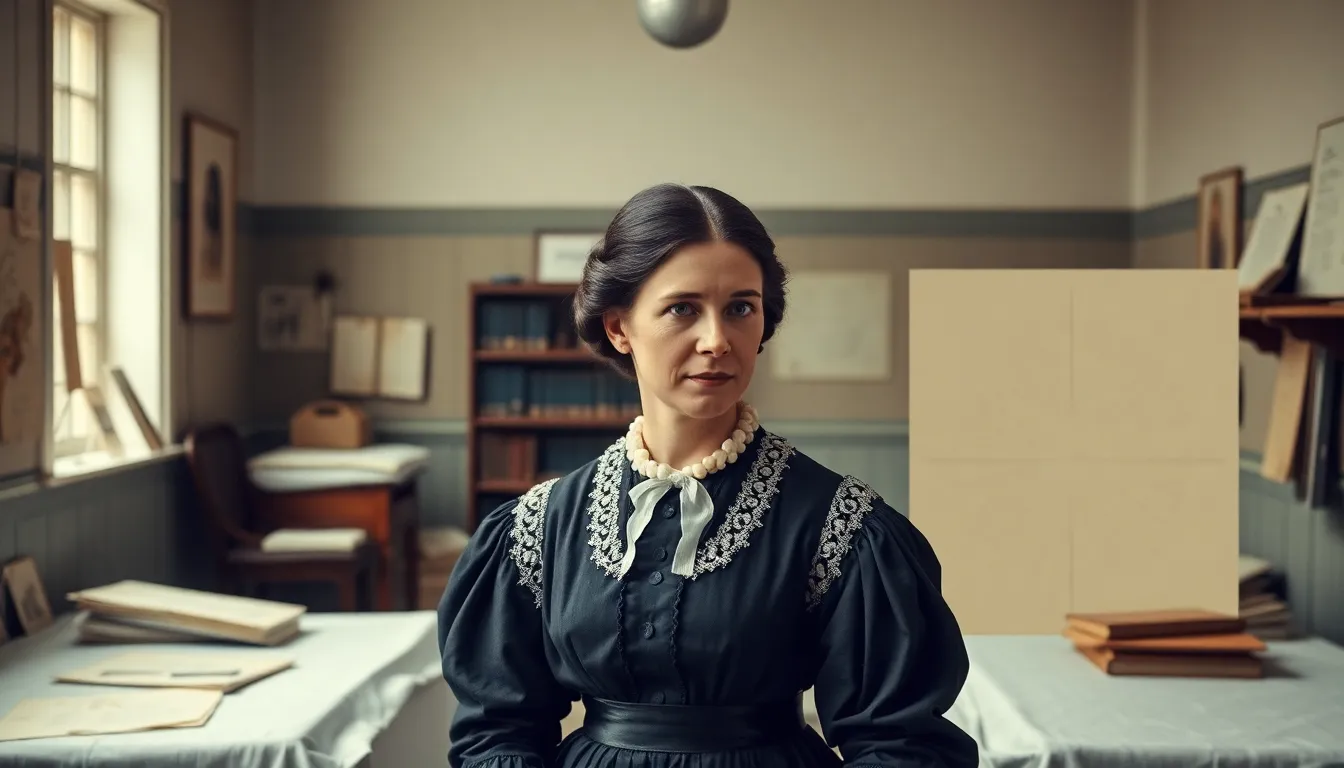
Florence Nightingale was born on 12 May 1820 in Florence, Italy, to William Edward Nightingale, an English landowner, and Frances Smith, a member of the wealthy British gentry. The family returned to England soon after her birth, settling at Embley Park in Hampshire. As a daughter of the upper‑middle class, Florence enjoyed a level of education uncommon for women of her era: private tutors taught her Latin, Greek, mathematics, and natural philosophy. Her upbringing coincided with the early Victorian period, a time when industrialization, urban crowding, and recurring epidemics were reshaping British society. Contemporary sources—family letters, school records, and the Nightingale family diaries—reveal both her intellectual curiosity and the social expectations that limited women to domestic roles. Historians note that while the Nightingale archives are extensive, many personal reflections were destroyed after her death, leaving gaps in the record of her formative years.
In the 1830s and 1840s, Britain experienced a heightened public awareness of sanitary conditions. Edwin Chadwick’s 1842 report on the sanitary condition of the labouring population highlighted the link between environment and health, influencing reformist circles in which the Nightingales moved. Florence’s exposure to these debates, combined with her Catholic upbringing and devotion to Christian charity, seeded a conviction that health care could be a moral enterprise. Nevertheless, the professional avenues for women to act on these convictions were scarce; nursing was considered menial, and the field lacked formal training or status. This historical context shaped Nightingale’s later determination to elevate nursing from a charitable occupation to a disciplined, evidence‑based profession.
Work, Service, or Contribution
In 1850, at age 30, Florence Nightingale answered a call to improve the care of wounded soldiers in the British Army. After a brief stint at the Institute of St Thomas’ Hospital in London, she joined a small group of volunteers sent to the Ottoman Empire to support British troops during the Crimean War (1853‑1856). In November 1854 she arrived at the military hospital in Scutari (present‑day Üsküdar, Istanbul), where she found a chaotic environment: overcrowded wards, inadequate ventilation, and rampant infection. Through systematic observation, she introduced hygiene practices—regular bed‑making, clean water, proper ventilation, and the segregation of contagious patients—dramatically lowering mortality rates from an estimated 42 % to under 2 % in her ward.
Nightingale’s nightly rounds, during which she carried a lamp and personally tended to her patients, earned her the nickname “the Lady with the Lamp.” While the image is now iconic, contemporary reports from fellow officers and Turkish nurses emphasize her role as a manager: she organized supply chains, trained local attendants, and instituted record‑keeping practices that allowed her to analyse outcomes. Her statistical work culminated in the famous “Rose Diagram” (also called the “Nightingale Chart”), a polar area graph that visualised seasonal mortality patterns and persuaded the British Parliament to fund sanitary reforms for the army.
On returning to England in 1856, Nightingale published the seminal “Notes on Nursing: What It Is and What It Is Not” (1859), which outlined practical standards for patient care, the importance of ventilation, and the moral responsibilities of caregivers. The book became a staple in hospitals and private homes alike. In 1860 she founded the Nightingale Training School for Nurses at St Thomas’ Hospital, creating a structured curriculum that combined clinical practice, hygiene, and rigorous record‑keeping. Her school produced the first generation of professionally trained nurses, establishing a model that spread throughout the British Empire and beyond.
Beyond nursing, Nightingale contributed to public‑health statistics. She compiled “The Crimean War Statistics” (1858) and later, as a member of the Royal Commission on the Health of the Army (1863‑1865), she used statistical evidence to recommend comprehensive sanitary reforms. Her work laid the groundwork for modern epidemiology and health‑policy analysis, although her contributions to statistics were often subsumed under her nursing identity in later historiography.
Obstacles and Underrecognition
Nightingale faced formidable gender barriers throughout her career. In a patriarchal Victorian society, women were rarely consulted on matters of public policy or medical practice. Her attempts to influence the British War Office met with resistance; senior military officials often dismissed her recommendations as “sentimental” rather than scientific. Moreover, her statistical innovations were frequently credited to male colleagues—particularly Sir John Snow and Sir William Farr—who occupied more visible positions within the Royal Society and the General Board of Health. Contemporary correspondence indicates that Nightingale’s own publications were sometimes edited or down‑played by male editors who prioritized clinical over statistical content.
Archival evidence also shows that Nightingale’s collaborative network—Turkish nurses, Indian assistant matrons, and volunteer caregivers—remains largely invisible in mainstream narratives. Historians such as Mark Bostridge (2015) argue that the “Lady with the Lamp” myth consolidates credit onto a single heroic figure, obscuring the collective labor that enabled the reforms. This mythologisation was reinforced by Victorian press sensationalism and later by World War I propaganda, which invoked Nightingale as a national symbol while overlooking the contributions of her colleagues.
The underrecognition extended to her later life. After the Crimean War, Nightingale withdrew from public view, focusing on administrative work and statistical research. By the 1880s, public memory of her wartime heroics persisted, yet her analytical contributions to sanitation statistics were rarely taught in medical curricula. It was not until the mid‑20th century, with the rise of feminist historiography and the field of the history of statistics, that scholars began to re‑examine her technical work and bring it back into scholarly discourse.
Recognition, Evidence, and Debate
During her lifetime, Nightingale received several formal honours. In 1856 the British government awarded her the Royal Red Cross (though the order was formally established later, a distinction was made informally) and the French Legion of Honour (Chevalier) in 1857. She was elected a Fellow of the Royal Statistical Society in 1858, becoming one of its first female members. In 1883 she was appointed to the Order of Merit (the first woman to receive the honour), though she declined a peerage offered by Prime Minister William Gladstone in 1907, preferring to remain a private citizen.
Her legacy has been commemorated through statues, plaques, and the naming of hospitals and nursing schools worldwide. The Nightingale Statue in London’s Waterloo Place (1915) and the Nightingale Pledge (originally formulated in 1893) exemplify institutional remembrance. However, scholarly debate persists regarding the balance between Nightingale’s individual agency and the collective contexts that shaped her achievements. Some historians argue that her reputation has been inflated by Victorian moralism, while others contend that the statistical evidence she produced demonstrates a uniquely rigorous methodological approach unprecedented among her contemporaries.
Primary source material—her extensive correspondence, the “Palgrave Papers,” and the original statistical tables—are housed at the British Library and the National Archives. Nevertheless, gaps exist: many of her personal notebooks were destroyed per her wishes, and oral histories from Turkish and Indian staff remain scarce. Contemporary scholars rely on triangulating British military records, newspaper accounts, and later memoirs to reconstruct a fuller picture of her collaborative networks.
Legacy and Why the Story Matters
Florence Nightingale’s influence endures in multiple domains. In nursing education, her emphasis on hygiene, patient observation, and professional standards remains foundational; modern nursing curricula reference “Notes on Nursing” as a historical cornerstone. In public health, her advocacy for sanitation reforms helped inaugurate the sanitary movement that led to the Public Health Act of 1875, a legislation that reduced urban mortality across Britain.
Statistically, Nightingale is recognised as a pioneer of infographics; the Rose Diagram remains a case study in data visualisation courses. Her insistence on evidence‑based policy prefigured contemporary health‑policy frameworks that rely on quantitative analysis. Moreover, her life illustrates the gendered dynamics of professional recognition: while celebrated as a national heroine, the systematic under‑crediting of her statistical work highlights enduring biases against women in science and medicine.
Recovering Nightingale’s full story—acknowledging both her celebrated achievements and the collaborative, often invisible, labor that enabled them—offers a corrective lens for historiography. It underscores how societal structures can elevate singular narratives while marginalising the collective contributions of marginalized groups. By foregrounding the documented obstacles she faced and the later re‑evaluation of her work, this biography demonstrates why Nightingale remains a pivotal figure for scholars of gender, medicine, and the history of statistics.