Early Life and Historical Context
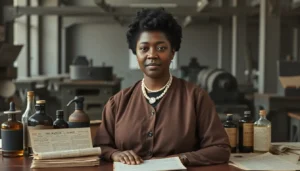
Henrietta Lacks was born Loretta Pleasant on August 1, 1920, in Roanoke, Virginia, a small town in the segregated American South. She was the second of five children born to Eliza and Day Lacks, both tobacco farm laborers of mixed African‑American and Native‑American ancestry. Census records, family oral histories, and local church documents indicate that the family lived in a modest, racially isolated community where educational and economic opportunities for Black citizens were severely limited. Henrietta attended the then‑segregated home‑school operated by the local African‑American church, completing only the eighth grade before she began working to support her family.
The Great Migration, the movement of millions of African‑Americans from the rural South to northern industrial cities, shaped the backdrop of Henrietta’s adolescence. In 1941, at age 21, she married a fellow tobacco farm worker, David “Day” Lacks, and the couple soon relocated to Turners Station, a predominantly Black community near Baltimore, Maryland. The migration provided better employment prospects but also placed the Lacks family within a health care system that routinely denied full medical agency to Black patients. Contemporary public‑health records reveal high rates of cervical cancer among African‑American women in the mid‑20th century, a disparity linked to limited screening, poverty, and lack of access to quality care.
Work, Service, or Contribution
In Turners Station, Henrietta worked as a domestic laborer, a common occupation for Black women in the era, while raising five children. In early 1951, she experienced abnormal vaginal bleeding and, after a painful delay in receiving care, was admitted to Johns Hopkins Hospital in Baltimore—the nation’s first hospital to admit Black patients on a regular basis, though under segregated conditions. On February 8, 1951, physicians diagnosed her with an aggressive, inoperable form of cervical adenocarcinoma. During her treatment, physicians at the hospital’s tissue‑culture laboratory, led by Dr. George Gey, harvested a sample of her tumor without her knowledge or consent, a practice that was not yet regulated and was common in the era’s research culture.
Within weeks, the cells from Henrietta’s tumor proved to be uniquely robust: they doubled every 20‑30 hours, survived beyond the patient’s death, and could be cultured indefinitely. Dr. Gey named the line “HeLa,” a portmanteau of Henrietta Lacks’ first name and surname. HeLa cells became the first immortal human cell line, providing an unprecedented tool for virology, genetics, pharmacology, and vaccine development. By the late 1950s, HeLa cells were used to test the polio vaccine, study chromosome behavior, and later underpin the development of treatments for leukemia, herpes, and human papillomavirus. The cell line’s proliferation across laboratories worldwide made it a cornerstone of modern biomedicine, yet Henrietta’s name remained absent from scientific publications and patents for decades.
Obstacles and Underrecognition
Henrietta Lacks’ anonymity was rooted in intersecting structures of racism, sexism, and class bias. In the 1950s, African‑American patients were routinely denied full participation in medical decision‑making, and the concept of informed consent had not yet entered U.S. law. The lack of legal protections meant that tissue specimens could be taken and commercialized without patient knowledge. Moreover, the scientific community’s norms privileged white male physicians and researchers, making it unlikely that a Black woman’s contribution would be acknowledged publicly.
Primary source gaps further obscured Henrietta’s story. Hospital records concerning her treatment were destroyed in a 1975 fire at the Johns Hopkins archives, eliminating direct medical documentation. The Lacks family, kept uninformed of the existence and use of HeLa cells, learned of their mother’s posthumous fame only after a 1970s article referenced “the immortal cells of a woman named Henrietta Lacks.” Oral histories collected later by journalists and scholars serve as vital, though second‑hand, evidence of the family’s experience and the broader community’s perception of the case.
Economic barriers also limited Henrietta’s ability to contest the use of her cells. Her family lived on a modest income; after her death in October 1951, the Lacks family received no compensation for the commercial exploitation of HeLa cells, which would later generate billions of dollars in research funding and pharmaceutical patents. The exclusion of the Lacks family from any financial or intellectual benefit reflects systemic inequities that have persisted in biomedical research.
Recognition, Evidence, and Debate
Public awareness of Henrietta Lacks emerged gradually. In 1975, a newspaper article in the Baltimore Sun mentioned HeLa cells in the context of a scientific conference but did not name the donor. The turning point came with the 1995 book The Immortal Life of Henrietta Lacks by Rebecca Skloot, which combined scientific exposition with extensive interviews of Lacks family members, archival research, and ethical analysis. The book sold millions of copies, was adapted into a 2017 HBO film, and catalyzed scholarly debate about consent, bioethics, and the rights of tissue donors.
Following the book’s publication, the National Institutes of Health (NIH) established the “HeLa Genome Data Use Agreement” in 2013, requiring researchers to obtain permission from the Lacks family before accessing the HeLa genome sequence. In 2021, the Lacks family entered a formal agreement with the NIH that granted them a say in future research uses, marking a rare instance of a donor’s descendants receiving a measure of control over biomedical data derived from a patient’s tissue.
Academic scholarship continues to reevaluate the HeLa story. Historians of science emphasize that while Henrietta’s cells were indispensable, the broader network of laboratory technicians, cell‑culture assistants, and funding agencies also contributed to HeLa’s success. Ethical scholars note that the HeLa case prefigured modern debates over genetic privacy, commercial genomics, and “biopiracy.” Critics argue that the narrative sometimes centers Henrietta as a “martyr” rather than foregrounding the systemic exploitation of Black bodies in medical research—a tension reflected in ongoing discussions among bioethicists, historians, and activists.
Legacy and Why the Story Matters
HeLa cells remain a workhorse of biomedical research, cited in tens of thousands of peer‑reviewed articles and contributing to breakthroughs in cancer treatment, gene editing (CRISPR), and vaccine development, including the rapid production of COVID‑19 vaccines. The cells’ scientific legacy underscores how a single patient’s biology can shape global health.
Beyond the laboratory, Henrietta Lacks’ story has become a catalyst for policy reform. The case prompted revisions to the U.S. Common Rule (the federal policy for human subjects research) to strengthen informed‑consent requirements, particularly regarding the use of discarded tissue. The NIH’s HeLa policies exemplify a growing acknowledgment that donors and their families deserve transparency and, where appropriate, shared benefits.
Educational initiatives now commemorate Henrietta Lacks in curricula ranging from high school biology to graduate bioethics. Several institutions—including the National Museum of African American History and Culture, the Science History Institute, and Johns Hopkins—feature exhibits that contextualize her life within broader histories of racial inequity in medicine. In 2022, a public health center in Baltimore was named the Henrietta Lacks Community Health Center, linking her legacy to ongoing efforts to improve health equity in the African‑American community that raised her.
In sum, Henrietta Lacks personifies the complex interplay of scientific innovation, racial injustice, and the evolving ethics of medical research. Her underrecognized contribution, once hidden within laboratory notebooks, now informs a more conscientious approach to patient rights, community engagement, and the collective memory of those whose bodies have been instrumental in advancing human health.