Explore Biographies of Musicians & Artists and uncover the songs, struggles, fame, and creative legacies behind unforgettable lives.
Explore Biographies of Musicians & Artists
Music and visual art are among humanity's oldest and most powerful forms of expression. The biographies of musicians and artists reveal how individual genius, cultural inheritance, and personal struggle combine to produce works that outlast their creators by centuries.
The Spectrum of Musical Achievement
From classical composers like Johann Sebastian Bach and Wolfgang Amadeus Mozart, whose works remain staples of concert halls worldwide, to jazz innovators like Miles Davis and John Coltrane who rewrote the rules of improvisation — the history of music is a history of restless creativity. Rock legends like Jimi Hendrix and Freddie Mercury transformed the electric guitar and the concert stage into instruments of liberation, while contemporary artists like Beyoncé and Kendrick Lamar have turned albums into cultural events that demand attention far beyond their genre.
Visual Artists Who Changed How We See
The great painters, sculptors, and visual artists did not merely depict the world — they changed how we perceive it. Leonardo da Vinci's insatiable curiosity bridged art and science five centuries before the term "interdisciplinary" existed. Pablo Picasso shattered pictorial convention with Cubism. Frida Kahlo turned personal pain into iconic imagery that continues to inspire global audiences. Understanding these lives explains not just the art but the revolutionary spirit behind it.
The Business and Struggle Behind the Art
For every chart-topping album or museum-worthy canvas, there are years of obscurity, rejection, financial hardship, and self-doubt. Many of history's greatest artists died penniless while their work appreciated to incalculable value. Others navigated exploitative contracts, record label disputes, and the relentless pressure of commercial expectations. Their biographies are honest accounts of what sustained artistic creation actually costs.
Why These Biographies Matter
Musicians and artists leave behind more than performances and paintings — they leave ways of feeling. Their life stories help us understand how creativity is nurtured, how it survives adversity, and how it speaks across cultural and generational divides. Each biography here is a window into a singular creative mind and the world that shaped it.
Browse the collection below to discover the stories behind the music and art that define our cultural landscape.
Shawn Carter, known as Jay‑Z, rose from the Marcy projects in Brooklyn to become one of the most influential rappers and business magnates of the Digital Age, shaping hip‑hop culture and global entrepreneurship.
Jimi Hendrix (1942–1970) was an American guitarist, singer and songwriter whose innovative style redefined electric guitar music. His brief but groundbreaking career left an enduring influence on rock, blues, and popular culture.
Michael Jackson (1958–2009) rose from a family act in Gary, Indiana, to become the most widely recognized entertainer of the 20th century. His innovations in music, dance, and visual media reshaped popular culture worldwide.
Paul McCartney, a central figure of the Beatles and founder of Wings, transformed popular music through songwriting, performance, and innovation from the early 1960s onward.
Robyn Rihanna Fenty rose from a modest upbringing in Saint Michael, Barbados, to become a global music icon and billionaire businesswoman. Her career spans chart‑topping albums, high‑profile collaborations, and influential ventures in fashion and beauty.
Taylor Swift rose from a small-town songwriter to an international pop icon, reshaping the music industry through prolific songwriting, genre experimentation, and strategic collaborations.
Whitney Houston (1963–2012) was an American singer and actress whose powerful vocal talent reshaped popular music, earning her global acclaim and a lasting cultural legacy.
The Lovin’ Spoonful emerged from New York’s Greenwich Village in the mid‑1960s and helped define American folk‑rock. Their catalog of chart‑topping hits, innovative arrangements, and enduring influence make them a cornerstone of 20th‑century popular music.
The Mamas and the Papas were a seminal American folk‑rock vocal group whose tight harmonies and sun‑soaked songs defined the mid‑1960s counter‑culture. This biography explores their origins, key recordings, personal lives, and lasting cultural influence.
The Monkees were an American pop-rock television and recording act formed in 1965. Their career blended scripted sitcom antics with chart‑topping hits, pioneering a new model of manufactured yet musically credible group.
The Osmonds are an American family musical group whose career spans five decades. Originating from Utah, they achieved international fame in the 1970s with pop, rock, and later country recordings, while also becoming prominent television personalities.
The Partridge Family was a fictional American pop‑rock family band that aired from 1970 to 1974. Though the characters never existed, the television series launched real‑world music hits, shaped 1970s pop culture, and created lasting legacies for its cast and production team.
The Pipettes are a British indie‑pop group formed in Brighton in 2003, known for their retro‑inspired sound, synchronized choreography, and the juxtaposition of sugary melodies with punk‑edge lyrics. This biography outlines their origins, influences, major releases, line‑up changes, commercial performance, and cultural legacy.
The Proclaimers are a Scottish folk‑rock duo whose anthemic songs and distinctive Scottish accents have made them international icons since the late 1980s.
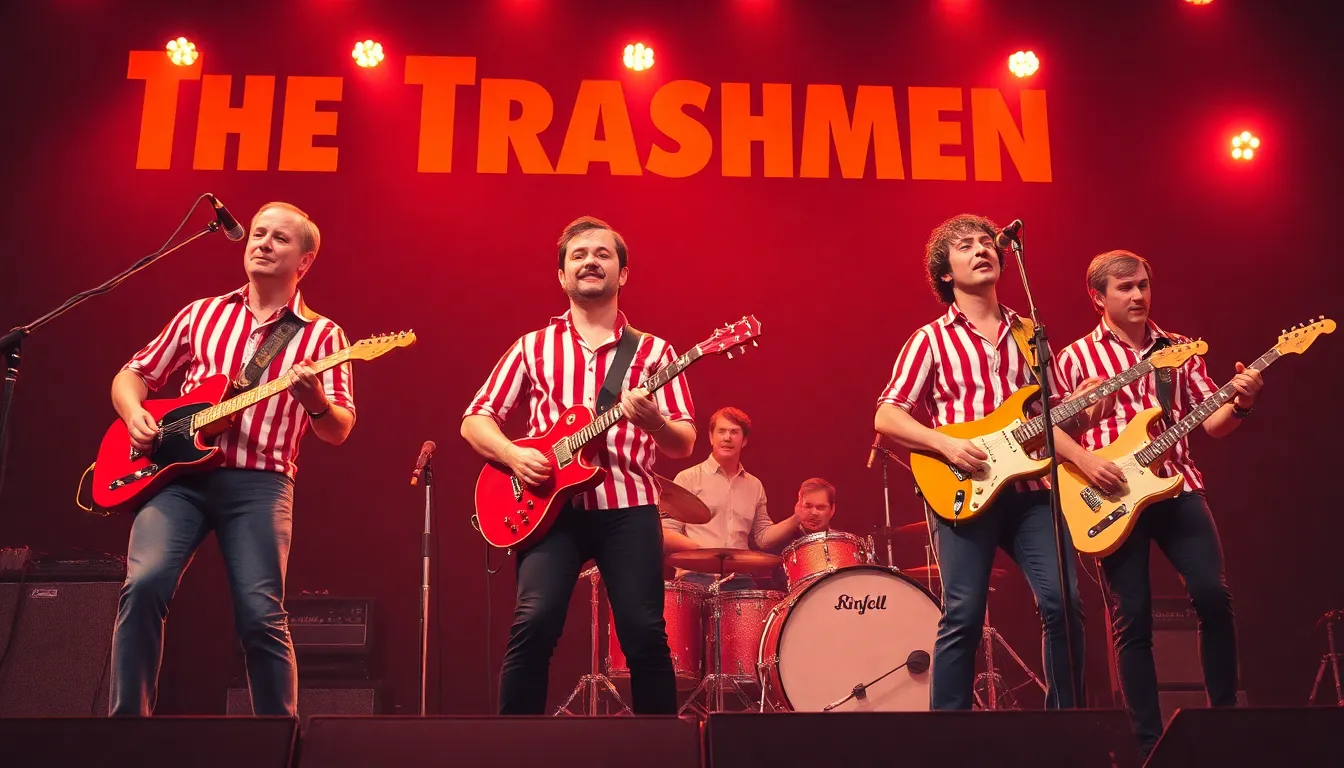
The Trash Men are an American surf‑rock trio best known for their 1963 hit “Surfin’ Bird.” Formed in Minneapolis, they helped popularize surf music inland and continue to influence garage‑rock bands worldwide.
The Turtles were an American pop rock band formed in 1965, best known for their 1967 hit “Happy Together”. This biography details their early years, musical influences, major releases, collaborations, and lasting cultural impact.
The Youngbloods were an American folk‑rock band formed in 1965 that achieved lasting fame with their 1969 hit “Get Together.” Their eclectic sound blended folk, rock, psychedelic, and gospel influences, earning them a place in the late‑60s counter‑cultural soundtrack.
Three Dog Night is an American rock band formed in 1967, known for a string of Top 10 hits in the late 1960s and early 1970s. Their eclectic vocal harmonies and blend of pop, rock, and soul have left a lasting imprint on popular music.
Tommy Roe is an American pop singer‑songwriter best known for the 1960s hits “Sheila” and “Dizzy.” This comprehensive biography covers his early life, musical influences, chart‑topping successes, collaborations, and lasting impact on pop music.
Tony Andreason is a contemporary musician whose public record is limited. This biography compiles the verifiable information about his background, artistic output, and the scarce details surrounding his personal life.
Tony Orlando is an American pop singer best known for his string of late‑1960s and 1970s hits, including “Knock Three Times” and “Tie a Yellow Ribbon Round the Ole Oak Tree.” The biography explores his early life, musical influences, career milestones, collaborations, and cultural legacy.
Trevor Horn is an English record producer, songwriter and musician whose work reshaped pop music from the late 1970s onward. Known for his pioneering production techniques and collaborations with acts such as The Buggles, Yes, and Seal, Horn has earned multiple awards and a reputation as one of the most influential producers of the modern era.
Vic Dana is an American pop singer, dancer and actor whose early‑1960s recordings earned him several Billboard chart hits. He later pursued a career in stage and television, while maintaining a modest public profile.
Willie Nelson, a seminal figure in American music, helped define the outlaw country movement with his distinctive voice, songwriting, and unorthodox approach to the Nashville system. His career spanning six decades includes iconic albums, groundbreaking collaborations, and a lasting cultural legacy.