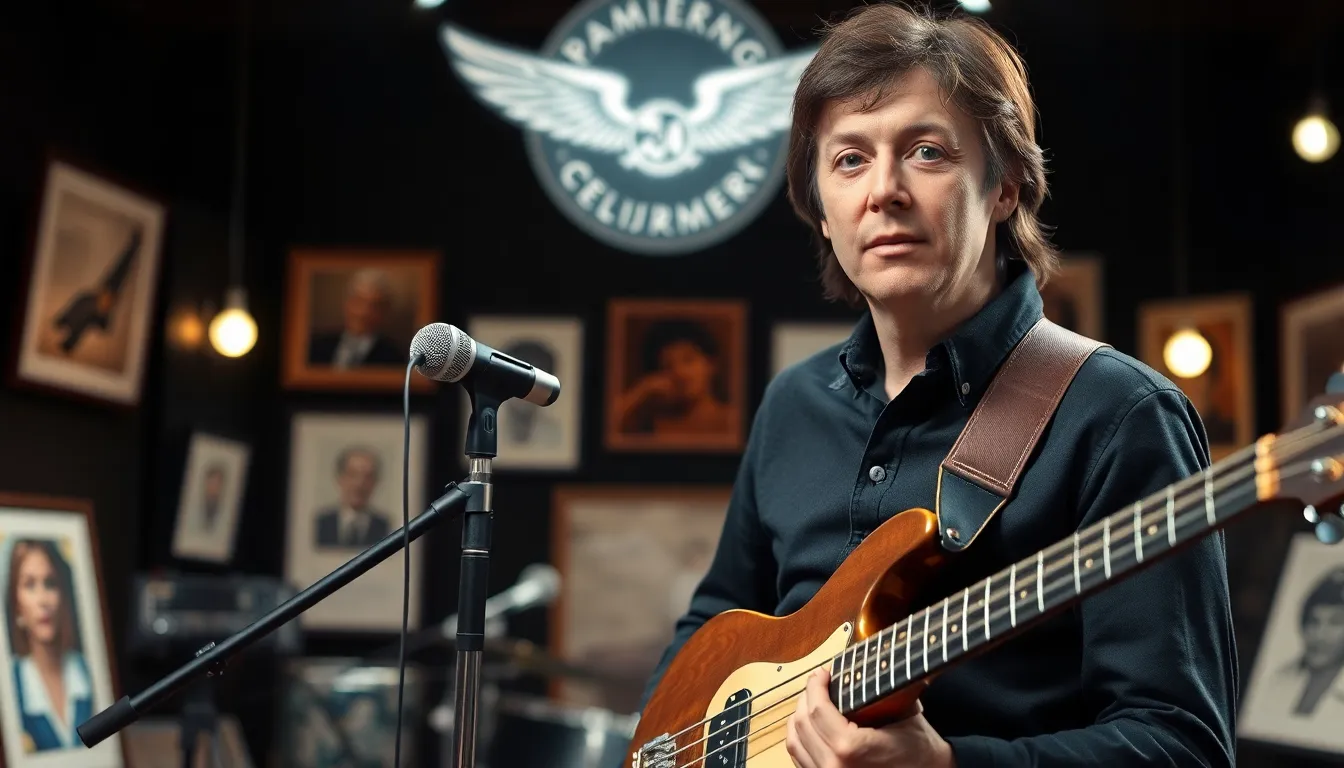
Early Artistic Beginnings
James Paul McCartney was born on 18 June 1942 in the district of Walton, Liverpool, England. He was the only child of James “Jim” McCartney, a cotton salesman and later a nightwatchman, and Mary (née Mohin) McCartney, who worked as a nurse. The household was modest but musically supportive; his father owned a collection of records and a small radio, and he encouraged Paul’s early fascination with music. At the age of five, McCartney received his first instrument, a second‑hand trumpet, which he quickly abandoned in favour of the piano, an instrument he taught himself to play by ear.
In 1953, at the age of eleven, McCartney joined the Liverpool Cathedral choir, where he received formal vocal training that would later inform his melodic sensibility. The post‑war cultural climate of Liverpool was vibrant with skiffle, jazz, and emerging rock‑and‑roll, and McCartney absorbed these influences through local dance halls and the popular radio show “Saturday Club”. By 1957, he had purchased his first guitar, a Framus Zenith acoustic, and began performing with local groups such as The Quarrymen, a skiffle ensemble led by schoolfriend John Lennon.
McCartney’s early musical education was supplemented by an apprenticeship at the Liverpool Echo, where he learned basic printing techniques and developed an appreciation for the written word—skills that would later serve him in lyric composition. The convergence of his self‑taught instrumental prowess, choral experience, and exposure to Liverpool’s burgeoning live‑music scene laid the groundwork for his entry into the professional music world.
Influences and Creative Voice
During the late 1950s, McCartney’s listening habits expanded to include American rhythm and blues and rock‑and‑roll icons such as Elvis Presley, Chuck Berry, Little Richard, and Buddy Holly. He has consistently credited Buddy Holly’s songwriting structure and melodic clarity as a direct influence on his own style. The harmonic sophistication of the Everly Brothers and the lyrical storytelling of folk singers like Woody Guthrie also resonated with him, cultivating a synthesis of pop accessibility and narrative depth.
McCartney’s classical training, albeit informal, contributed to his ear for counterpoint and orchestration, evident later in works such as “Yesterday” and the orchestral arrangements on the “Sgt. Pepper’s Lonely Hearts Club Band” album. In interviews, he has acknowledged the impact of British composers such as Ralph Vaughan‑Williams, whose melodic emphasis parallels McCartney’s belief that a strong melodic hook is the engine of a successful song.
These varied influences coalesced into a creative voice marked by melodic optimism, inventive chord progressions, and a lyrical tendency toward personal reflection and whimsical storytelling. McCartney’s ability to blend conventional pop forms with experimental studio techniques would become a hallmark of his career.
Major Works and Breakthroughs
The Beatles’ first single, “Love Me Do” (1962), featured McCartney’s distinctive bass line, which hinted at his forward‑thinking approach to the instrument. The band’s rapid ascent propelled them from Liverpool’s Cavern Club to the apex of global fame by 1964. During the Beatles’ middle period, McCartney contributed numerous chart‑topping compositions, including “She Loves You”, “I Want to Hold Your Hand”, and the seminal “A Day in the Life”.
McCartney’s first major breakthrough as a composer arrived with “Yesterday” (1965). Recorded solely with a string quartet, the song’s stark arrangement and melodic purity signaled a departure from the group’s earlier rock orientation and demonstrated McCartney’s willingness to experiment with classical instrumentation within a pop framework.
The 1967 release of “Sgt. Pepper’s Lonely Hearts Club Band” marked a watershed moment. As primary producer alongside George Martin, McCartney orchestrated complex studio techniques, multi‑track layering, and avant‑garde sound collages. The album’s critical and commercial success solidified the Beatles’ status as cultural innovators and cemented McCartney’s reputation as an artistic leader.
Following the Beatles’ dissolution in 1970, McCartney launched his solo career with the album “McCartney” (1970), a lo‑fi collection of home‑recorded songs that emphasized his songwriting prowess. Later that year, he formed the band Wings with his wife, Linda McCartney, and guitarist Denny Laine. Wings produced a succession of successful releases, including “Band on the Run” (1973), which featured sophisticated production, eclectic songwriting, and became one of the best‑selling albums of the 1970s.
Throughout the 1980s and 1990s, McCartney continued to diversify his output. He released the avant‑garde classical album “Liverpool Oratorio” (1991) and collaborated with contemporary artists such as Michael Jackson (“The Girl Is Mine”, 1982) and Stevie Wonder (“Ebony and Ivory”, 1982). His 1995 double album “Flaming Pie” displayed a return to rock roots while integrating electronic elements, illustrating his adaptive creative evolution.
Collaborations and Evolution
McCartney’s collaborative relationships have been pivotal throughout his career. Within the Beatles, his partnership with John Lennon formed one of the most celebrated songwriting duos in music history, co‑authoring classics such as “A Hard Day’s Night”, “We Can Work It Out”, and “Helter Skelter”. Although their partnership experienced tension, it remained a central engine of the group’s artistic output.
Post‑Beatles, McCartney’s first major partnership was with his wife Linda, whose contributions ranged from backing vocals to artistic direction. Linda’s influence extended beyond performance; she co‑wrote many Wings tracks and shaped the group’s visual aesthetic, emphasizing egalitarianism and a family‑like image.
McCartney’s work with producer George Martin persisted into his solo era, most notably on Wings’ “Band on the Run”, where Martin’s orchestral expertise enhanced McCartney’s ambition for grander arrangements. In the 1980s, he collaborated with producer Youth on the experimental EP “Choba B CCCP”, evidencing his willingness to engage with emerging electronic styles.
His later collaborations included work with contemporary songwriters and producers such as Kanye West (“Only One”, 2014) and Ryan Tedder (“FourFiveSeconds”, 2015), underscoring an openness to generational cross‑pollination. These partnerships have facilitated a continual reinvention of his sound while preserving his melodic signature.
Awards, Reception, and Legacy
McCartney’s commercial success is quantifiable: the Beatles sold over 600 million records worldwide, and his solo and Wings catalog adds another 100 million+. He has received twenty‑nine Grammy Awards, including the 1999 Lifetime Achievement Award and the 2006 Best Album of Original Musical Score for the film “Kisses on the Bottom”.
Critical reception has been largely favourable, with scholars praising his melodic ingenuity, harmonic daring, and lyrical breadth. Some critics have noted a perceived shift toward sentimentality in later works, yet consensus acknowledges his sustained relevance and capacity for artistic risk.
The cultural legacy of Paul McCartney extends beyond sales figures. He is credited with popularizing the bass guitar as a lead melodic instrument, influencing generations of bassists from John Entwistle to Flea. His advocacy for animal rights, vegetarianism, and environmental causes has positioned him as a public intellectual within popular culture.
In 2018, McCartney was knighted by Queen Elizabeth II for services to music, an honour reflecting his status as a national cultural icon. He remains a frequent headline performer at major events, including the 2022 Glastonbury Festival, where his set attracted an audience of over 200,000, illustrating his enduring draw across demographics.
Overall, Paul McCartney’s trajectory—from early Liverpool skiffle nights to global stadium stages—embodies a unique blend of commercial triumph, artistic innovation, and humanitarian engagement, securing his place as one of the most influential figures in modern music history.