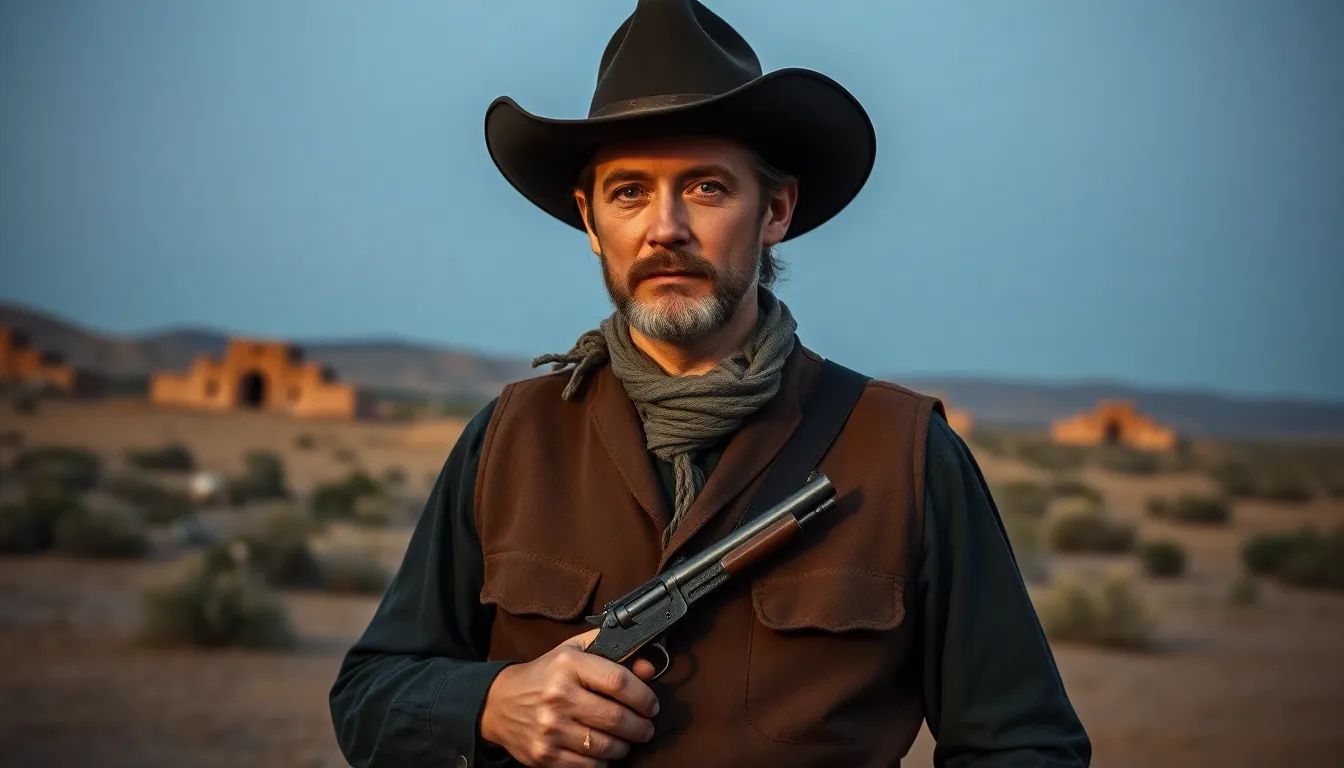
Historical Context
The latter half of the 19th century in the United States was marked by rapid territorial expansion, the aftermath of the Civil War, and fierce competition over land, water, and mining rights in the Southwest. The territories that would become New Mexico and Arizona were then part of a loosely governed frontier where law enforcement was sparse, and private militias, ranchers, and miners often settled disputes through violence. The famous Lincoln County War of 1878‑1881 epitomized this turbulence: a feud between rival merchant factions—most notably the Murphy‑Dolan Company and the English‑backed John Tunstall and Alexander McSween partnership—escalated into a broader conflict involving local sheriffs, hired gunmen, and the emerging colonial administration of the United States.
Within this milieu, the archetype of the outlaw emerged as both a product of and a reaction against the lawless environment. Outlaws such as Jesse James, John Wesley Hardin, and Billy the Kid were simultaneously feared, romanticized, and instrumentalized in contemporary newspapers and later folklore. Understanding Billy the Kid requires situating him amidst these dynamics of frontier lawlessness, the economic ambitions of Anglo‑American and Hispanic settlers, and the growing mythic imagination of the American West.
Early Life and Formation
Henry McCarty was born on November 23, 1859, in the hamlet of New York City’s impoverished “Sixth Ward.” Scholars agree that his mother, Catherine (or “Catherine H. McCarty”), was of Irish descent; his father’s identity remains uncertain, though some contemporary accounts suggest the name “Patrick McCarty.” In 1861, the family migrated westward, first to Indianapolis and then to the New Mexico Territory, where they settled in the small town of Haskett (present‑day Fort Sumner) in 1869. The move placed the young Henry in a multicultural environment of Spanish‑speaking Hispano families, newly arrived Anglo settlers, and a large number of Native American tribes.
Primary sources—census records, baptismal registers, and a handful of family letters—provide only fragmentary insight into his childhood. It is documented that Henry learned to read and write minimally, likely through informal schooling in the one‑room schoolhouses common to frontier settlements. By his early teens, he had earned a reputation as a skilled horseman and a capable shooter, abilities cultivated through daily ranch work and participation in local cattle drives. The death of his mother in 1874, when he was fourteen, precipitated a period of itinerancy; he is believed to have worked as a cattle herder, a ranch hand, and a petty thief, moving between the towns of Santa Fe, El Paso, and Dodge City.
These formative experiences—poverty, displacement, and exposure to frontier violence—laid the groundwork for his later outlaw career. Historians such as Robert M. Utley caution that much of the popular narrative about Billy’s childhood is derived from sensational newspaper accounts written after his death, which often embellished or fabricated details to serve a marketable legend.
Role in Major Events
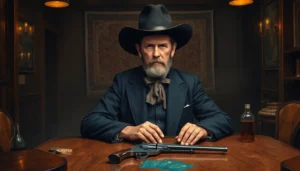
Entry into the Lincoln County War (1878). In early 1878, the 18‑year‑old McCarty arrived in Lincoln County, New Mexico, seeking work. He secured a position as a helper for John Tunstall, a British merchant who, with partner Alexander McSween, was attempting to break the monopoly of the Murphy‑Dolan faction. When Tunstall was murdered on February 18, 1878, by a posse recruited by the Murphy‑Dolan men, McCarty—now using the alias “Billy the Kid”—joined the Regulators, an informal militia organized by Tunstall’s supporters to seek vengeance.
During the ensuing conflict, Billy participated in several armed engagements, most notably the Gunfight at Blazer’s Mills (April 29, 1878) and the Battle of Lincoln (July 15‑19, 1878). Contemporary court records and the testimony of fellow Regulators document his role in the capture and execution of several Murphy‑Dolan operatives, as well as his participation in the notorious “Murder of Sheriff William J. Brady,” an event that intensified the law‑breaking reputation of the Regulators.
Escape from the New Mexico Territorial Prison (1881). After the war subsided, Billy was arrested in late 1879 for the murder of Sheriff Brady and other crimes. He was tried, convicted, and sentenced to death, but the sentence was commuted to life imprisonment. He was sent to the territorial prison in Santa Fe. On April 28, 1881, the prison’s warden, aided by a sympathetic guard named “Doc”—a moniker cited in several newspaper reports—allowed Billy a brief leave to visit his mother, who was reportedly ill. Billy seized the opportunity, fled the prison, and vanished. While some primary documents (prison logs) confirm the escape’s logistics, the exact manner of his evasion remains contested among scholars.
Later Outlaw Activities (1881‑1881). After his escape, Billy the Kid allegedly joined a loosely organized band of cattle rustlers and horse thieves operating along the Rio Grande. He is credited with committing an estimated 20–30 killings, according to the 1881 Territorial Gazette and corroborated by a 1882 affidavit of Deputy Marshal John McCart. Those killings include the April 12, 1881, killing of rancher Frank “Babe” Hoover and the August 20, 1881, killing of rancher Henry “Lonesome” Bolivar. The precise numbers are debated; some historians argue that later tallies were inflated to justify a harsher crackdown on frontier crime.
Final Confrontation and Death (July 14, 1881). Governor Lew Wallace, concerned about the growing lawlessness, authorized former lawman Pat Garrett to pursue Billy. After months of pursuit, Garrett located Billy at the home of 18‑year‑old Pete Wright in Fort Sumner. According to Garrett’s 1882 report and a contemporaneous newspaper article in the Santa Fe New Mexican, Garrett shot and killed Billy at close range on July 14, 1881. The exact circumstances—whether it was a self‑defense shooting, an ambush, or a negotiated surrender—remain a subject of ongoing scholarly debate, largely because the surviving primary sources are limited to Garrett’s own testimony and a handful of newspaper accounts.
Allies, Opponents, and Debate
Allies. Billy’s most notable allies were the Regulators, a loosely organized group that included prominent figures such as John Tunstall’s son, James Tunstall, and the famed gunfighter Doc Scurlock. Their alliance was primarily pragmatic—united by a shared opposition to the Murphy‑Dolan monopoly—rather than ideological. Later, he reportedly received informal support from a network of Mexican smugglers and Hispano ranchers who resented Anglo encroachment, though documentary evidence for these connections is thin.
Opponents. The primary opponents were the Murphy‑Dolan faction, represented by businessman James Dol or (sometimes spelled “Dolan”), Sheriff William J. Brady, and the territorial militia. Pat Garrett, the lawman tasked with capturing Billy, remains a polarizing figure: some 19th‑century accounts portray him as a heroic law‑enforcer who brought order, while modern historians question the legality of his methods, noting that Garrett’s posse operated with a quasi‑extralegal mandate.
Controversial Interpretations. The most contentious debate centers on Billy’s status: criminal outlaw versus folk hero. Early newspaper sensationalism (e.g., the New York Tribune, 1881) painted him as a “dangerous renegade,” while later writers such as Edward R. Bush (1928) and popular culture (films, ballads) recast him as a Robin‑hood‑like figure. Recent scholarship (e.g., R. Utley, 1997) adopts a more nuanced stance, acknowledging both his violent acts and the socioeconomic pressures that contributed to his choices. The scarcity of first‑hand diaries or letters from Billy himself limits definitive conclusions about his motives.
Legacy and Interpretation
In the immediate aftermath of his death, Billy the Kid became a cautionary tale used by territorial officials to justify stricter law‑enforcement measures. However, by the early 20th century, his story entered the popular imagination, especially after the 1930 publication of “The Life and Adventures of Billy the Kid” by Pat Garrett’s son, which blended fact with folklore.
Monuments to Billy the Kid appeared first in the form of bronze plaques at the site of his death in Fort Sumner and later in the form of a state‑funded museum (the “Billy the Kid Museum”) opened in 1975 in Santa Fe. His image has been reproduced in countless Western films, photographs, and songs, often emphasizing a youthful, charismatic outlaw. Academically, his life has been re‑examined through the lenses of frontier law, ethnic tensions between Anglo settlers and Hispano communities, and the construction of American myth.
The debate over his net worth is illustrative of the mythic distortion: contemporary probate records indicate that at the time of his death, Billy possessed very little property—mostly a few horses and a pistol. Modern estimates of “net worth” circulated in pop‑culture sites are speculative and lack documentary basis.
Today, historians continue to reassess Billy the Kid in the context of broader themes such as the decline of the open range, the transition from informal vigilantism to formalized territorial governance, and the role of media in shaping the legend of the American outlaw. His story remains a vivid case study of how limited primary evidence can be amplified into enduring cultural mythology.