Early Artistic Beginnings
William Thomas Medley was born on September 19, 1940, in Santa Rosa, California, United States. He grew up in a modest household; his father, William ‘Bill’ Medley Sr., worked as a college sports coach, and his mother, Melissa Medley, was a housewife who encouraged musical exposure at home. The family relocated to Los Angeles when Bill was a teenager, positioning him near the burgeoning West‑coast music scene.
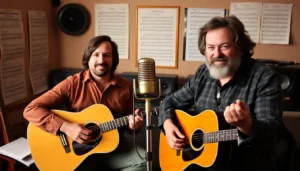
Medley’s first formal encounter with music occurred in middle school, where he sang in the choir and learned to play the piano. By the age of 14, he had begun experimenting with the guitar, a skill he refined while performing at local teen clubs and school assemblies. His voice—naturally deep and resonant—quickly attracted attention, prompting him to join a series of short‑lived surf and rock‑and‑roll groups in the late 1950s, including a band called The King & the Serpent.
In 1959, Medley enrolled at the University of California, Berkeley, intending to study architecture. However, his growing involvement in the campus music circuit, particularly with folk‑blues ensembles, led him to abandon his degree after two years to pursue a full‑time music career. He worked odd jobs—ranging from busboy to delivery driver—while auditioning for recording contracts, a common path for many aspiring artists of the era.
Influences and Creative Voice
Medley’s vocal style bears the imprint of several diverse influences. He has cited the soulful crooning of Frank Sinatra, the gospel-inflected phrasing of Sam Cooke, and the emotional intensity of Elvis Presley as formative. In addition, the rich tradition of African‑American rhythm and blues, especially the work of Ray Charles and The Platters, shaped his approach to melodic interpretation.
Growing up in the culturally mixed neighborhoods of Los Angeles exposed Medley to a cross‑section of musical traditions, from Mexican boleros to Mexican‑American muralist art. This environment fostered an intuitive sense for blending pop sensibilities with soulful depth—a hallmark that would later define the “blue‑eyed soul” sound of The Righteous Brothers.

Crucially, Medley’s baritone was not merely a technical instrument; it became a narrative device. He often described his voice as an “instrument that tells a story without words,” a perspective that guided his choice of material—ballads that allowed for heartfelt, lyrical storytelling.
Major Works and Breakthroughs
In 1962, while working as a session vocalist at the historic Gold Star Studios, Medley met Bobby Hatfield, a fellow singer with a soaring tenor. The two instantly recognized complementary vocal ranges and recorded a demo of the song “Little Latin Lupe Girl,” which eventually caught the ear of producer Phil Spector. Spector, famed for his “Wall of Sound” production technique, signed the pair to his Philles Records imprint and christened them The Righteous Brothers.
Their debut single, “Little Latin Lupe Girl” (1963), achieved modest regional success, but it was the 1965 release of “You’ve Lost That Lovin’ Feelin'”—produced by Spector and co‑written by Barry Mann and Cynthia Weil—that catapulted the duo to international fame. The song topped charts in the United States, the United Kingdom, and several European territories, earning a Gold certification and cementing their reputation as one of the most successful vocal duos of the 1960s.
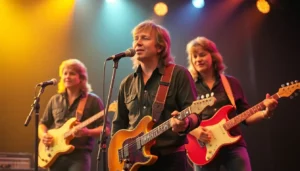
Following the success of “Lovin’ Feelin’,” The Righteous Brothers delivered a string of hits: “Unchained Melody” (1965), which re‑entered the U.S. Billboard Hot 100 in 1990 after featuring in the film *Ghost*; “Ebb Tide” (1965); “You’ve Got a Friend” (1968); and “Soul and Inspiration” (1969). Medley’s rich baritone carried the lower register on many of these tracks, while Hatfield handled the higher parts, creating a distinctive call‑and‑response dynamic.
Beyond the duo, Medley pursued a solo career beginning in 1970, releasing his first solo album, *Bill Medley*, on the RCA Victor label. Though his solo releases never replicated the duo’s commercial peaks, tracks such as “I Love You (The Hard‑To-Get Party)” and “What Can I Do Without You” showcased his capability as a stand‑alone artist. In 1978, he recorded a solo version of “Behind the Iron Gate” for the film *The Last Flight of Noah’s Ark*, further diversifying his portfolio.
Collaborations and Evolution
Throughout his career, Medley has engaged in numerous collaborations that illustrate both his adaptability and willingness to experiment across genres. In the 1980s, he co‑produced the song “Chain of Love” with country‑rock singer Clint Black, merging his soulful vocal style with country instrumentation. The early 1990s saw Medley recording “A Fool in Love” alongside rock vocalist Huey Lewis, a cross‑generational effort that earned moderate airplay on adult contemporary stations.
After Bobby Hatfield’s untimely death in 2003, Medley faced a pivotal crossroads. Rather than retiring, he chose to honor the legacy of The Righteous Brothers by touring with new partner B.B.E. (Bobby and Bill Evolution) and later with the well‑known harmonist Randy Hobbs. These tours were marketed as tribute performances, emphasizing Medley’s role as a custodian of the group’s catalog rather than a replacement for Hatfield.
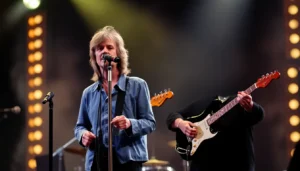
In 2014, Medley joined forces with rock legend Paul McCartney for a charity concert at the Royal Albert Hall, performing “Unchained Melody” in a stripped‑down arrangement that highlighted the raw emotional power of his voice. The collaboration was praised by critics as a testament to Medley’s timeless vocal appeal.
Awards, Reception, and Legacy
The Righteous Brothers received multiple accolades during their active years. They earned a Grammy Award nomination for Best Vocal Performance – Duo or Group in 1966 for “You’ve Lost That Lovin’ Feelin'” and were later inducted into the Rock and Roll Hall of Fame in 2003, a year after Hatfield’s death.
Commercially, the duo sold over 30 million records worldwide, with “Unchained Melody” alone achieving over 2.5 million certified sales in the United States. Medley’s solo endeavors, while less commercially dominant, contributed to a cumulative number of over 40 million records sold when combined with The Righteous Brothers catalog.
Culturally, Medley’s baritone has been referenced in scholarly works on “blue‑eyed soul” as a pivotal example of white artists authentically interpreting African‑American musical idioms. His influence is evident in later acts such as Hall & Oates, Simply Red, and modern vocal duos who employ contrasting vocal ranges to create harmonic depth.
Critics have consistently praised Medley’s vocal consistency, noting that even in his 80s his timbre retains the warmth and subtle vibrato that characterized his early recordings. However, some reviewers have critiqued his solo material for lacking the dramatic tension that the partnership with Hatfield provided.
As of the early 2020s, Medley continues to perform selectively, often appearing at nostalgia‑focused festivals and contributing to charitable causes, particularly veteran support organizations. His ongoing presence reinforces the lasting relevance of The Righteous Brothers’ repertoire in contemporary popular culture.