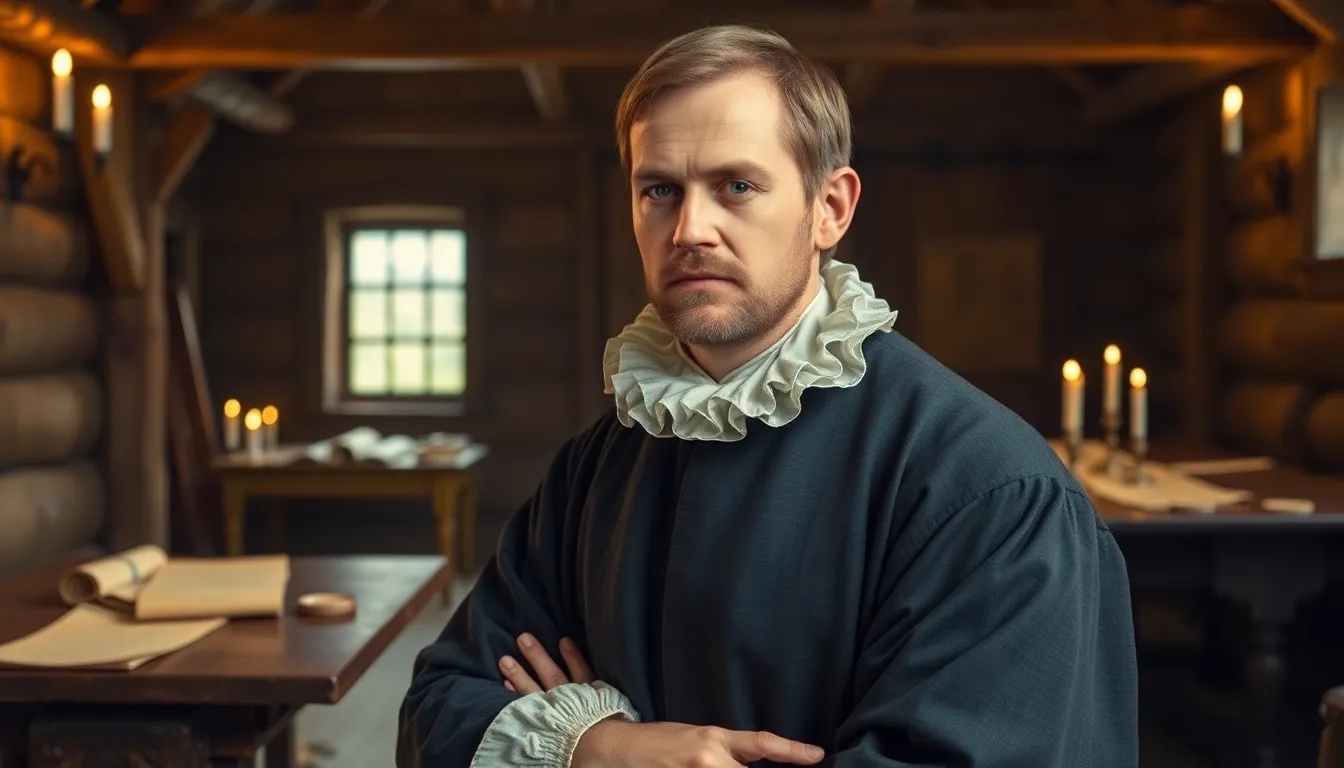
Historical Context
In the early seventeenth century, England was roiled by religious conflict, economic distress, and political tension. The reign of James I (1603‑1625) and later Charles I witnessed increasing pressure on Puritan dissenters, who faced persecution for their desire to reform the Church of England. Across the Atlantic, the New World presented both an opportunity for religious freedom and a venue for England’s imperial ambitions. The first successful English settlement, Jamestown (Virginia), was established in 1607, but it struggled with disease, starvation, and hostile relations with Indigenous peoples.
In 1620, a group of Separatist Puritans, later known as the Pilgrims, secured a patent from the London Virginia Company to settle north of the Chesapeake region. Their aim was to create a community governed by their interpretation of Scripture, free from the perceived corruption of the Anglican hierarchy. The Mayflower set sail in September 1620, carrying 102 passengers and a crew of 30; after a harrowing Atlantic crossing, the vessel was forced to anchor in Cape Cod (present‑day Provincetown, Massachusetts) because of navigational errors and severe weather.
The settlement that emerged, Plymouth Colony, was the first enduring English foothold in New England. Its early years were marked by a fragile alliance with the local Wampanoag Confederacy, most famously capped by the 1621 harvest celebration that later evolved into the myth of Thanksgiving. The colony’s survival depended upon effective governance, adaptation to a harsh climate, and the capacity to negotiate with Indigenous peoples. Within this volatile setting, William Bradford emerged as the colony’s chief magistrate, shaping its political institutions and chronicling its story for posterity.
Early Life and Formation
William Bradford was born in Austerfield, a village in the West Riding of Yorkshire, England, on 19 January 1590 (Old Style calendar) – which corresponds to 29 January 1590 in the modern Gregorian calendar. His parents, John Bradford, a tenant farmer, and Margaret (Stone) Bradford, were members of a modest but devoutly religious community. Little is recorded about his childhood; parish records confirm his baptism in the local church, but details of his early education remain scarce. It is probable that Bradford received a basic school education typical for a yeoman’s son, encompassing reading, writing, and arithmetic, as well as exposure to the Protestant teachings of the Elizabethan Settlement.
In his teens, Bradford became involved with the Puritan movement, which sought to “purify” the Church of England of lingering Catholic practices. By 1609, at age nineteen, he was apprenticed as a clerk to a mercantile firm in London, a position that provided him with exposure to the commercial world and the burgeoning network of non‑conformist dissenters. During his apprenticeship he encountered the Separatist community of Scrooby, a small Puritan congregation that had fled persecution in Nottinghamshire and taken refuge in the parish of Scrooby Hall.
Bradford’s decision to join the Scrooby congregation in 1609 marks his first major step toward emigration. The group, led by John Robinson, practiced a strict form of Congregationalism, rejecting the hierarchical clergy of the Anglican Church. Limited documentation exists about Bradford’s exact role within the Scrooby congregation, but it is clear that he was an active participant in their clandestine meetings and helped to relocate the congregation to the more tolerant Dutch city of Leiden in 1609.
In Leiden, Bradford worked as a clerk and later as a factor for the English merchant community, gaining experience with shipping, accounting, and the nascent trans‑Atlantic trade. He married Dorothy May in 1613; the couple had one child, John, who died in infancy. Dorothy’s death in 1620, shortly before the Mayflower voyage, is noted in Bradford’s own journal, which records his grief and sense of personal loss.
The Leiden period proved formative: the community’s struggles with cultural assimilation, economic hardship, and religious isolation sharpened Bradford’s conviction that a new settlement in America might better serve their spiritual aims.
Role in Major Events
1620 – The Mayflower Voyage and the Signing of the Mayflower Compact
Bradford was one of the signatories of the Mayflower Compact, a social contract that established a self‑governing body based on the consent of the “free‑men” aboard. The Compact, signed on 11 November 1620 (Old Style) while the ship lay anchored in Provincetown Harbor, laid the groundwork for democratic decision‑making in the colony. Bradford’s signature indicates his early prominence among the fledgling settlers.
1621–1626 – Early Governance and the First Term as Governor
Following the death of the colony’s first governor, John Carver, in April 1621, the Pilgrims elected William Bradford as governor, a post he would hold for 30 non‑consecutive years. During his initial term, Bradford oversaw the arduous task of securing food supplies, dealing with disease, and negotiating a crucial alliance with the Wampanoag chief Massasoit. The 1621 Harvest Celebration—later mythologized as Thanksgiving—was recorded by Bradford as a “small and simple” feast shared between Pilgrims and Indigenous allies.
Bradford’s administration also dealt with the onset of the 1622 Native American uprising (the Powhatan Confederacy’s attacks in Virginia), which heightened the colonists’ fear and prompted defensive measures. In response, Bradford instituted a militia system, organized communal work parties (the “common stock” system), and oversaw the construction of fortified settlements.
1630s – Expansion, Conflict, and Economic Development
The 1630s saw a wave of Puritan migration to New England under the leadership of John Winthrop, establishing the Massachusetts Bay Colony to the north. Plymouth’s interactions with its larger neighbor were complex: at times cooperative, at times competitive for trade and land.
Bradford’s records indicate he negotiated the 1652 purchase of the “Martha’s Vineyard” and other western territories, though these transactions remain contested in scholarly debate regarding the understanding of land ownership by the Indigenous parties.
During the 1640s, Bradford served intermittently as governor, alternating with other leaders such as Edward Winslow and Thomas Prence, in accordance with the colony’s practice of annual elections. The political stability Bradford fostered allowed Plymouth to survive the tumultuous period of the English Civil War (1642‑1651) and the execution of Charles I in 1649, which indirectly affected the colony’s fortunes.
1650s – Final Years, Writings, and Legacy
In his later years, Bradford devoted much of his energy to chronicling the colony’s history. His manuscript, “Of Plymouth Plantation,” written between 1630 and 1651, offers a comprehensive, first‑hand account of the Pilgrims’ voyage, settlement, governance, and interactions with Native peoples. The work was intended for a future generation of English Puritans, and it remains one of the most valuable primary sources for early American history. After the manuscript was taken to England by the Massachusetts Bay Colony’s governor in 1691, it was presumed lost until it resurfaced after the Great Fire of London in 1666, and finally returned to the United States in 1897.
Bradford died on 9 May 1657 at the age of 67 and was buried in the burial ground of the First Parish Church in Plymouth. His will listed modest personal possessions and bequeathed land to his surviving children, indicating that despite his prominent public role, his personal wealth remained limited.
Allies, Opponents, and Debate
Bradford’s political life involved a network of allies and occasional opponents. His closest ally was Edward Winslow, a fellow leader who alternated the governorship with Bradford and co‑authored many key diplomatic agreements with Indigenous groups. Their cooperative relationship helped maintain stability during periods of external threat.
Bradford also cultivated a pragmatic relationship with the Wampanoag chief Massasoit, whose alliance secured the colony’s early survival. However, the alliance was later strained by increasing English encroachment on Native lands, a point of contention in later historiography, which debates the degree to which Bradford’s policies contributed to the erosion of Indigenous autonomy.
Among opponents, the most notable were members of the Plymouth community who criticized Bradford’s authoritarian style and his handling of dissent. In the early 1630s, a faction led by John Layton opposed the expansion of communal labor requirements, arguing they resembled “ye olde tyrannies.” While the disputes never escalated into open conflict, they reveal early colonial tensions over governance.
Modern scholars continue to debate Bradford’s legacy. Some view him as a visionary architect of early democratic governance; others critique his role in the dispossession of Native peoples and his participation in a colonial enterprise that imposed European structures on Indigenous societies. Primary sources, such as Bradford’s own “Of Plymouth Plantation,” provide both insight and bias, necessitating careful source‑critical analysis.
Legacy and Interpretation
Bradford’s immediate legacy was the continued survival and relative prosperity of Plymouth Colony, which remained an independent entity until its merger with the Massachusetts Bay Colony in 1691. His detailed chronicle, “Of Plymouth Plantation,” has become a cornerstone of early American historiography, offering a rare continuous narrative from a participant’s perspective.
In the nineteenth century, American historians like James De Mille and Washington Irving mythologized the Pilgrims, emphasizing Bradford’s virtue and piety, thereby shaping the national memory of “Founding Fathers.” This romanticized view was later challenged by twentieth‑century scholars, including historians of the “new social history” movement, who highlighted the colony’s economic motivations, class structures, and the impact on Indigenous populations.
Contemporary interpretations increasingly situate Bradford within broader Atlantic world frameworks, acknowledging both his religious idealism and his role in the colonial project. Public commemorations—such as statues in Plymouth and an annual Governor’s Day—reflect both admiration and ongoing debate.
Bradford’s influence extends to modern governance concepts; his participation in drafting the Mayflower Compact is often cited as an early example of social contract theory in practice. Moreover, his emphasis on written records underscored the importance of documentation for colonial administration, a principle that informed later American legal traditions.
Overall, William Bradford remains a complex figure: a devout Puritan, a pragmatic leader, a diligent chronicler, and a participant in a colonial system that wrought profound change for both European settlers and Native peoples. His life exemplifies the intertwining of religious conviction, political necessity, and the uncertain fortunes of early English America.