Historical Context
At the turn of the 19th century the United States was a young republic eager to explore and claim the vast territories acquired in the 1803 Louisiana Purchase. President Thomas Jefferson envisioned a trans‑Continental expedition that would map the new lands, establish trade routes, and assert American sovereignty over the western frontier. This period, often called the Early Republic or the Age of Jeffersonian Expansion, was marked by a belief in “manifest destiny” before the term itself was coined, as well as complex diplomatic negotiations with European powers and Indigenous nations.
Within this milieu, the United States Army functioned not only as a military force but also as a vehicle for scientific and geographic investigation. Young officers were expected to be adaptable, literate, and capable of navigating both hostile terrains and diplomatic encounters. William Clark, a frontier‑born militia officer, emerged from this environment and would become one of its most consequential actors.
Early Life and Formation
William Clark was born on August 1, 1770, in Albemarle County, Virginia, to John Clark, a planter and Continental Army officer, and Ann (née Rogers) Clark. The family moved to present‑day Louisville, Kentucky, in 1779, seeking the relative safety of the western frontier. Primary source material for Clark’s childhood is sparse; most details derive from family letters, Clark’s own later recollections, and secondary biographies that rely on those documents.
Clark received a rudimentary education typical of frontier families, learning to read, write, and perform basic arithmetic. He was also taught practical frontier skills such as hunting, surveying, and horseback riding. At age 15, he began an apprenticeship in surveying under the guidance of his uncle, General George Rogers Clark, a celebrated Revolutionary War hero. This apprenticeship provided William with formal knowledge of land measurement and cartography, which would later be crucial for the expedition.
In 1790, at the age of 20, Clark secured a commission as a lieutenant in the United States Army’s newly formed infantry. His early military service included posts at Fort Pitt (now Pittsburgh) and participation in campaigns against Native American confederations in the Northwest Territory. These experiences exposed him to the realities of frontier warfare and the intricate diplomacy required in relations with Indigenous peoples.
Role in Major Events
Lewis and Clark Expedition (1804–1806)
In 1803, President Jefferson appointed Meriwether Lewis, his personal secretary, to lead an expedition to explore the western portion of the Louisiana Purchase. Jefferson selected Clark as Lewis’s co‑leader shortly before the expedition’s departure, valuing Clark’s surveying expertise, familiarity with the western frontier, and rapport with Native nations.
Clark and Lewis departed from Camp Dubois (near present‑day Wood River, Illinois) in May 1804 with a corps of 45 men, including French‑Canadian voyageurs, African‑American slaves, and a small contingent of Native guides. Over the course of two years, they traversed the Missouri River, crossed the Continental Divide via the Lemhi Pass, navigated the Columbia River to its Pacific mouth, and then returned eastward via the same route.
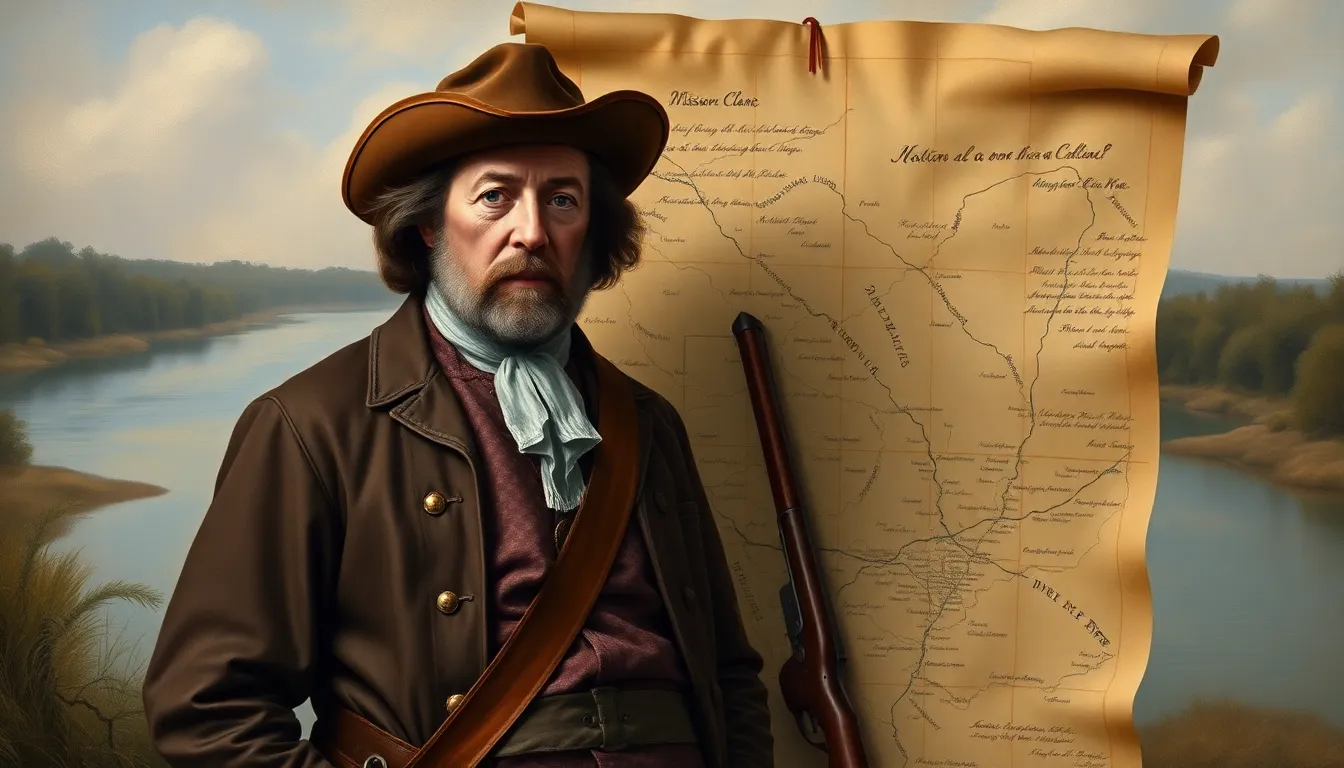
Clark’s responsibilities were manifold. He acted as chief surveyor, creating detailed maps of rivers, mountain ranges, and tribal lands. He also kept a meticulous scientific journal, documenting flora, fauna, geology, and ethnographic observations. Moreover, Clark served as the primary diplomat, engaging with over 50 Indigenous nations, forging trade agreements, and establishing diplomatic protocols that the United States would rely upon for decades.
The expedition’s successes—accurate mapping of the continent’s interior, the discovery of viable fur‑bearing regions, and the establishment of a United States presence on the Pacific Coast—were recorded in the richly illustrated journals that Clark and Lewis compiled. These journals were later published in 1814, providing a foundational source for historians.
Post‑Expedition Military and Political Career
After returning to St. Louis in September 1806, Clark was promoted to captain and appointed as the commander of the Missouri militia. In 1809, he was appointed the first Territorial Governor of the newly created Missouri Territory, a position he held until 1820. As governor, Clark oversaw the establishment of a civil administration, negotiated treaties with Native tribes (including the 1818 Treaty of St. Louis), and promoted settlement and infrastructure development.
Clark’s military career continued alongside his political duties. He served as the senior officer of the U.S. Army’s western frontier, holding the rank of major by 1815. He directed the construction of forts such as Fort Osage and Fort Scott, which served both defensive and trading purposes.
Later Life and Personal Affairs
In 1812, Clark married his second cousin, Virginia “Jean” Richardson, the daughter of a prominent Kentucky planter. The couple had nine children, several of whom died young. Their marriage, while personally affectionate, was strained by Clark’s frequent absences due to his duties and his long‑standing friendship with his fellow explorer, Meriwether Lewis.
Clark retired from active military service in 1835, but he remained a prominent figure in Missouri’s civic life. He died on September 1, 1838, in St. Louis at the age of 68. His estate was modest for a man of his stature; contemporary probate records indicate the value of his personal property at approximately $12,000 (equivalent to roughly $350,000 in today’s dollars), reflecting both his frugal lifestyle and the limited financial remuneration for frontier officials of the era.
Allies, Opponents, and Debate
Clark’s career was defined by a network of alliances and rivalries. His most enduring alliance was with Meriwether Lewis, whose complementary skills—Lewis’s scientific curiosity and Clark’s practical frontier experience—produced the expedition’s historic achievements. Their partnership, however, was occasionally strained by personality differences and the burden of leadership.
Clark cultivated advantageous relationships with numerous Native leaders, most notably the Shoshone chief Cameahwait, who guided the expedition across the Rocky Mountains, and Sacagawea, the Lemhi Shoshone woman whose linguistic abilities and knowledge of terrain proved invaluable. These alliances facilitated the expedition’s navigation and diplomatic success, though later scholarship debates the extent to which the expedition respected Native sovereignty versus furthering American expansionist aims.
Opponents of Clark included rival fur traders, such as the British‑Canadian North West Company, who perceived American incursions as a threat to their commercial dominance. Additionally, some Eastern politicians criticized the considerable expense of the expedition, arguing that resources would be better allocated to more immediate domestic concerns.
Contemporary and later historians have debated Clark’s role in the displacement of Indigenous peoples. While Clark’s journals depict a generally respectful attitude, his subsequent governance involved treaty negotiations that often resulted in cession of tribal lands. This duality fuels ongoing discussion regarding Clark’s legacy as an explorer versus a participant in early American colonialism.
Legacy and Interpretation
William Clark’s immediate legacy was the comprehensive geographic knowledge he and Lewis supplied to the United States, which facilitated westward migration, fur trade expansion, and the eventual admission of states such as Missouri, Oregon, and California. The maps produced under his direction remained authoritative references for decades.
In the 19th and early 20th centuries, Clark was celebrated as a national hero. Monuments, such as the Clark National Forest in Washington and statues in St. Louis, commemorated his contributions. He was portrayed in popular literature as the archetypal frontier gentleman, embodying American virtues of courage, ingenuity, and respect for nature.
Modern scholarship adopts a more nuanced view. Historians acknowledge Clark’s scientific contributions while also recognizing his role in the United States’ expansionist policies that precipitated Native displacement. Recent works, such as James Ronda’s “Lewis and Clark Among the Indians” and Stephen E. Ambrose’s “Undaunted Courage,” balance admiration with critical examination of the expedition’s impact on Indigenous populations.
Educational curricula now present Clark as a complex figure—simultaneously a pioneering explorer, a skilled cartographer, a frontier administrator, and a participant in the early American project of territorial acquisition. His personal correspondence, stored at the American Philosophical Society and other archives, continues to be a rich primary source for scholars studying early American frontier history.