Early Life and Military Formation
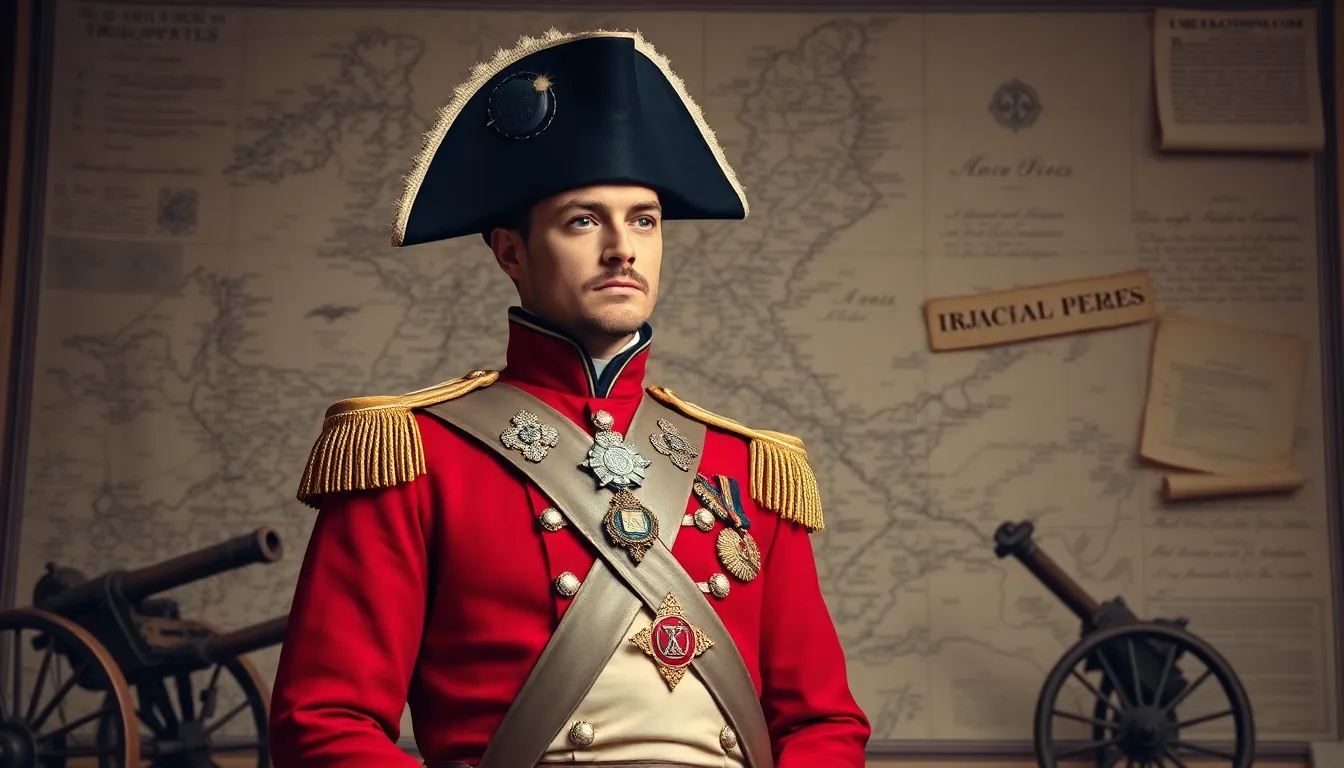
Napoleon Bonaparte was born on 15 August 1769 in Ajaccio, Corsica, a few months after the island was transferred from the Republic of Genoa to French control. His family belonged to the minor Corsican nobility; his father, Carlo Buonaparte, was a lawyer and political activist who attempted to secure Corsican autonomy. In 1778, Carlo sent young Napoleon to mainland France to attend school, first at Autun and then at the prestigious military academy of Brienne-le-Château, where he studied mathematics, geography and the classics. At Brienne, his modest means made him an outsider, but his intellectual aptitude and ambition were evident.
In 1784 Napoleon earned a place at the École Militaire in Paris, the elite institution that produced French artillery officers. He completed the two‑year course in a single year, graduating on 15 July 1785 as a second lieutenant (sous‑lieutenant) in the artillery. His early commissions placed him with the La Fère Artillery Regiment, where he served as an instructor and demonstrated an unusual grasp of siege theory and logistics—skills that would later underpin his operational style.
Wartime Context and Role
The French Revolution (1789‑1799) upended the ancien régime and created a power vacuum that demanded capable military leadership. By 1792 France was at war with the First Coalition—a coalition of European monarchies that sought to restore the pre‑revolutionary order. Napoleon, then a captain, first saw action in the Siege of Toulon (1793), where he devised a plan to seize the key heights overlooking the harbour and thus force the allied fleet to withdraw. His successful implementation earned him a promotion to brigadier general at the age of 24.
In 1795, Napoleon was recalled to Paris to suppress a royalist insurrection in the streets, known as the 13 Vendémiaire. Commanding a provisional artillery force, he employed a “cannonade” that broke the rebels’ resolve, a performance that impressed the Directory and secured his reputation as a decisive commander under pressure.
Major Campaigns, Battles, and Decisions
Italian Campaign (1796–1797) – Appointed commander of the Army of Italy, Napoleon inherited a demoralised force facing the Austrians and their Kingdom of Sardinia allies. He reorganised supply lines, instituted merit‑based promotion, and introduced the corps system, allowing independent yet coordinated operations. Key battles such as Montenotte, Lodi, and the decisive victory at Rivoli showcased his ability to achieve local superiority through rapid maneuver and concentration of force. The resulting Treaty of Campo Formio (1797) ceded much of northern Italy to France, vastly expanding French influence.
Egyptian Expedition (1798–1799) – Seeking to threaten British access to India, Napoleon led a combined army‑navy force across the Mediterranean. After the naval defeat at the Battle of the Nile, his land campaign won notable victories at the Battle of the Pyramids and the Siege of Acre, but strategic goals remained unfulfilled. The Egyptian venture produced extensive scientific scholarship (the Description de l’Égypte) and reinforced Napoleon’s image as a modern, Enlightenment‑inspired leader, despite the failure to secure lasting political control.
Rise to Consul (1799) – Returning to France in late 1799, Napoleon participated in the Coup of 18 Brumaire, which overthrew the Directory and established the Consulate with Napoleon as First Consul. This political ascension shifted his role from field commander to head of state, though he continued to shape military policy.
War of the Third Coalition (1805) – As Emperor, Napoleon orchestrated a rapid concentration of troops to confront Austria, Russia, and Britain. The Ulm Campaign demonstrated his mastery of interior lines, forcing an Austrian army to surrender without a major battle. At the Battle of Austerlitz (2 December 1805), his combined arms tactics, feigned weakness, and decisive use of artillery secured a crushing victory that dissolved the Third Coalition and led to the Treaties of Pressburg and Tilsit.
Peninsular War (1808–1814) – In response to Spanish resistance and Portuguese alliance with Britain, Napoleon intervened in the Iberian Peninsula. Initial successes at battles such as Somosierra were offset by a prolonged guerrilla war, high casualties, and the draining of French resources. The war illustrated limitations of Napoleon’s conventional strategies when faced with popular insurgency and superior British naval support.
Russian Campaign (1812) – Aiming to enforce the Continental System, Napoleon invaded Russia with the Grande Armée, approximately 600,000 strong. Strategic miscalculations, including an over‑reliance on forced marches, inadequate supply lines, and underestimation of Russian scorched‑earth tactics, culminated in the disastrous retreat from Moscow. Attrition reduced the army to fewer than 100,000 men, marking the turning point of his imperial fortunes.
Sixth Coalition and the 1814 Campaign – After the Russian debacle, an alliance of Britain, Russia, Prussia, Austria, Sweden, and several German states invaded France. Napoleon conducted a series of defensive battles (Lützen, Bautzen, and the Battle of the Nations at Leipzig) that displayed tactical brilliance yet could not reverse the strategic tide. Paris fell on 31 March 1814, leading to his abdication and exile to Elba.
Hundred Days and Waterloo (1815) – Escaping Elba, Napoleon returned to Paris, raising an army for the “Hundred Days.” His rapid advance into Belgium culminated in the Battle of Waterloo (18 June 1815), where coordinated Anglo‑Dutch and Prussian forces outflanked the French, resulting in a decisive defeat. This final battle sealed his permanent exile to Saint‑Helena.
Leadership, Courage, and Controversies
Napoleon’s leadership style combined personal charisma, a relentless work ethic, and an insistence on rapid decision‑making. He often visited front‑line positions, sharing hardships with his troops, which fostered loyalty and morale. His use of artillery as a decisive arm, the creation of the corps d’Armee system, and the integration of political and military objectives revolutionised modern warfare.
Nevertheless, his career is marked by controversy. Critics highlight the massive civilian casualties resulting from his campaigns—estimates of total deaths range from 3 to 6 million—alongside policies such as the Continental System that harmed European economies. His establishment of a hereditary empire overturned the republican ideals of the Revolution and engendered widespread nationalist resistance. The authoritarian nature of his rule, the reinstatement of aristocratic privileges, and the use of secret police (the Ministry of Police) further tarnish his legacy.
From a military‑ethical standpoint, Napoleonic warfare introduced total‑war concepts, blurring the line between combatants and civilians. The siege of cities such as Jaffa (1799) and the harsh reprisals during the Peninsular War raise questions about proportionality and civilian protection. Contemporary historiography tends to balance his tactical innovations against the human cost of his conquests.
Later Life, Memory, and Legacy
Exiled on the remote island of Saint‑Helena in the South Atlantic, Napoleon spent his final six years under British supervision. He dictated memoirs to his attendant, Emmanuel de Las Cases, producing the “Mémorial de Sainte‑Helena,” which shaped much of his posthumous mythos. He died on 5 May 1821, presumably of stomach cancer, though speculation about arsenic poisoning persists.
Napoleon’s legacy endures in numerous domains. Militarily, the corps system, emphasis on mobility, and combined‑arms tactics influenced 19th‑century generals such as Helmuth von Moltke the Elder and are still studied at military academies worldwide. Politically, the Napoleonic Code (Code Civil) unified French law and inspired civil law systems across Europe and Latin America.
The French Republic has commemorated him through monuments such as the Arc de Triomphe, his tomb at Les Invalides, and the naming of streets and institutions. Conversely, scholars and public opinion remain divided: some view him as a visionary moderniser, while others regard him as an opportunistic conqueror whose wars caused untold suffering.
Modern reassessment places Napoleon within the broader sweep of the Revolutionary Age, emphasizing the continuity between revolutionary ideals and his imperial ambitions. Recent scholarship stresses the importance of viewing his actions in the context of contemporary state‑building, nationalism, and the transformation of warfare from limited to total conflict.