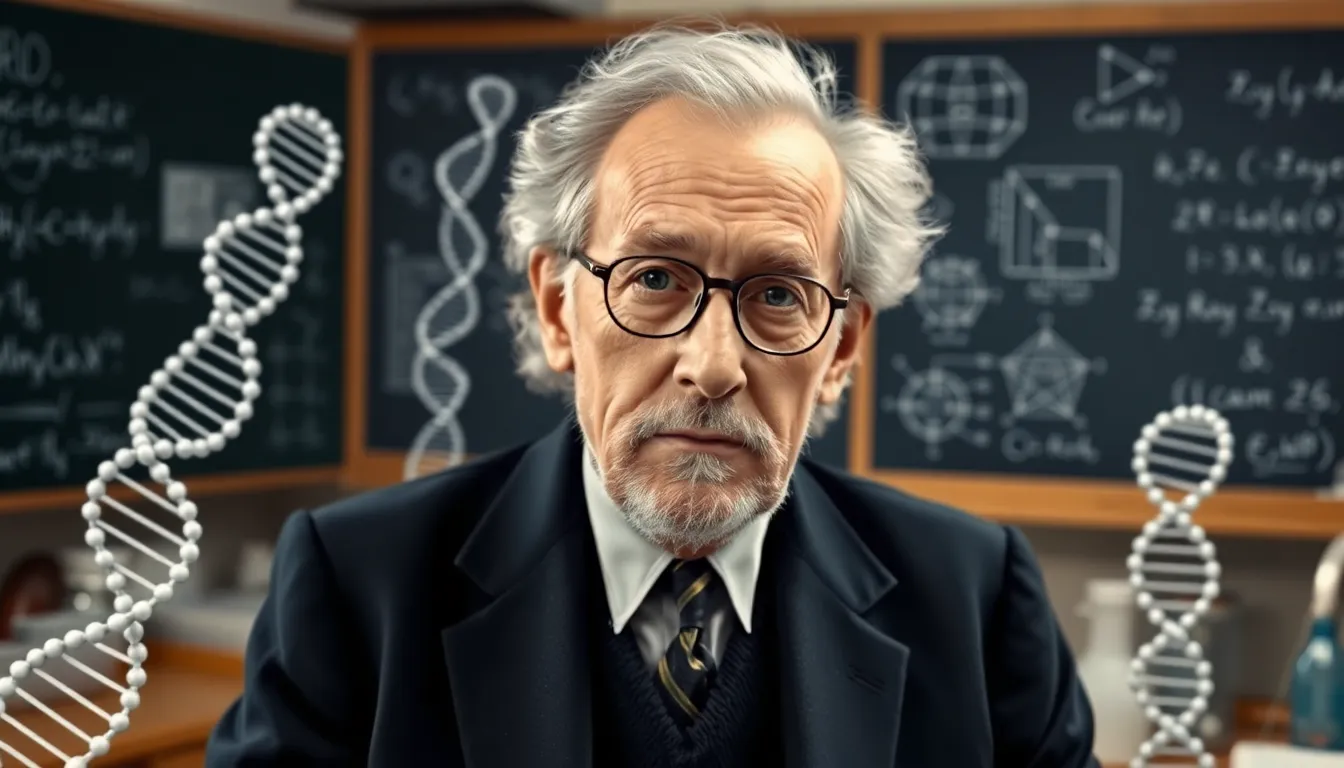
Education and Scientific Formation
Francis Harry Compton Crick was born on 8 June 1916 in Northampton, England, to a middle‑class family. He attended the local High School, where his aptitude for mathematics and physics became evident. In 1934, Crick won a scholarship to University College London (UCL), enrolling in the laboratory of biophysicist A.V. Hill, a future Nobel laureate. At UCL, he earned a BSc in physics in 1937, followed by a PhD in physics in 1940 under the supervision of Sir William Lawrence Bragg, a pioneer of X‑ray crystallography.
Crick’s early scientific formation was shaped by a confluence of disciplines: physics supplied rigorous quantitative methods, while the emerging field of biophysics sparked his curiosity about the molecular basis of life. During his doctoral work, Crick studied the magnetic properties of crystals, a subject far removed from biology, yet it honed his skill in interpreting diffraction patterns—an ability that would later prove decisive in solving the structure of DNA.
After completing his PhD, Crick briefly served as a research fellow at the Ministry of Aircraft Production, contributing to radar and optics development during World War II. This wartime experience broadened his technical repertoire and introduced him to collaborative, interdisciplinary research environments.
Research Career
In 1947, Crick accepted a position at the Medical Research Council (MRC) Laboratory of Molecular Biology (LMB) in Cambridge, then a nascent research institute focused on the physical chemistry of biological macromolecules. The LMB attracted leading figures such as Max Perutz, John Kendrew, and Maurice Wilkins, creating a fertile ground for cross‑fertilization of ideas. Crick began studying the structure of proteins, employing X‑ray diffraction techniques learned from his early mentors.
Crick’s tenure at the LMB coincided with an influx of new data on nucleic acids, particularly the groundbreaking work of Erwin Chargaff, who revealed that adenine pairs with thymine and guanine with cytosine in a regular, species‑independent ratio. Inspired by these findings, Crick turned his attention to nucleic acids, reasoning that a regular, complementary pairing could underpin genetic information storage.
In 1951, Crick moved to the Cavendish Laboratory at the University of Cambridge, where he collaborated with James D. Watson, an American biologist newly arrived from the United States. The partnership between Crain and Watson was emblematic of post‑war scientific collaboration across the Atlantic, combining Crick’s expertise in X‑ray interpretation with Watson’s knowledge of genetics.
The duo’s research was supported by the MRC, which provided access to Wilkins’s X‑ray diffraction images of nucleic acids. In 1953, after intense competition and a series of model‑building sessions, Crick and Watson announced the double‑helical structure of DNA, publishing their findings in Nature on 25 April 1953.
Discoveries, Inventions, and Methods
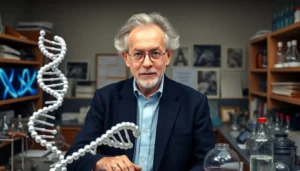
The double‑helix model proposed that DNA consists of two antiparallel strands twisted around each other, with complementary base pairs (A‑T and G‑C) held together by hydrogen bonds. This elegant structure explained how genetic information could be replicated with high fidelity: each strand serves as a template for the synthesis of its partner.
Crick’s contribution extended beyond the initial model. He introduced the concept of the “central dogma” of molecular biology in a 1958 paper, asserting that genetic information flows from DNA to RNA to protein, but not in reverse. This principle guided subsequent research on transcription, translation, and gene regulation.
In the 1960s, Crick turned his analytical mind toward the genetic code, hypothesizing that sequences of three nucleotides (codons) encode individual amino acids. Through a combination of theoretical reasoning and experimental collaboration with Sidney Brenner, he helped decipher the codon‑to‑amino‑acid assignments, a breakthrough that underpinned modern molecular genetics.
The methodological innovations introduced by Crick included model‑building using physical constraints derived from X‑ray data, a systematic approach that blended chemistry, physics, and biology. He also advocated for “hypothesis‑driven” experimentation, a philosophy that emphasized clear, testable predictions.
Publications, Recognition, and Debate
Crick’s seminal 1953 paper, co‑authored with Watson, is one of the most cited works in the history of science. The same year, the duo published a companion paper with Wilkins clarifying the experimental basis for the model. Crick’s later publications, such as “The Genetic Code” (1966) and “What Is Life?” (1966), broadened his influence beyond structural biology into the philosophy of biology.
In 1962, Crick, Watson, and Wilkins received the Nobel Prize in Physiology or Medicine for their discoveries concerning the molecular structure of nucleic acids and its significance for information transfer in living material. The award cemented Crick’s status as a central figure in 20th‑century science.
Crick’s career was not without controversy. The role of Rosalind Franklin’s X‑ray diffraction images, especially Photo 51, sparked ongoing debate about credit and recognition. While Watson and Crick acknowledged Franklin’s data in later writings, initial publications omitted her contribution, leading to criticism from historians and feminist scholars. Crick later expressed regret for the oversight and emphasized the collaborative nature of the discoveries.
Throughout his life, Crick received numerous honors, including the Royal Society’s Copley Medal (1970), the Albert Lasker Award for Basic Medical Research (1965), and election to the Fellowship of the Royal Society (1959). He was also appointed a Companion of Honour in 1981.
Impact on the Field
Crick’s elucidation of DNA’s structure launched the era of molecular biology, enabling the rapid development of genetic engineering, biotechnology, and genomics. The double‑helix model provided a tangible framework for understanding heredity at the molecular level, directly leading to techniques such as DNA sequencing, polymerase chain reaction (PCR), and recombinant DNA technology.
The central dogma remains a foundational concept taught in biology curricula worldwide, shaping how scientists conceptualize information flow within cells. Crick’s later work on the genetic code laid groundwork for synthetic biology and personalized medicine, where decoding and editing genetic information are routine.
Beyond the laboratory, Crick engaged in public discourse on scientific responsibility, bioethics, and the societal implications of genetic research. His later years were spent at the Salk Institute in La Jolla, California, where he turned to neuroscience, investigating the neural correlates of consciousness—a testament to his lifelong curiosity about the origins of mind and life.
Francis Crick died on 28 July 2004 in La Jolla, leaving a legacy that extends from the double‑helix to contemporary efforts to map the human brain. His interdisciplinary approach, model‑building methodology, and willingness to cross traditional scientific boundaries continue to inspire new generations of researchers.