Historical Context
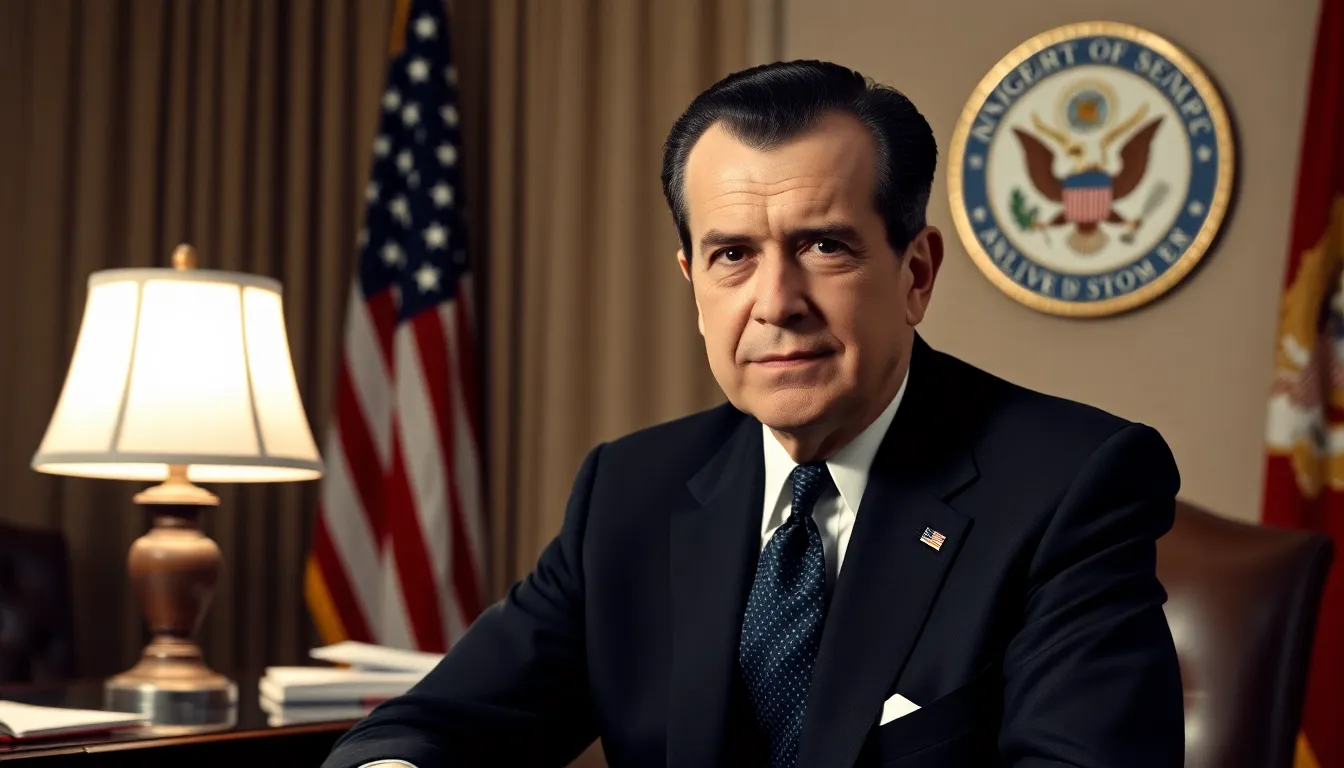
Richard Milhous Nixon emerged as a national figure during the middle of the 20th century, a period marked by the aftermath of the Great Depression, World War II, the onset of the Cold War, and profound social change in the United States. The United States in the 1950s and 1960s was defined by anti‑communist sentiment, the civil‑rights movement, and an escalating contest for global influence with the Soviet Union. Within this climate, the Republican Party sought figures who could project both staunch anti‑communism and diplomatic agility, qualities that propelled Nixon from a modest congressional career to the Vice Presidency under Dwight D. Eisenhower (1953‑1961) and later to the Presidency (1969‑1974).
Early Life and Formation
Nixon was born on January 9, 1913, in Yorba Linda, a small agricultural community in Southern California, to modest Quaker parents, Francis (“Frank”) Nixon and Hannah Milhous Nixon. The family’s modest means—Frank worked as a carpenter and later a contractor—shaped Nixon’s early self‑image as a diligent, self‑made man. Primary sources such as the Nixon family Bible and local census records confirm these details, though some aspects of his childhood (e.g., the precise nature of his relationship with his mother) are drawn from later oral histories and remain partially anecdotal.
He attended Whittier College, a liberal‑arts institution affiliated with the Quakers, graduating in 1934 with a degree in history. At Whittier, Nixon was active in debate and student government, demonstrating early political ambition. He then earned a law degree from Duke University School of Law in 1937, where he also served as student body president. His time at Duke placed him under the mentorship of Professor William “Bill” Greene, whose emphasis on constitutional law and public service would influence Nixon’s later political philosophy.
In 1940, Nixon married Thelma “Pat” Ryan, a fellow Whittier alumna. Their marriage produced two daughters, Tricia and Julie. Pat’s supportive role, especially during Nixon’s early political setbacks, is documented in personal correspondence archived at the Nixon Presidential Library, though some biographers note a degree of privacy surrounding their household that limits full scholarly insight.
Role in Major Events
Congressional Career (1947‑1950)
After serving briefly as a lieutenant commander in the United States Naval Reserve during World II (1942‑1945), Nixon was elected to the U.S. House of Representatives from California’s 12th district in 1946. His 1947 freshman year was marked by vigorous anti‑communist activity; he authored a pamphlet titled “The Red Scare of 1947,” which condemned alleged Soviet infiltration of the U.S. State Department. The pamphlet, while reflecting prevailing fears, also showcased Nixon’s skill in political messaging.
Senate and the Alger Hiss Case (1950‑1952)
In 1950, Nixon narrowly defeated incumbent Democrat Helen Gahagan Douglas for a U.S. Senate seat, a campaign noted for the controversial “pink sheet” tactic that accused Douglas of being sympathetic to communism. Once in the Senate, Nixon served on the Senate Foreign Relations Committee and the Senate Armed Services Committee. He gained national prominence by investigating the alleged espionage of former State Department official Alger Hiss. Nixon’s role as the “junior counsel” of the HUAC‑style investigation, later formalized as the House Un-American Activities Committee (HUAC) inquiry, resulted in Hiss’s conviction for perjury in 1950. Primary documents—including the trial transcripts and Nixon’s own Senate testimony—confirm his central involvement, though later scholarship debates the fairness of the proceedings.
Vice Presidency (1953‑1961)
Selected as Eisenhower’s running mate in 1952, Nixon became the youngest Vice President in U.S. history at age 39. During his two terms, he undertook extensive diplomatic missions, most notably the 1958 “Goldwater–Nixon” tour of Asia, which cemented his reputation as a staunch anti‑communist. He also played a key role in shaping the “New Look” defense policy, emphasizing nuclear deterrence over conventional forces. Nixon’s attendance at the 1957 summit in Geneva with Soviet Premier Nikita Khrushchev and later the 1959 diplomatic overture to the Republic of China (Taiwan) reflected a complex blend of confrontation and negotiation.
Presidential Campaigns and the 1960 Election
In 1960, Nixon secured the Republican nomination and faced Democrat John F. Kennedy. The campaign was dominated by the first televised presidential debates, where Nixon’s visual presentation—marked by a visible five‑pointed scar on his left cheek from a 1942 injury—was arguably less effective than Kennedy’s telegenic appeal. Nixon narrowly lost the election, an outcome confirmed by the official Electoral College vote (Kennedy 303, Nixon 219). The defeat spurred Nixon to reassess his political strategy, leading to a successful 1968 presidential bid.
Presidency (1969‑1974)
Assuming office on January 20, 1969, Nixon inherited deep domestic unrest and a contentious foreign policy environment. His domestically focused “New Federalism” sought to devolve power to the states, yet many of his proposals stalled in Congress. Internationally, his “strategic détente” with the Soviet Union produced the Strategic Arms Limitation Talks (SALT I) and the historic 1972 Moscow Summit, which eased Cold War tensions.
A groundbreaking achievement was the 1972 opening of diplomatic relations with the People’s Republic of China, facilitated by secret negotiations conducted by National Security Advisor Henry Kissinger and Secretary of State William P. Rogers. The resulting Shanghai Communiqué marked a major shift in the global balance of power.
Domestically, Nixon’s administration instituted the Environmental Protection Agency (EPA) in 1970 and enacted the Clean Air Act, reflecting a growing environmental awareness. However, his “law‑and‑order” stance also intensified the war on drugs and expanded federal surveillance capabilities, leaving a mixed legacy.
Watergate Scandal and Resignation
The turning point of Nixon’s presidency came with the 1972 break‑in at the Democratic National Committee headquarters in the Watergate complex. Subsequent investigations by the Senate Watergate Committee and the Special Prosecutor’s Office uncovered a pattern of illegal activities and a systematic cover‑up involving senior administration officials, including Nixon’s chief of staff H.R. Haldeman and advisor John Dean. The release of the “Nixon tapes”—recordings of Oval Office conversations—provided direct evidence of obstruction of justice. Facing imminent impeachment, Nixon resigned on August 9, 1974, becoming the first U.S. president to do so. His resignation letter, brief and measured, is preserved in the National Archives.
Post‑Presidential Life (1974‑1994)
After leaving office, Nixon retired to New York City, engaging in writing and foreign‑policy consulting. He authored several books, most notably “RN: The Memoirs of Richard Nixon” (1978) and “The Real War” (1980), which sought to reshape his historical image. He also participated in diplomatic missions, such as the 1975 “Iran hostage” mediation and the 1980 San Francisco State University conference on U.S.–China relations.
Nixon’s net worth grew modestly through book royalties, speaking fees, and consulting contracts. Estimates by contemporary financial publications place his net worth at roughly $20 million at the time of his death, though exact figures remain imprecise due to private holdings.
Richard Nixon died on April 22, 1994, in New York City, from a stroke. He was interred at his family’s historic residence in Yorba Linda, a site now preserved as the Richard Nixon Presidential Library and Museum.
Allies, Opponents, and Debate
Nixon’s political network included close allies such as Henry Kissinger, whose realpolitik approach shaped détente policies, and former Secretary of State William P. Rogers, a consensus builder. In Congress, moderate Republicans like Nelson A. Rockefeller supported his domestic reforms, while conservative stalwarts such as Barry Goldwater backed his anti‑communist agenda.
Opponents ranged from Democratic leaders like Senate Majority Leader Mike Kirkland, who critiqued Nixon’s civil‑rights inertia, to intra‑party rivals such as Senator Barry Goldwater, who challenged Nixon’s foreign‑policy compromises. The Watergate scandal intensified opposition, with key figures like Democratic Senator Howard Hughes leading impeachment proceedings.
Historiographical debate continues over Nixon’s legacy. Some scholars, like Stephen Ambrose, emphasize his diplomatic achievements and foreign‑policy mastery, while others, such as Robert Miller, highlight the ethical violations of the Watergate era and the erosion of public trust. The diversity of perspectives underscores the complexity of evaluating Nixon’s impact.
Legacy and Interpretation
In the immediate aftermath of his resignation, public opinion of Nixon plummeted, as reflected in contemporary polls that rated his administration among the most corrupt in U.S. history. Over subsequent decades, reassessments have nuanced this view. Nixon’s pioneering opening to China is now widely regarded as a watershed moment that altered the geopolitical landscape, a view supported by scholars such as Ezra Klein and Anne Foster.
Domestically, his establishment of environmental agencies and enforcement of the Clean Air Act contributed to the modern environmental movement, though critics argue these actions were politically expedient rather than morally driven. Nixon’s expansion of the “war on drugs” has also been reevaluated in light of contemporary concerns about mass incarceration.
Monuments to Nixon include the Richard Nixon Presidential Library in Yorba Linda, a National Archives facility that curates his papers, speeches, and audio recordings. Academic institutions host the “Nixon Center” for research, reflecting an ongoing scholarly interest.
Overall, Nixon’s historical memory remains contested: he is simultaneously remembered as a skilled statesman who reshaped U.S. foreign policy and as a president whose abuse of power reshaped the nation’s expectations of executive accountability. Future historiography will likely continue to balance these dual aspects as new archival material and interpretations emerge.