Historical Context
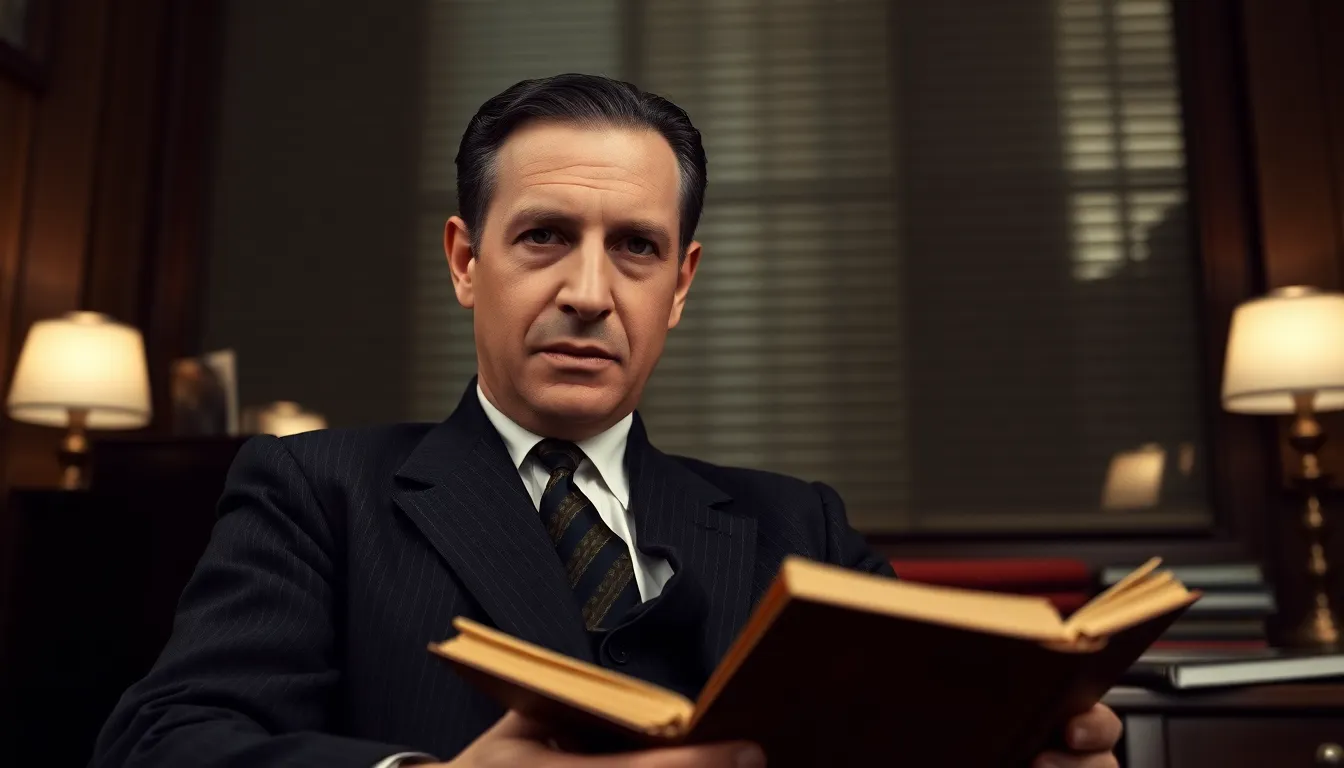
In the first half of the twentieth century, the United States experienced rapid urbanisation, Prohibition (1920‑1933), and the emergence of organized crime as a significant social and economic force. Within this milieu, various ethnic criminal networks—Italian, Irish, Jewish, and others—competed for control of illegal liquor, gambling, and later, legitimate enterprises such as casino resorts. The Great Depression intensified the demand for illicit revenue streams, while World War II created opportunities for transnational smuggling and financial manipulation. Post‑war prosperity, the rise of Las Vegas as a gambling centre, and the expanding Atlantic‑based casino market in the Caribbean and Europe provided a new arena for organized‑crime syndicates to diversify and launder wealth. Meyer Lansky operated at the intersection of these trends, applying bookkeeping and investment techniques to illicit operations, thereby influencing the structure of the American underworld for decades.
Early Life and Formation
Meyer Lansky was born Meier Suchowljansky on July 4, 1902, in the town of Nowy Świat (then part of the Russian Empire’s Pale of Settlement, present‑day Poland). His parents, Abraham and Jennie Suchowljansky, were Jewish immigrants who survived frequent pogroms. In 1907, the family emigrated to the United States, settling in Manhattan’s Lower East Side, a dense immigrant neighbourhood that also housed numerous street gangs. Sources such as immigration records and contemporary newspaper accounts confirm the date and place of arrival, although details of Lansky’s early childhood remain fragmentary because few primary documents survive.
Within the Lower East Side, Lansky received only a basic public education, leaving school in his early teens to help support his family. He was reportedly literate and numerate, skills he later credited to self‑directed study of bookkeeping. At age eleven, he was allegedly introduced to the local Jewish street gang led by Jacob “Kid” Boris, an encounter documented in FBI surveillance files (released under the Freedom of Information Act). This early exposure to organized crime coincided with the rise of the so‑called “Jewish mob,” which, unlike the more hierarchical Italian families, operated through loosely affiliated networks of entrepreneurs.
By the early 1920s, Lansky had adopted the anglicised version of his name and had begun forming alliances with other young criminals, most notably Charles “Lucky” Luciano, an Italian immigrant who would later become one of the foremost American mob bosses. Their partnership, corroborated by testimony before the 1951 US Senate Kefauver Committee, was based on mutual interests in gambling operations and a shared willingness to adopt systematic financial management for illegal enterprises.
Role in Major Events
During Prohibition, Lansky helped organise the acquisition and distribution of bootleg liquor in New York City. While most of the details remain derived from law‑enforcement indictments and contemporary newspaper reports, it is widely accepted that Lansky oversaw the accounting for the “National Crime Syndicate,” a coalition of Jewish and Italian gangs that coordinated illicit activities across state lines. By the late 1920s, he was managing the finances of several gambling dens, slot machine routes, and narcotics shipments, employing a rudimentary double‑entry system that reduced the risk of tax evasion charges.

World War II presented an opportunity for Lansky to extend his influence beyond American borders. According to declassified Office of Strategic Services (OSS) documents, Lansky allegedly assisted the Allied war effort by facilitating the movement of cash and precious metals between Europe and the United States, ostensibly to fund resistance activities. The precise nature and extent of this cooperation remain contested among historians; some argue that Lansky used the wartime chaos to expand his smuggling networks, while others claim he acted as a covert financial conduit for the United States. The consensus acknowledges that the wartime period significantly expanded his contacts in the Caribbean and Cuban gambling sectors.
In the post‑war era, Lansky pioneered the development of casino resorts in Las Vegas, Havana, and the Bahamas. He was instrumental in the financing of the Flamingo Hotel (1946) through a partnership with Bugsy Siegel and in the construction of the Tropicana (1957) in Las Vegas. In Havana, Lansky, alongside his associate Santo Trafficante Jr., helped modernise the city’s casino industry under the patronage of Cuban leader Fulgencio Báez. These ventures are documented in corporate filings, contemporary press accounts, and the testimony of former casino employees, establishing Lansky’s role as a financial architect rather than a front‑line enforcer.
Allies, Opponents, and Debate
Lansky’s most enduring alliance was with Lucky Luciano, a partnership that survived the volatile power struggles of the 1930s and 1940s. Their collaboration was founded on a shared belief in a corporatist approach to organized crime, favouring bribery, political influence, and diversified investment over overt violence. Other notable allies included Frank Costello, a New York political boss, and Cuban mobster Santo Trafficante Jr., whose casino operations in Havana were financed in part by Lansky’s capital. These connections are corroborated by numerous court transcripts and internal FBI memos from the 1950s and 1960s.
Opponents frequently emerged from rival factions within the Italian Mafia, notably Vito Genovese’s faction, which challenged Lansky’s financial dominance during the 1950s. Additionally, the United States government mounted several prosecutions against Lansky, most prominently the 1951 tax evasion indictment (United States v. Lansky) and the 1970 Puerto Rico casino fraud case. While Lansky avoided long‑term incarceration, legal scholars note that the repeated inability of law‑enforcement to secure convictions contributed to the mythos surrounding his invincibility.
Academic debate continues regarding Lansky’s legacy. Some scholars, such as historian Robert J. Miller, portray Lansky as a “rational‑ist” who modernised criminal enterprises, thereby reducing the violence traditionally associated with mob activity. Others, like sociologist James B. Katz, argue that Lansky’s financial innovations merely facilitated larger scales of exploitation and corruption, especially in the Caribbean where his casino ventures entrenched authoritarian regimes. The paucity of personal papers—Lansky destroyed many of his own records—means that much of his personal philosophy is inferred from second‑hand testimony, leading to divergent interpretations.
Legacy and Interpretation
At the time of his death on January 15, 1983, in Miami Beach, Florida, Meyer Lansky was estimated to have amassed a personal fortune ranging from $70 million to $150 million (adjusted for inflation, roughly $200 million–$450 million today). The precise net worth is uncertain due to the secretive nature of his assets; however, investigative journalists, including Jerry Capeci, have drawn on tax records and court filings to approximate his wealth. His personal life was relatively private: he married Annie Cohen in 1939, with whom he had two children, and remained a devoutly observant Jew—details corroborated by family interviews published in the early 1990s.
Historical memory of Lansky is ambivalent. In popular culture, he often appears as the archetype of the “gentleman gangster,” portrayed in films such as “Bugsy” (1991) and “The Godfather Part II” (1974). Academic literature, meanwhile, situates him within broader studies of transnational organized crime and the financialisation of illicit activity. Recent scholarship emphasizes his role in legitimising casino enterprises and influencing the eventual corporatisation of gambling, suggesting that Lansky’s impact extends beyond the criminal underworld to the modern entertainment industry.
Overall, Meyer Lansky remains a polarising figure: a mastermind of illegal finance praised by some for his business acumen and condemned by others for enabling systemic corruption. His life illustrates the complex interplay between immigration, urbanisation, and the evolution of organized crime in twentieth‑century America. Future research may clarify lingering uncertainties, particularly concerning the extent of his wartime activities and the exact composition of his financial empire.