Historical Context
Rosa Louise McCauley Parks (1913‑2005) lived during a period of entrenched racial segregation in the United States, known as Jim Crow. Southern states, including Alabama, enacted laws that mandated the separation of Black and white citizens in public facilities, transportation, schools, and employment. The era was marked by systemic disenfranchisement of African‑Americans through literacy tests, poll taxes, and violent intimidation. By the mid‑20th century, a growing body of African‑American intellectuals and organizations—most notably the NAACP—began to challenge these injustices through legal action, grassroots organizing, and non‑violent protest. The backdrop of World War II, which highlighted the contradiction between fighting fascism abroad and sustaining segregation at home, further spurred calls for civil‑rights reform.
Early Life and Formation
Rosa Parks was born on February 4, 1913, in Tuskegee, Alabama, to Leona (McCauley) and James McCauley, a minister and a carpenter. Her family moved to Pine Level and later to the Sand Hill community of Hampton, where she grew up among deeply religious, close‑knit Black families. Parks attended the segregated schools of the era, completing the tenth grade before leaving formal education to work and support her family. At the age of 12 she attended a sermon by Dr. Martin Luther King Sr., who encouraged her to resist injustice, a moment she later recalled as formative. In 1932, she married Raymond Parks, a member of the NAACP and a lifelong civil‑rights activist; the couple’s partnership provided Rosa with both emotional support and exposure to organized resistance.
Throughout the 1930s and 1940s, Parks worked as a seamstress, a domestic servant, and a clerk for the Montgomery chapter of the NAACP. She underwent training in civil‑disobedience, literacy, and legal strategy, attending workshops led by civil‑rights leaders such as E.D. Nixon and James W. Ferguson. While many biographers emphasize her 1955 act of defiance as a sudden impulse, primary sources—including Parks’ own oral histories—indicate a deliberate, long‑term commitment to the cause, cultivated through years of activism and personal sacrifice.
Role in Major Events
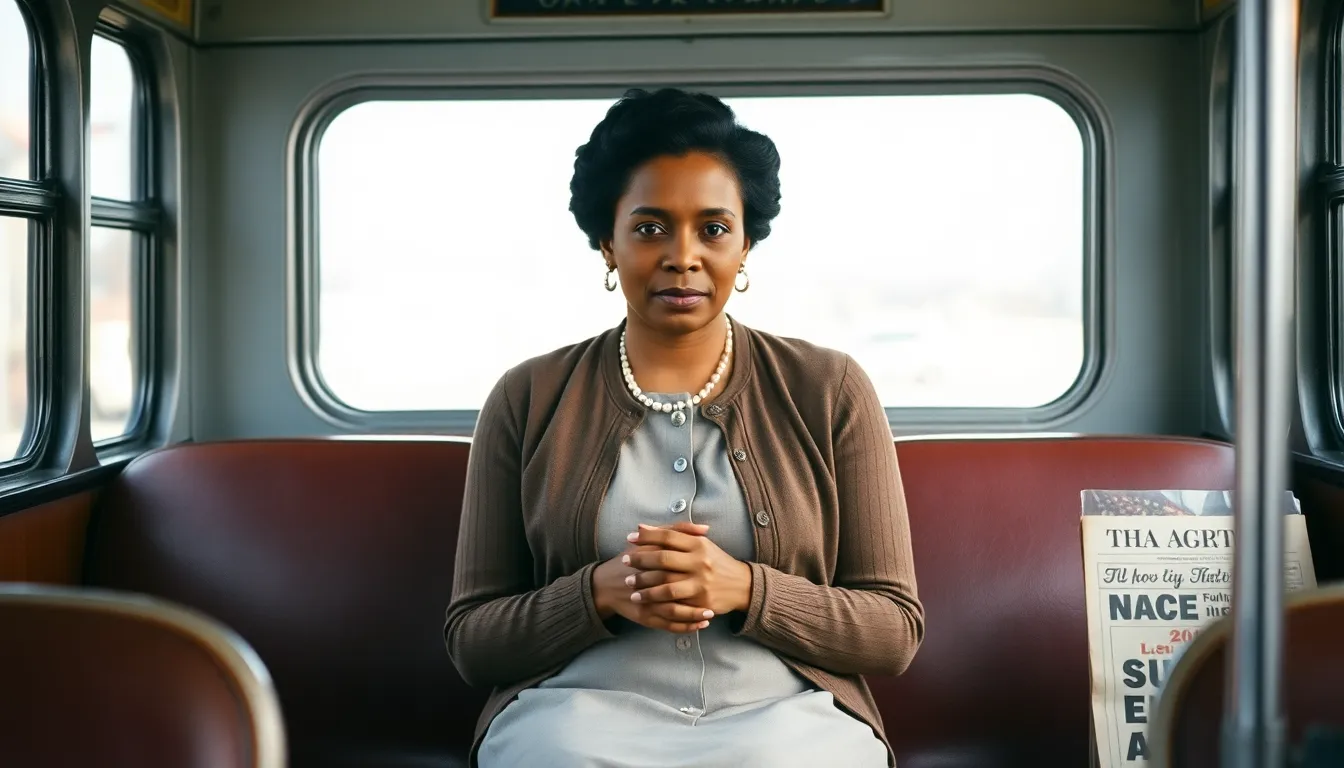
On December 1, 1955, Parks boarded a Montgomery city bus after a day of work. Because of a “colored” section’s “full” status, the driver, James F. Blake, ordered her to give up her seat for a white passenger. Unlike the customary practice of offering her seat voluntarily, Parks quietly refused. Her arrest on charges of disorderly conduct and breach of the city’s segregation ordinance sparked outrage within the Black community.
Local NAACP leaders, including E.D. Nixon—who had long been looking for a case to challenge bus segregation—saw the incident as a strategic opportunity. With the support of the newly formed Montgomery Improvement Association (MIA), led by a 26‑year‑old pastor, Dr. Martin Luther King Jr., the Black residents of Montgomery initiated a citywide bus boycott on December 5, 1955. The boycott lasted 381 days, during which Black citizens organized a sophisticated network of carpools, walking routes, and informal taxis. Parks’ steadfastness became a symbol of moral resistance; her image appeared on pamphlets, newspaper columns, and later, in the iconic photograph taken by photographer Charles Moore.
The legal battle culminated in the Supreme Court case Browder v. Gayle (1956). The Court ruled that Alabama’s bus segregation laws violated the Fourteenth Amendment, a decision that effectively ended forced racial seating on public buses. Parks’ role in the boycott propelled her onto the national stage, leading to invitations to speak at colleges, churches, and civil‑rights conferences across the United States.
Following the boycott, Parks continued to work for civil‑rights causes. She served as a secretary for the NAACP’s Montgomery chapter, later becoming a field secretary for the Highlander Folk School in Tennessee, an interracial institution that trained activists in non‑violent protest techniques. In 1965, she relocated to Detroit, Michigan, where she worked for the United Auto Workers (UAW) and continued to advocate for racial and economic justice until her retirement in 1988.
Allies, Opponents, and Debate
Parks’ activism was supported by a network of Black community leaders, church organizations, and progressive white allies. Figures such as E.D. Nixon, Jo Ann Robinson (who helped draft the boycott’s flyers), and Dr. King provided strategic and moral support. The national press, particularly African‑American newspapers like the Atlanta Daily World and the Pittsburgh Courier, amplified her story, helping to frame the boycott as a disciplined, non‑violent movement.
Opposition came from local and state officials who defended segregation as “law and order.” The Montgomery Police Department, under the command of Police Chief W. B. Bowling, pursued Parks and other boycott leaders with arrests, fines, and intimidation. Segregationist groups such as the White Citizens’ Council mounted a public relations campaign to discredit the boycott, portraying Parks as an agitator.
Scholarly debate has examined the extent to which Parks’ action was a spontaneous act versus a pre‑planned test case. Historian David J. Garrow emphasizes that Parks, aware of the legal consequences, deliberately placed herself in a position to challenge the law, inspired by prior legal challenges like the 1944 case of Irene Morgan v. Commonwealth of Virginia. Conversely, some contemporary accounts highlight the immediacy of her refusal as a personal act of resistance rooted in everyday fatigue from systemic oppression. The consensus acknowledges both agency and context, illustrating how individual acts intersect with broader social movements.
Legacy and Interpretation
The immediate impact of Parks’ defiance was the desegregation of Montgomery’s public buses, a tangible victory that energized the national civil‑rights movement. Her quiet courage became a rallying point for subsequent actions, including the 1963 March on Washington and the 1964 Civil Rights Act. Over time, Parks has been memorialized in countless ways: a U.S. postage stamp (issued in 1979), a congressional gold medal (1999), and numerous schools and streets bearing her name.
Historical interpretation of Parks has evolved. Early civil‑rights narratives often treated her as a lone heroine, a “Maid of Montgomery,” which risked obscuring the collective nature of the boycott. Recent scholarship, such as the 2012 biography “Rosa Parks: A Life” by Douglas Brinkley, places her within a network of Black women activists whose labor, organizational skill, and strategic planning were essential to the movement’s success. This shift reflects a broader historiographical trend that emphasizes grassroots agency over charismatic leadership alone.
Economically, Parks’ net worth at the time of her death was modest; she lived on a modest pension from the UAW and modest royalties from her autobiography, “Rosa Parks: My Story.” The focus on net worth in contemporary media sometimes distracts from her lasting contributions to civil‑rights law and social change.
In the digital age, Parks’ legacy continues to inspire new generations through educational curricula, social‑media campaigns, and renewed scholarly interest. Her image is frequently invoked in discussions of voting rights, police reform, and racial equity, underscoring the enduring relevance of her 1955 act of resistance.