Early Life and Military Formation
Otto Lilienthal was born on 23 May 1848 in Anklam, a town in the Grand Duchy of Mecklenburg-Strelitz, then part of the German Confederation. He was the second of six children of Bernhard Lilienthal, a rural physician, and Martha (née Simm). The family belonged to the educated middle class, and young Otto received a solid elementary education before attending the state gymnasium in Anklam. In 1865, at the age of seventeen, he enrolled at the Royal Technical College (now the Technical University of Berlin) where he studied engineering, mechanics, and materials science. He completed his studies in 1869, earning a degree in mechanical engineering.
During his university years Lilienthal became interested in the scientific principles of flight, a topic that fascinated many engineers after the publication of Sir George Cayley’s work on aerodynamics. Although Lilienthal never joined a regular armed force, the period of his youth coincided with the Austro‑Prussian War (1866) and the Franco‑Prussian War (1870‑71). These conflicts underscored the strategic importance of technology and engineering, prompting several German universities—including the one Lilienthal attended—to incorporate military‑related engineering projects into their curricula. Consequently, Lilienthal received a cursory exposure to military engineering concepts, particularly the design of lightweight structures, but there is no record of formal enlistment or commissioning.
Wartime Context and Role
The latter half of the 19th century in Central Europe was defined by rapid industrialisation, the unification of Germany under Otto von Bismarck, and a growing fascination with new forms of transportation. While Germany was not involved in a major war during Lilienthal’s most productive years, the military establishment was keenly observing emerging technologies that could confer tactical advantages. The German Imperial Army (Kaiserliche Armee) maintained a formal interest in aerial observation, albeit in a speculative manner, and established several technical committees to evaluate the potential of balloons and, later, heavier‑than‑air craft.
Lilienthal’s role in this context was purely civilian, yet his pioneering work in controlled gliding attracted the attention of military engineers. From 1891 onward, he published a series of scientific papers—most notably *Der Vogelflug als Grundlage der Fliegekunst* (Bird Flight as the Basis for Aviation)—which detailed his systematic approach to wing design, lift‑to‑drag ratios, and pilot control. German military circles began to cite his data when considering the feasibility of reconnaissance platforms, though no official adoption occurred during his lifetime.
Major Campaigns, Flights, and Decisions
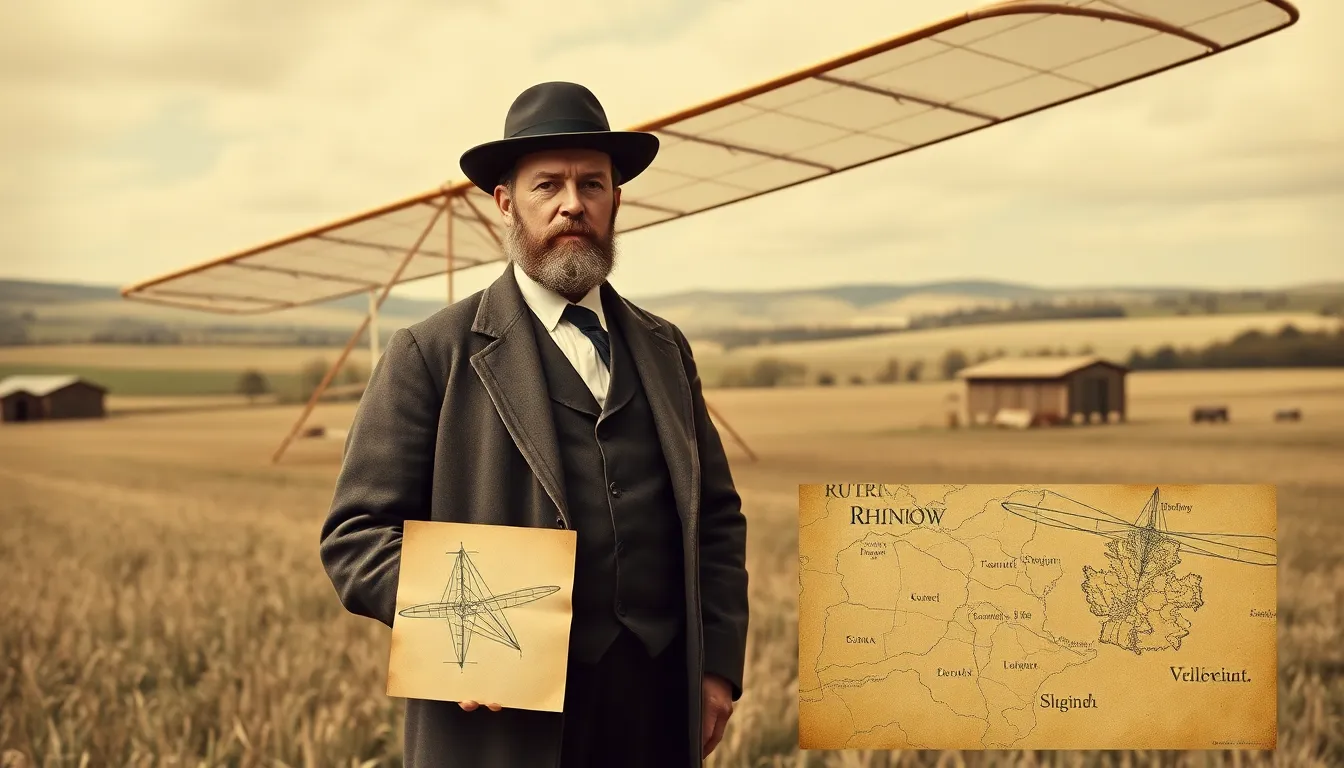
Between 1891 and 1896 Lilienthal conducted a remarkable series of experimental flights at his estate in Rhinow, near the Havel River. He built a fleet of eight gliders, each progressively refined in response to flight data. The most famous of these were the “Derwisch” and “Derwisch II,” monoplane‑type gliders with a wingspan of roughly 5 metres and a wing area of 10 m², constructed from lightweight ash and spruce with canvas covering.
Lilienthal’s flights were meticulously documented. Over his career he logged more than 2,000 glides, covering distances up to 250 m and achieving flight durations of approximately six seconds. He employed a self‑designed harness and a simple weight‑shift control system that allowed the pilot to tilt the glider’s wing tips, thereby controlling roll and yaw. His methodical approach—measuring glide angles, calculating lift coefficients, and calibrating wing curvature—set a scientific standard for future aviators.
On 9 August 1896, while testing a redesigned glider (the “Derwisch III”), Lilienthal experienced a fatal crash. He misjudged a gust of wind, the wing collapsed, and he sustained a severe pelvic fracture. He died the following day at age 48. His death was widely reported in contemporary newspapers and marked the first recorded fatality of a powered‑aircraft‑type flight, though his craft remained un‑powered.
Leadership, Courage, and Controversies
Lilienthal’s willingness to risk his own life in pursuit of experimental data exemplifies a form of personal leadership that resonated with both civilian and military audiences. Contemporary accounts describe him as a disciplined, methodical builder who insisted on rigorous testing before public demonstration. He conducted public flights in front of dignitaries, scientists, and journalists, thereby promoting a culture of open scientific exchange.
Critics of the era, particularly some military traditionalists, questioned the practicality of Lilienthal’s gliders for combat or reconnaissance. They argued that the reliance on favorable wind conditions rendered gliders unsuitable for systematic military use. These debates persisted after his death and foreshadowed later disagreements over the development of heavier‑than‑air aircraft during World War I.
In the years following his death, some nationalist writers exaggerated Lilienthal’s contributions, portraying him as a “father of German air power.” While his technical work undeniably influenced later aviation pioneers—including the Wright brothers, who studied his data—such embellishments constitute post‑humous myth‑making rather than documented fact. Modern scholarship, such as the works of aviation historians John D. Anderson and Charles Gibbs‑Seymour, stresses that Lilienthal’s achievements were primarily scientific and civilian in nature, though they later became a reference point for military aeronautical engineering.
Later Life, Memory, and Legacy
After Lilienthal’s death, his brother Gustav (who had collaborated on many of the glider projects) oversaw the publication of *Der Vogelflug* and ensured that the experimental data were archived at the Technical University of Berlin. The German military incorporated Lilienthal’s glide ratios and structural calculations into early 20th‑century studies of troop‑carrying gliders, which saw limited use during World War I for silent infiltration behind enemy lines.
In the interwar period, the Reichswehr’s aviation branch (the Luftstreitkräfte) cited Lilienthal’s work when developing the first generation of military gliders, such as the DFS 230 and the Gotha Go 150. During World War II, German forces employed large troop‑carrying gliders—most famously in the airborne invasion of Crete (Operation Mercury, 1941)—and frequently referenced Lilienthal’s aerodynamic principles in training manuals.
Lilienthal’s legacy is commemorated through numerous monuments and institutions. A bronze statue stands near the original Rhinow launch site, and his former residence now houses the Otto‑Lilienthal‑Museum, which displays original glider fragments, personal correspondence, and early flight instruments. In 1909, the German Aeronautical Society (Deutscher Verein für Luftfahrt) instituted the *Lilienthal Medal* to honour outstanding contributions to gliding. Internationally, he is celebrated as one of the three founders of modern aviation, alongside the Wright brothers and the French aviator Gabriel Voisin.
Academic historians regard Lilienthal as a pivotal figure in the transition from theoretical aerodynamics to practical flight experimentation. His meticulous data collection, emphasis on repeatable testing, and public advocacy for aviation laid the groundwork for both civilian aviation and later military applications. Contemporary military scholars cite Lilienthal when discussing the origins of aerial reconnaissance and the strategic impact of unmanned platforms, noting how his early gliders foreshadowed later concepts such as surveillance drones.
In summary, Otto Lilienthal did not serve as a combatant, but his scientific work profoundly impacted the development of military aviation. By establishing a rigorous experimental methodology and demonstrating the feasibility of controlled heavier‑than‑air flight, he became an indirect but essential contributor to the air strategies employed by 20th‑century armed forces.