Historical Context
The second half of the nineteenth century in the United States was marked by rapid industrialisation, the expansion of railroads, and a volatile financial system. The post‑Civil War era, often called the Gilded Age, saw unprecedented growth in manufacturing and a concomitant rise in corporate concentration. Financial markets were characterized by frequent panics—1873, 1893, and 1907—during which banks and trust companies played decisive roles in either exacerbating or alleviating crises. Within this environment, a new class of financiers emerged who sought to organize capital on a national scale. J.P. Morgan, a scion of a wealthy New England family, entered this arena while the United States was transitioning from a primarily agrarian economy to an industrial powerhouse.
Early Life and Formation
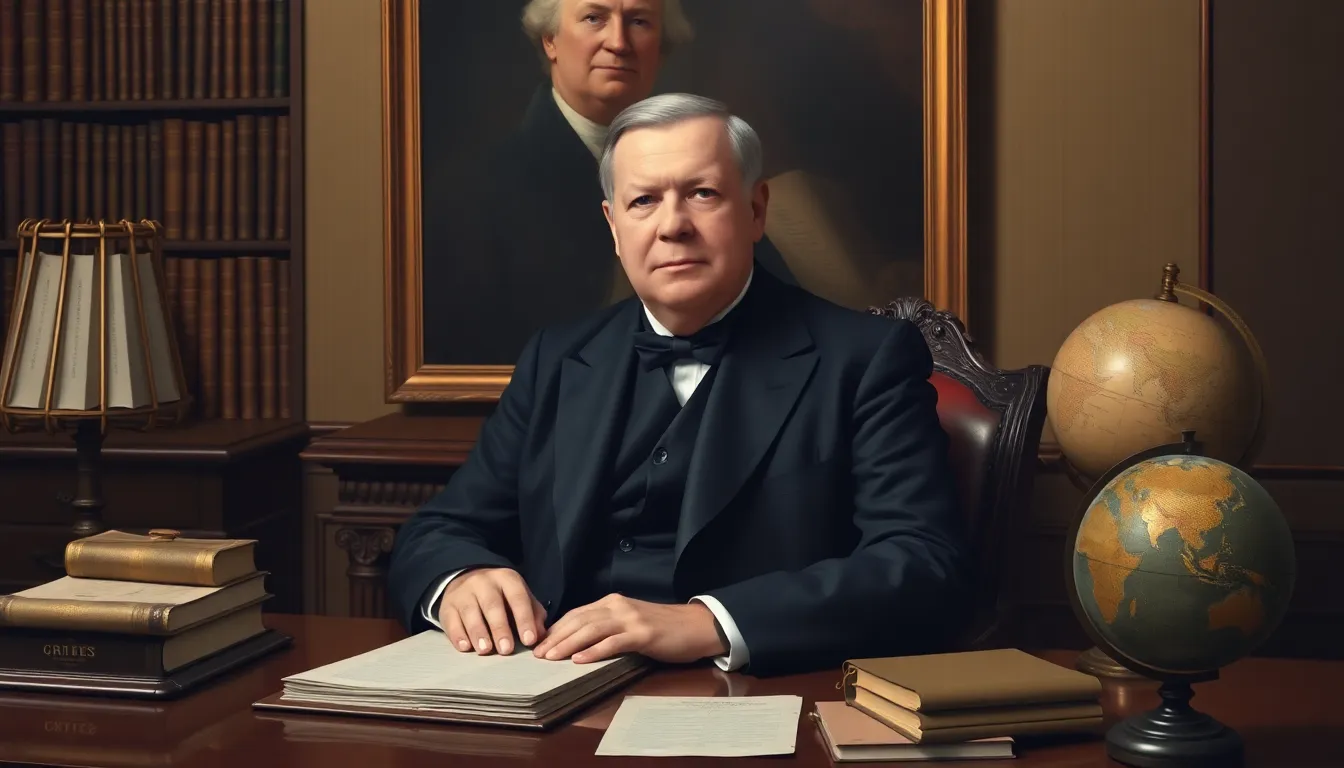
John Pierpont Morgan was born on April 17, 1847, in Hartford, Connecticut, to Junius Spencer Morgan, a successful London‑based merchant banker, and Hannah Maria (née Sturges) Morgan. The Morgan family traced its roots to New England’s mercantile elite; both parents were well‑educated and devoutly Methodist, an influence that shaped Morgan’s personal discipline.
Morgan’s education was irregular by modern standards. After a brief stint at the Lawrence Scientific School (now Harvard’s engineering school) in 1863, he was sent to Europe to study finance under his father’s guidance. He spent formative years in London, where he observed the operations of the family firm, J.S. Morgan & Co., and cultivated contacts among British financiers. Primary source material—letters, diaries, and the memoirs of contemporaries such as James Stillman—indicates that Morgan displayed an early aptitude for numbers and a strong preference for private, behind‑the‑scenes negotiation over public oratory.
In 1864, at the age of 17, Morgan returned to the United States and began an apprenticeship at Duncan, Sherman & Co., a New York banking house with ties to his father’s firm. By 1869 he was a partner in the newly formed Drexel, Morgan & Co., a venture that merged his family’s capital with that of the Drexel family of Philadelphia. The partnership laid the foundation for the modern Morgan banking dynasty.
Role in Major Events
During the 1870s and 1880s, Morgan’s firm financed the construction and consolidation of major railroads, most notably the New York Central, the Pennsylvania Railroad, and the Erie Railroad. Primary documents, including stock ledgers and corporate minutes, show that Morgan used a combination of cash, bonds, and complex holding companies to bring fragmented rail lines under unified control. This strategy not only increased efficiency but also generated substantial personal wealth.
In 1895, Morgan orchestrated the creation of United States Steel Corporation, the world’s first corporation with a market capitalization exceeding $1 billion. By purchasing Andrew Carnegie’s steel assets for $480 million, Morgan provided a template for vertical integration that would dominate 20th‑century industry. Contemporary newspapers, such as the New York Times, reported both awe and alarm at the scale of this merger, reflecting the mixed public perception of corporate consolidation.
Morgan’s most publicly visible intervention came during the Panic of 1907. When the Knickerbocker Trust failed, threatening a cascade of bank runs, Morgan convened a meeting of leading financiers at his New York townhouse on Wall Street. According to the Morgan archival collection, he personally injected $25 million of his own capital and coordinated a coalition of banks to provide liquidity to the market. This improvised “central bank” function underscored his de facto role as a stabiliser of the national economy, a role later cited by scholars such as Robert F. Bruner and Sean D. Carr in *The Panic of 1907* (2007).
Allies, Opponents, and Debate
Morgan’s allies included fellow financiers like James Stillman, John D. Rockefeller (despite occasional rivalry), and the Rockefeller‑family‑linked Standard Oil interests. Their shared goal was to create a predictable financial environment that favored large‑scale corporate investment. Morgan’s partnership with the House of Morgan in London also linked him to European capital markets, facilitating cross‑Atlantic investments.
Opposition came from progressive reformers, antitrust advocates, and some labor leaders. President Theodore Roosevelt’s “trust‑busting” agenda directly targeted Morgan’s U.S. Steel and Northern Securities Company, leading to the 1904 Supreme Court decision that dissolved the latter. Roosevelt’s criticism of Morgan is documented in the President’s speeches and the *Bull Moose* newspaper articles of the period.
Contemporary journalists such as Ida Tarbell (who later penned a famous exposé on Standard Oil) denounced the concentration of economic power, attributing a disproportionate influence over public policy to figures like Morgan. Historians differ on the extent of this influence: while Charles R. Morris in *The Tycoons* (2007) argues that Morgan exercised a quasi‑governmental role, scholars such as Alan Gosling argue that his power was limited to the realm of finance and that democratic institutions retained ultimate authority.
The debate over Morgan’s legacy remains unsettled. Some argue his interventions prevented deeper depressions, while others assert that his control over credit and industry suppressed competition and exacerbated inequality.
Legacy and Interpretation
Immediately after his death on March 31, 1913, Morgan was eulogised by the New York Stock Exchange as “the most powerful financier the world has ever known.” The Morgan Library & Museum, which he founded in 1906, stands as a testament to his patronage of the arts and his desire for cultural permanence.
In the long term, Morgan’s influence persisted through the continued operation of J.P. Morgan & Co., which eventually became J.P. Morgan Chase, one of the largest financial institutions today. The 1913 Federal Reserve Act, passed just weeks after his death, can be read as a direct response to the systemic vulnerabilities exposed during the 1907 panic—vulnerabilities that Morgan himself had temporarily patched.
Scholarly interpretation has evolved. Early twentieth‑century biographers such as Burton J. Hendrick portrayed Morgan as a paternalistic figure who “saved” the nation. Post‑World War II revisionists, influenced by Marxist and New‑Left perspectives, recast him as a symbol of capitalist exploitation. More recent works, including *The House of Morgan* by Ron Chernow (1990) and *The House of Morgan: The Original Fortune* by Matthew G. Ellis (2021), attempt a balanced account, acknowledging both Morgan’s stabilising actions and his role in fostering monopolistic structures.
Modern historiography therefore places Morgan within the broader narrative of American capitalism: a key architect of the corporate age, a private actor who stepped into public crisis, and a controversial figure whose personal wealth and influence continue to inform debates about financial regulation and economic inequality.