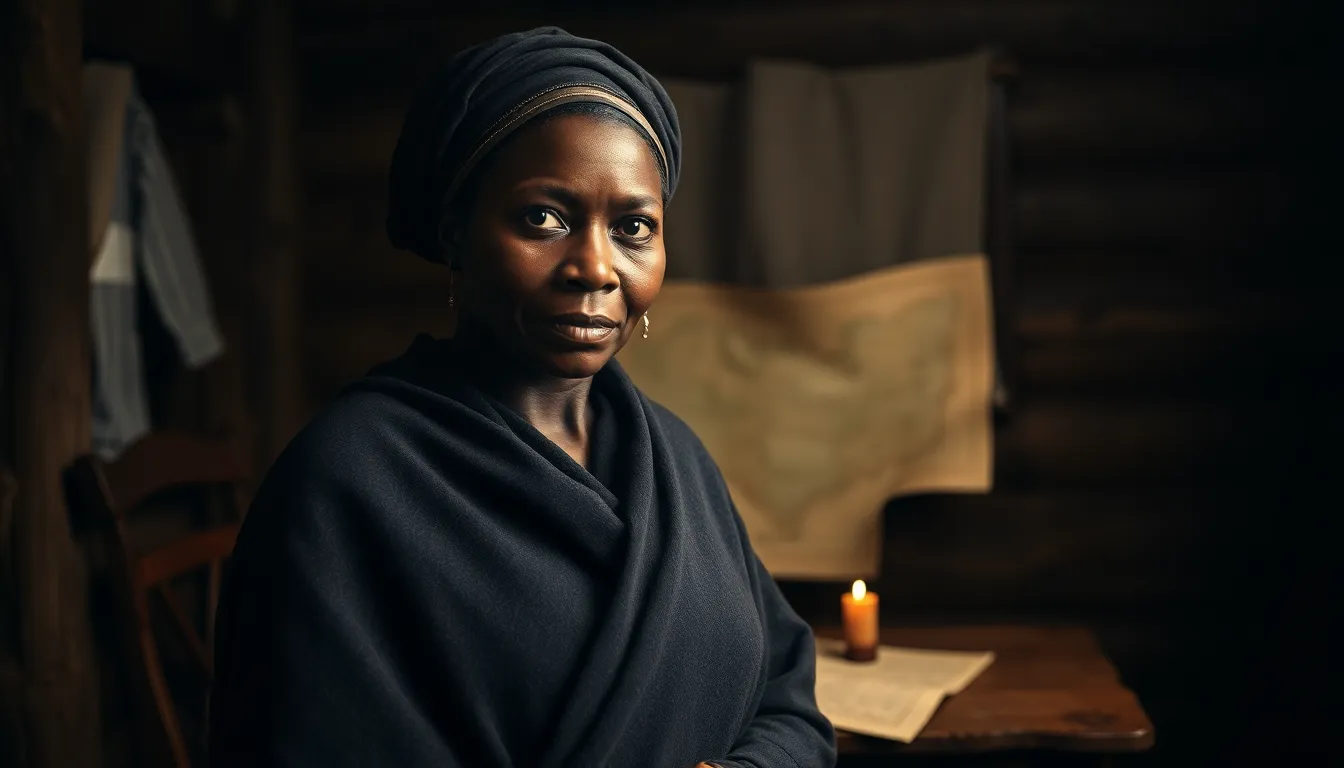
Historical Context
The United States of the early 19th century was a nation divided by the institution of slavery. The Southern states, including Maryland where Tubman was born, operated a plantation economy dependent on enslaved labor, while a growing abolitionist movement in the North, fueled by religious revivals, Enlightenment ideas, and the Haitian Revolution, called for emancipation. The legal framework, epitomised by the Fugitive Slave Act of 1793 and its stricter revision in 1850, criminalised assisting runaway enslaved people and intensified the risk for anyone aiding escapees. Within this polarized landscape, a clandestine network known as the Underground Railroad emerged, employing secret routes, safe houses, and volunteer “conductors” to guide enslaved people to free states or Canada.
Harriet Tubman’s activities spanned the antebellum period, the Civil War (1861–1865), and the early Reconstruction era. These eras saw the rise of abolitionist societies, the violent conflicts over slavery, and the eventual constitutional amendments abolishing slavery (13th), granting citizenship (14th), and securing voting rights for men (15th). Tubman’s work intersected with broader movements for African‑American civil rights, women’s suffrage, and humanitarian reform, and her legacy has been reassessed by historians across the 20th and 21st centuries.
Early Life and Formation
Harriet Tubman was born Araminta Ross around March 1822 (exact date uncertain) in Dorchester County, Maryland, a slaveholding region of the Chesapeake Bay. Primary sources—including the 1853 oral interview recorded by abolitionist William Still and later testimonies before the U.S. Senate—indicate her mother, Harriet “Rit” Green, and father, Ben Ross, were both enslaved. Tubman’s birth name and date appear inconsistently in the limited archival record; historians therefore cite a range of possible dates (1820–1823).
Enslavement meant that Tubman’s early years were marked by hard physical labour on the tobacco and later the grain farms of the Ross family. At the age of six, Tubman suffered a severe head injury when an overseer threw a heavy metal weight at another enslaved person; the weight struck Tubman instead, causing lifelong seizures, headaches, and visions that she later described as divine. These episodes, documented in Tubman’s own recollections and in the testimony of her contemporaries, shaped her spiritual framework and contributed to the mystic tone of many later biographical accounts.
Education for enslaved children was prohibited in Maryland. Nonetheless, Tubman learned to read and write clandestinely, aided by members of the free Black community in nearby Baltimore. Her religious upbringing in the African Methodist Episcopal (AME) tradition, coupled with the Second Great Awakening’s emphasis on personal salvation and social reform, provided a moral compass that guided her later humanitarian work.
In 1844, Tubman married John Tubman, a free Black man of the same surname who worked as a carpenter. Their marriage is documented in church records of the Bethel AME Church in Dorchester County. The couple had no children. While still enslaved, Tubman endured the trauma of family separations; in 1852, her husband was sold to a plantation in the Deep South, an event that reinforced her resolve to escape.
Role in Major Events
Escape from Slavery (1849)
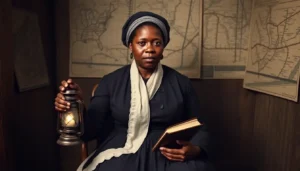
After learning that her owner, Edward Brodess, planned to sell her to a trader bound for the Deep South, Tubman fled north on the night of September 17, 1849, traveling 90 miles through hostile terrain to Philadelphia. She was guided by the covert signals of the Underground Railroad, including coded songs and lanterns. Her escape is documented in multiple oral histories and reinforced by court petitions she later filed for her family’s freedom.
Conductor of the Underground Railroad (1850–1860)
Following her successful arrival in Philadelphia, Tubman returned repeatedly to Maryland to rescue family members and others. Over a decade, she is credited with leading at least 13 missions that liberated an estimated 70 enslaved individuals, though exact numbers vary among scholars. The most famous expedition, conducted in 1850, involved Tubman traveling alone through the night to locate her parents, who she successfully led to freedom in Pennsylvania.
The methodology of these missions—use of coded spirituals, safe houses operated by Quakers and free Blacks, and careful timing to avoid slave patrols—is described in the papers of William Still and the abolitionist newspaper The Liberator. Tubman’s adherence to a strict “no one left behind” principle is a recurring theme in both contemporary accounts and later historiography.
Union Army Service (1861–1865)
When the Civil War began, Tubman was recruited by Union General David Hunter, who appointed her as a scout, spy, and nurse. In 1863, she served as a leader of the Combahee River Raid, a joint operation with the 1st South Carolina Volunteers (an African‑American regiment). Tubman’s intelligence on local terrain enabled Union forces to free more than 700 enslaved people along the South Carolina coast. Official military reports, including the after‑action report of Colonel James Montgomery, acknowledge Tubman’s indispensable role.
During the war, Tubman also worked with the Freedmen’s Bureau, assisting newly emancipated people in securing food, shelter, and education. Her involvement in hospital work, particularly at the Freedmen’s Hospital in Washington, D.C., is documented in wartime medical logs.
Post‑War Activism (1865–1913)
After the war, Tubman settled in Auburn, New York, where she purchased a 175‑acre farm in 1869, a rare example of land ownership by a formerly enslaved woman. She used the property as a refuge for women and children escaping the South during the Reconstruction era.
In the 1880s, Tubman joined the women’s suffrage movement, aligning with leaders such as Susan B. Anthony and Elizabeth Cady Stanton. While African‑American women’s suffrage activism was often marginalized within mainstream organizations, Tubman’s advocacy is recorded in the minutes of the National Woman Suffrage Association and in the 1903 publication Woman’s Journal.
Harriet Tubman died on March 10, 1913, in Auburn, New York, and was buried with military honors at Fort Hill Cemetery. Her funeral was attended by prominent abolitionists, Civil War veterans, and suffragists, reflecting the breadth of her influence.
Allies, Opponents, and Debate
Allies
Tubman’s network spanned Black and white abolitionists, Quaker benefactors, and later, Union military officers. Key allies included:
– William Still, a Philadelphia Black abolitionist who recorded many of Tubman’s rescues in his 1872 work The Underground Railroad.
– Thomas Garrett, a Quaker and leading conductor in Delaware who provided safe houses and financial support.
– Frederick Douglass, who praised Tubman’s bravery in speeches and correspondences.
– General David Hunter, who recognized her strategic value early in the Civil War.
Opponents and Contention
On the pro‑slavery side, slaveholders such as Edward Brodess pursued legal action against Tubman for property loss, filing lawsuits that were ultimately dismissed due to the 13th Amendment and the changing legal climate. The Fugitive Slave Act made any rescue operation a federal crime, exposing Tubman to possible capital punishment.
Within the abolitionist movement, there was occasional tension between radical activists who supported immediate, sometimes violent, resistance and more conservative reformers favoring moral suasion. Tubman’s direct-action approach placed her among the former, yet she also collaborated with moderate groups, a nuance often overlooked in popular narratives.
Historical Debate
Scholars have debated the precise number of individuals Tubman rescued. Early 20th‑century biographers, such as Sarah Bradford (1971), tended to elevate Tubman’s numbers to mythic levels (often citing “over 300”). Contemporary historians, including Kate Clifford Larson and Catherine Clinton, argue for a more conservative estimate (70–100), citing documentary evidence from tax records, census data, and Still’s ledger.
Another contested area concerns Tubman’s religious beliefs. While some accounts portray her as a devout Christian guided by divine visions, others suggest a broader spirituality intertwined with African‑American folk traditions. The debate reflects a wider historiographical tension between viewing Tubman as a saint‑like figure versus a pragmatic activist.
Legacy and Interpretation
Immediately after her death, Tubman was celebrated in African‑American newspapers and commemorated by the African Methodist Episcopal Church, which designated her a “sister of the church.” In the early 20th century, as the Jim Crow era intensified, Tubman’s story was invoked by civil‑rights leaders as an exemplar of Black resistance.
During the 1970s and 1980s, the burgeoning women’s liberation movement reclaimed Tubman as a feminist icon, highlighting her role in the suffrage campaign and her leadership in a male‑dominated military context. This reinterpretation sparked scholarly works that situated Tubman within intersectional frameworks, emphasizing race, gender, and class.
In recent decades, a plethora of memorials—including the Harriet Tubman Underground Railroad National Historical Park (established 2013), a U.S. postage stamp (1978), and the naming of multiple schools and highways—have cemented her place in the national consciousness. The 2016 proposal to replace the $20 bill with Tubman’s portrait, though not yet enacted, underscores her enduring symbolic capital.
Modern historiography continues to refine Tubman’s image. Researchers such as Milton C. Sernett emphasize her agency, arguing that Tubman’s decisions were rooted in strategic calculations rather than solely spiritual inspiration. Others, like historian Kevin M. Kruse, analyze Tubman’s activities within the context of early Black political economy, noting her savvy land acquisition and use of property as an activist base.
Overall, Harriet Tubman’s legacy transcends any single narrative; she is remembered as a conductor of freedom, a Union spy, a women’s rights advocate, and a symbol of resilience. Her life illustrates the intersecting currents of abolition, war, and civil‑rights activism that shaped the United States from the early 19th century through the early 20th century.