Early Artistic Beginnings
Michael Lawrence Nesmith was born on December 30, 1942, in Dallas, Texas, to William H. Nesmith, a housewife, and Charlie Nesmith, a professional musician who performed with local big bands. Raised in a musical household, Nesmith received his first guitar at age nine and began composing simple melodies by his early teens. He attended Highland Park High School, where he played in a garage‑band called the “Casuals” alongside a future member of the future pop ensemble, the “Glee Club.” After graduation, Nesmith enrolled at the University of Texas at Austin, studying pre‑law but leaving after two semesters to pursue a full‑time career in music.
In the early 1960s, Dallas’s burgeoning “Tex‑Pop” scene offered Nesmith opportunities to perform at local clubs such as the “Elephant’s Hand” and the “Garmon Ballroom.” He recorded his first single, “The Fool,” with the group “The Packers” for a regional label, showcasing a blend of rockabilly and early folk influences. By 1965, he had moved to Los Angeles seeking broader exposure, where he joined a short‑lived folk‑rock ensemble called the “Mikaels,” performing at coffeehouses on the Sunset Strip.
Influences and Creative Voice
Nesmith’s artistic development was shaped by a diverse set of musical traditions. Growing up amidst the country‑and‑western sounds of Texas, he absorbed the storytelling lyrical style of Hank Williams and the melodic sensibility of the Everly Brothers. Concurrently, the British Invasion introduced him to the harmonic experimentation of the Beatles and the jangly guitars of the Byrds. These hybrid influences crystallized into a distinctive “country‑rock” voice that would later be evident in his solo work.
Beyond music, Nesmith was influenced by visual art and cinema. He cited American realist painters such as Edward Hopper for their use of light and mood, and he was an early admirer of the French New Wave, particularly Jean‑Luc Godard’s unconventional storytelling. These cinematic sensibilities would later inform his pioneering work in the music video format.
Major Works and Breakthroughs
In 1966, Nesmith’s career took a decisive turn when he was recruited by the television producers Borscht Belt Studios to join the scripted pop group The Monkees. While the show presented the members as a cohesive band, Nesmith was the only member with prior experience as a professional songwriter and instrumentalist. He contributed several original compositions, most notably the 1967 single “Mary, Mary” (co‑written with Michael Martin Murphey) and the song “The Kind of Girl I Could Love,” which appeared on the album Headquarters. His blend of folk‑rock storytelling stood out in a group often associated with pop novelty.

Following the dissolution of The Monkees in 1970, Nesmith launched a solo career under the moniker “Michael Nesmith & The First National Band.” The group’s debut album, Loose Salute (1970), is widely recognized as one of the earliest examples of modern country‑rock, predating and influencing later acts such as the Eagles and Poco. The single “Joanne” became a modest hit, reaching No. 21 on the Billboard Hot 100, and its lyrical portrait of a lost love exemplified Nesmith’s capacity for narrative depth.
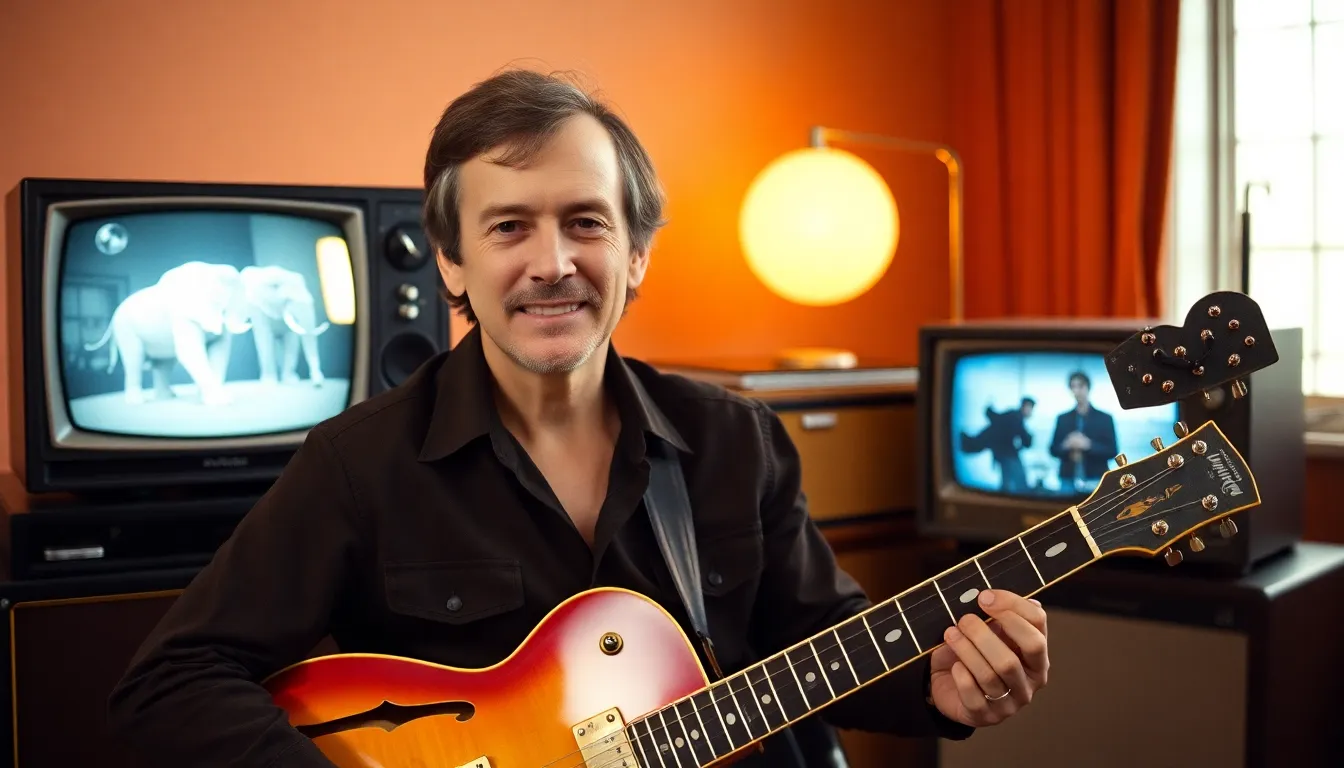
Beyond music, Nesmith ventured into multimedia experimentation. In 1978, he produced Elephant Parts, a collection of short comedy and music videos that won the inaugural Grammy Award for Best Video Album. The project is considered a forerunner of MTV’s format and demonstrated Nesmith’s belief that visual storytelling could enhance musical expression.
Collaborations and Evolution
Throughout the 1970s and 1980s, Nesmith collaborated with a range of artists and producers. He worked closely with Nashville session musicians such as Jerry Reed and Buddy Emmons, expanding his country‑rock palette. In the late 1970s, he formed the label Pacific Arts, a pioneering independent‑record company that released his own work as well as those of emerging artists like the pop‑folk duo “The Little River Band.” Pacific Arts also served as the distributor for his video projects, exemplifying his commitment to creative control.
The 1990s saw Nesmith embracing digital technologies. He was an early adopter of the internet, launching the “Michael Nesmith Music Video” series for AOL and later producing a series of web‑based video shorts titled Video Games* (1995). These works blended satire, music, and emerging computer graphics, underscoring his willingness to experiment with new media.
Even after his 2000s resurgence, Nesmith continued to collaborate with modern musicians, contributing guitar and vocal parts to recordings by artists such as R.E.M.’s Michael Stipe and the alternative country group The Jayhawks. He also produced the 2014 album The Michael Nesmith Anthology, which compiled rare tracks, live performances, and previously unreleased material, illustrating the breadth of his catalog.
Awards, Reception, and Legacy
Nesmith’s contributions have been recognized across multiple fields. In addition to his Grammy for Elephant Parts, he received a lifetime achievement award from the Nashville Songwriters Hall of Fame in 2009. Critics have praised his early solo albums for their forward‑thinking synthesis of country instrumentation and rock sensibility; Rolling Stone placed Loose Salute on its list of “100 Greatest Albums of the 1970s” in 2015.
His influence extends to contemporary musicians who cite his pioneering country‑rock approach as a template. The Eagles’ Don Henley has referred to Nesmith as a “key architect” of the sound that defined West Coast rock in the 1970s. Likewise, MTV founder Robert Rogers credited Elephant Parts as a conceptual spark for the network’s launch.
Despite his artistic successes, Nesmith remained a private figure, rarely engaging in the celebrity circuit. He maintained an estate in Carmel Valley, California, where he continued to write, record, and produce until his death on December 10, 2021, at age 78. Posthumously, his estate has overseen the release of a comprehensive box set, Red‑Headed Country Boy: The Complete Pacific Arts Collection, ensuring that new generations can access his extensive body of work.
Overall, Michael Nesmith is remembered as a multifaceted innovator—a songwriter who helped forge country‑rock, a television star who leveraged his platform for artistic autonomy, and a visionary who foresaw the convergence of music and visual media. His legacy persists in the continuing relevance of his recordings, the ongoing study of his multimedia ventures, and the admiration of artists who view him as a bridge between the classic era of rock and the digital age of visual storytelling.