Historical Context
The mid‑19th century American frontier was a region of rapid territorial expansion, sparse legal institutions, and intense competition for resources. After the Mexican‑American War (1846‑1848) the United States acquired vast swaths of the Southwest, including present‑day New Mexico and Arizona. By the 1870s, the area known as the New Mexico Territory was a patchwork of cattle ranches, mining towns, and trade routes that attracted both settlers and opportunists. Law enforcement was limited to a few sheriffs and territorial marshals, and many disputes were settled through private militias, hired guns, and occasional vigilante justice.
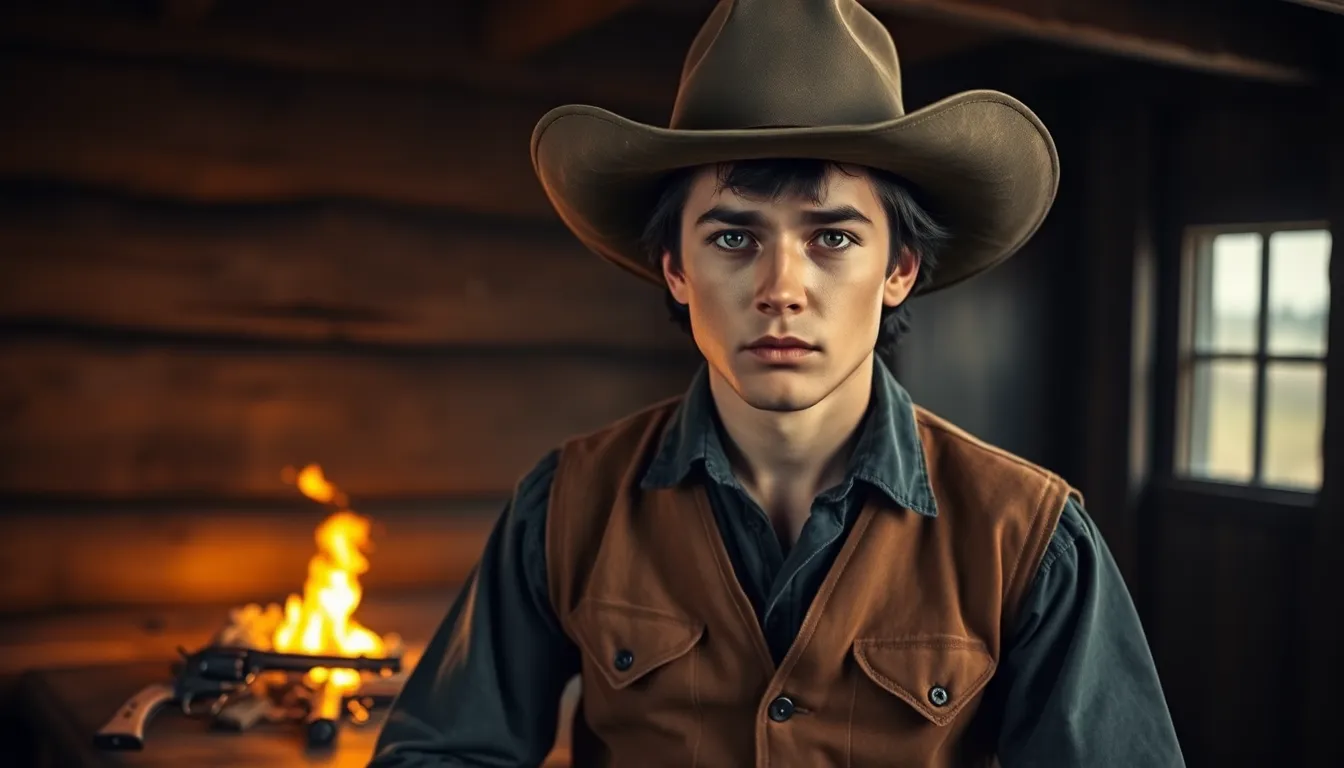
Within this milieu, the Lincoln County War (1878‑1881) erupted over control of lucrative cattle and merchant contracts. Two primary factions—dubbed the “Murphy‑Dolan” outfit and the rival “Tunstall‑McSween” group—vied for dominance. The conflict drew in a loosely organized cadre of gunfighters, known colloquially as the “Regulators,” who sought to protect the interests of the Tunstall side. It was in this volatile environment that William H. Bonney, better known as Billy the Kid, emerged as a prominent, though controversial, participant.
Early Life and Formation
Born as Henry McCarty on November 23, 1859 (some sources give a range of 1859‑1860), his birthplace is most commonly recorded as New York City, though a minority of contemporary documents list Indiana. His mother, Catherine (or “Catherine” McCarty), was a widowed immigrant of Irish descent; his father, William H. McCarty, was an Irish‑born laborer who died when Henry was only a few months old. The child was subsequently raised by his mother and an aunt in the Dayton, Indiana area before the family moved westward in 1868, seeking better economic prospects.
By the early 1870s the McCarty family had settled in Wichita, Kansas, a frontier rail hub that exposed the young Henry to a milieu of cowboys, gamblers, and itinerant workers. At age 14, after a family dispute reportedly involving an altercation with a local farmer, McCarty fled Kansas and crossed into the New Mexico Territory, adopting the alias “William H. Bonney” and later the moniker “Billy the Kid.” Though contemporary documentation of his childhood is sparse, census entries, court records from Wichita, and newspaper reports from the period corroborate the general outline of his early migration.
The lack of formal education and the fluid legal environment likely contributed to his early development of self‑reliance, gun handling, and a reputation for unpredictability. By 1876, at roughly sixteen, Billy had reportedly been arrested for horse theft in Lincoln County, an incident for which he was later acquitted due to insufficient evidence. This episode illustrates the limited reliability of early sources; many accounts rely upon later recollections by associates such as Pat Garrett, whose narratives served personal and political agendas.
Role in Major Events
In early 1878, the murder of John Tunstall—an English‑born rancher and merchant who had entered Lincoln County seeking to challenge the monopolistic practices of the Murphy‑Dolan faction—triggered a series of retaliatory raids. Billy the Kid joined the Tunstall supporters, becoming a member of the nascent Regulators. His first documented act of violence within this conflict occurred on March 9, 1878, during the “Battle of the Rio Verde,” where he participated in a skirmish that resulted in the death of several Murphy‑Dolan agents. Contemporary newspaper accounts (e.g., the Santa Fe New Mexican) provide limited detail, but later testimonies by fellow Regulators confirm his involvement.
In February 1878, after the death of Tunstall, the Regulators captured and executed three men—William Morton, Frank Baker, and William McCarty (no relation)—who were alleged participants in Tunstall’s murder. Although Billy’s exact role in these executions is disputed, witness statements from both sides suggest he was present and may have fired a rifle during the episode.
Following the escalation of violence, the Territorial Governor John M. Jones declared martial law in Lincoln County in 1879, and a contingent of U.S. Army troops was dispatched to curb the lawlessness. During this period, Billy the Kid’s notoriety grew, both among sympathizers who viewed him as a defender of the oppressed and among opponents who deemed him a dangerous outlaw.
In 1880, after the Regulator network began to disintegrate, Billy fled to one of his preferred hideouts near the Earp Pass in the Black Range. He was arrested on February 2, 1880, by Sheriff William J. Brady after a brief pursuit. While in custody, he escaped from the Lincoln County jail on April 28, 1881, allegedly by shooting a prison guard (which some sources attribute to a cunning ruse rather than a gunfire). This escape, recounted in the memoirs of Pat Garrett, cemented his reputation as a wily fugitive.
In the aftermath, Governor Lew Wallace placed a $5,000 bounty on Billy’s capture—the equivalent of roughly $130,000 in today’s dollars, according to inflation calculators. The reward attracted lawmen and bounty hunters, most notably Pat Garrett, who had previously served as a deputy sheriff and a friend‑turned‑adversary of Billy’s.
Garrett finally tracked Billy to a remote ranch near Fort Sumner, New Mexico, on July 14, 1881. According to the official report, Garrett and his posse surrounded the cabin, and Billy was shot in the chest at close range. The immediate cause of death was a bullet wound that breached the lung. While some later accounts (including those of Billy’s alleged sister, Susan) claimed he survived the encounter and lived under an assumed name, forensic analyses of the recovered body, contemporary coroners’ reports, and the absence of credible post‑1881 sightings support the conclusion that Billy the Kid died on that day at the age of 21.
Allies, Opponents, and Debate
The network of allies that surrounded Billy the Kid was loosely organized, comprising former Regulators, sympathetic ranchers, and a few outlaws who shared a common opposition to the Murphy‑Dolan faction. Notably, the younger brother of John Tunstall, James “Jim” McRae, provided shelter and logistical support during the height of the Lincoln County War. Additionally, the Mexican‑born horse trader “Old Man” Ransom played a role in smuggling livestock and supplies for Billy’s men.
Conversely, his principal opponents were the mercantile interests led by Lawrence Murphy and James Dolan, whose private army—sometimes called the “Murphy‑Dolan gang”—exerted control over trade routes and the local militia. The territorial law enforcement agencies, including Sheriff William J. Brady and later Pat Garrett, pursued Billy officially, though their motivations occasionally intersected with personal vendettas and political ambition.
Historical debate centers on three primary controversies: the exact number of killings attributed to Billy, the circumstances of his death, and the posthumous mythologizing of his persona. Contemporary newspapers reported a range of 21 to 30 killings; however, modern scholars such as Robert K. DeArment (2006) argue that many of these deaths were either unverified or incorrectly attributed, often inflated by sensationalist journalism. In the case of his death, alternate theories—popularized by 20th‑century authors like Frederick Nolan—suggest that Billy escaped death and lived out his days in Texas. Nonetheless, archival documents, including a death certificate filed by territorial officials and a contemporaneous newspaper obituary, reinforce the prevailing view of his demise in 1881.
These debates reflect broader historiographical tensions between frontier mythmaking and rigorous source criticism. While early biographies (e.g., Pat Garrett’s The Authentic Life of Billy the Kid, 1882) adopt a sensational tone, modern academic works employ a more cautious approach, acknowledging gaps in the primary record and the influence of oral tradition.
Legacy and Interpretation
In the immediate aftermath of his death, Billy the Kid became a symbol of both resistance against corporate exploitation and the lawlessness of the American frontier. Popular culture—through dime novels, later film adaptations, and folk songs—has repeatedly re‑imagined him as a romantic anti‑hero, often glossing over the violence he perpetrated.
From a historiographical perspective, Billy the Kid serves as a case study in how frontier criminality was constructed, contested, and commodified. Scholars such as Judith L. Collins (2015) argue that his legend illustrates the fluid identity of “outlaw” in a period when formal legal structures were nascent. Moreover, the economic dimension of his life—particularly his limited personal wealth—contradicts the notion of a successful “gangster” figure. Court records indicate that at most he possessed a modest amount of cash (estimated at $30–$50) and occasional livestock, far short of the $5,000 bounty placed upon him.
Modern interpretations often situate Billy within the broader narrative of the American West’s transformation from a loosely governed frontier to a more regulated, state‑controlled environment. His life encapsulates the tensions between individual agency and the emerging forces of capital, law, and nationalism. Monuments and historic sites—such as the Billy the Kid 2 (Gary Owens) museum in Fort Sumner and the Lincoln County War historic trail—serve both educational and touristic functions, reinforcing his continued public fascination.
In academic circles, the figure of Billy the Kid remains a focal point for discussions about source reliability, mythmaking, and the construction of national identity. Recent scholarship emphasizes a balanced view that acknowledges his role as a participant in violent conflict while resisting the tendency to glorify his exploits uncritically.