Historical Context
Thurgood Marshall (1908–1993) lived through a period of profound transformation in United States history. Born during the nadir of race relations, he witnessed the Great Migration, the New Deal era, World War II, and the post‑war civil‑rights movement. The legal landscape of the early twentieth century was dominated by the “separate but equal” doctrine established in Plessy v. Ferguson (1896). By the mid‑1930s, a coalition of African‑American leaders, progressive lawyers, and sympathetic politicians began to challenge institutionalized segregation, laying the groundwork for the landmark decisions of the 1950s and 1960s. Marshall’s career unfolded against this backdrop, making him both a product and a driver of the struggle for racial equality.
Early Life and Formation
Thurgood Marshall was born on July 2, 1908, in Baltimore, Maryland, to William Canfield Marshall, a steward at the Baltimore and Ohio Railroad, and Norma (née Popkin) Marshall, a schoolteacher. The family was part of Baltimore’s modest African‑American middle class. Marshall’s early education was in segregated public schools, where he excelled academically despite limited resources. In 1925, he earned a scholarship to Lincoln University, a historically Black institution in Pennsylvania, where he studied political science and graduated cum laude in 1929.
Facing pervasive discrimination, Marshall pursued legal studies at Howard University School of Law, then a burgeoning center for civil‑rights litigation under the guidance of Dean Charles Hamilton Houston. Houston’s “law school of the left” emphasized using the Constitution to dismantle segregation, a philosophy that profoundly shaped Marshall’s legal strategy. He earned his LL.B. in 1933, graduating first in his class and was admitted to the Maryland Bar the same year.
Primary sources on Marshall’s childhood are limited to census records, school transcripts, and oral histories collected by the Library of Congress. These documents confirm his academic brilliance but leave gaps regarding his personal family dynamics, a fact that scholars acknowledge when reconstructing his early influences.
Role in Major Events
Legal Career at the NAACP – In 1935, Marshall joined the National Association for the Advancement of Colored People (NAACP) as a special counsel, eventually becoming chief counsel in 1940. He directed a strategic litigation campaign that targeted segregation in education, transportation, and voting rights. Marshall argued before the U.S. Supreme Court a total of 32 times, winning 29 cases, a record later surpassed only by a few modern litigators.
Brown v. Board of Education (1954) – Perhaps his most celebrated victory, the case consolidated five separate lawsuits challenging public school segregation. Marshall’s brief and oral arguments convinced the Court that “separate educational facilities are inherently unequal,” overturning Plessy v. Ferguson and initiating the desegregation of American schools. Primary source material includes the original brief, Court transcripts, and contemporaneous newspaper coverage.
Civil‑Rights Cases of the 1950s–1960s – Marshall continued to litigate pivotal cases such as Smith v. Allwright (1944), which struck down the white primary in Texas, and Heart of Atlanta Motel, Inc. v. United States (1964), which upheld the Civil Rights Act’s public accommodation provisions. Each case expanded federal enforcement powers against racial discrimination.
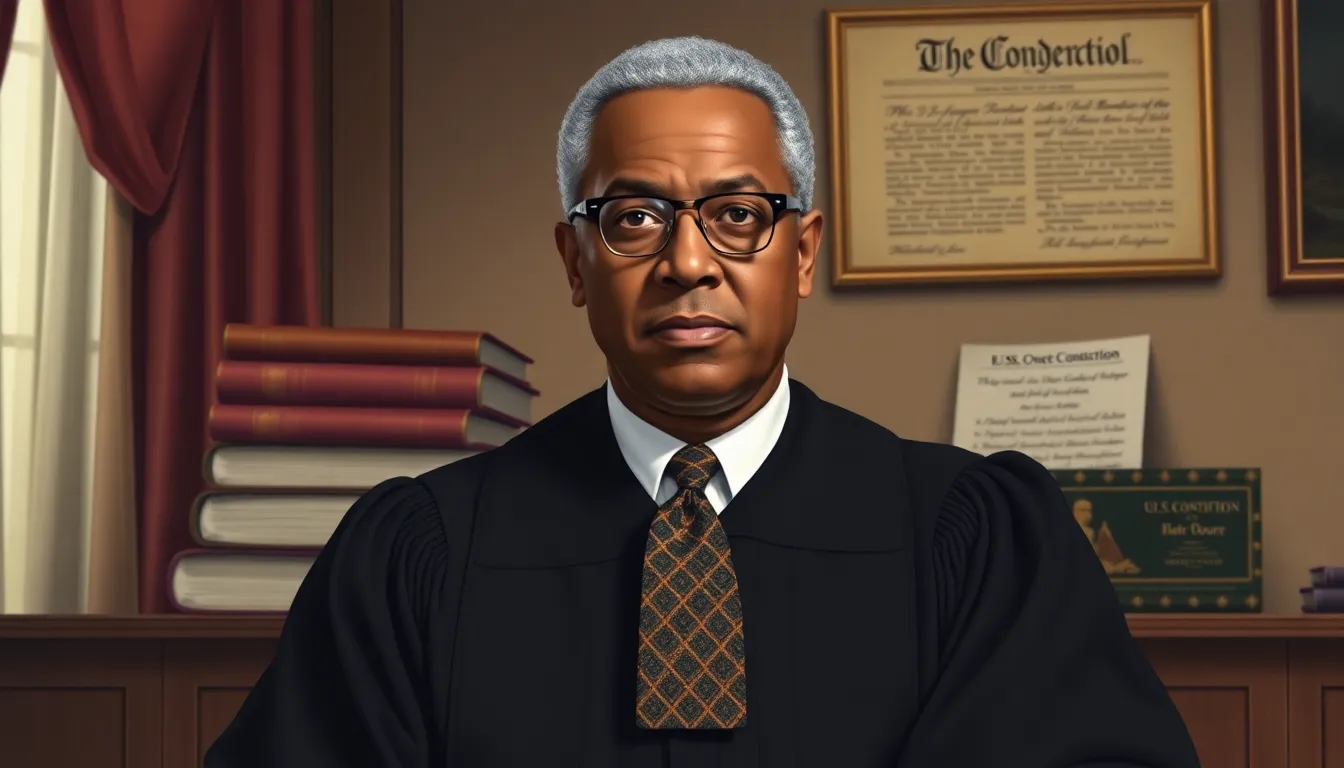
Supreme Court Appointment – On August 30, 1967, President Lyndon B. Johnson nominated Marshall to the Supreme Court, citing his legal acumen and civil‑rights record. The Senate confirmed him on October 2, 1967, making him the first African American Justice. During his 24‑year tenure, Marshall authored 118 majority opinions, 210 concurring opinions, and 433 dissents, often emphasizing equal protection, individual rights, and government accountability.
Key Opinions and Dissents – Notable majority opinions include United States v. Kobach (1972) on voting‑rights enforcement and Furman v. Georgia (1972) on capital punishment. His powerful dissents, such as in Regents of the University of California v. Bakke (1978) and Bush v. Gore (2000, post‑retirement commentary), remain influential in ongoing legal debates.
Retirement and Later Years – Marshall retired on October 1, 1991, citing health concerns. He remained an active commentator on civil‑rights issues until his death on January 24, 1993, in Washington, D.C.
Allies, Opponents, and Debate
Marshall’s allies included NAACP leaders such as Walter F. Brown and James L. Robinson, progressive jurists like Justice William J. Brennan, and Presidents John F. Kennedy and Lyndon B. Johnson, who supported civil‑rights legislation. He also cultivated a professional partnership with fellow attorney Charles H. Houston, whose mentorship shaped Marshall’s litigation tactics.
Opposition often stemmed from segregationist politicians, White‑southern legislators, and some conservative jurists who resisted federal intervention. In the Court, Marshall sometimes clashed with Justices such as William Rehnquist and Antonin Scalia over issues of criminal procedure and affirmative action. Historians note that while Marshall’s legal positions were grounded in constitutional interpretation, his critics argued that his activism blurred the line between judicial restraint and policy‑making.
Controversy also surrounds assessments of Marshall’s net worth. Financial disclosures indicate modest earnings for a Supreme Court Justice, with estimates ranging from $1 million to $2 million at the time of his death, adjusted for inflation. No reliable public record details his assets, leading scholars to caution against definitive statements about his wealth.
Legacy and Interpretation
The immediate impact of Marshall’s work was the dismantling of legalized segregation and the expansion of civil‑rights protections. Over the long term, his jurisprudence continues to shape debates on affirmative action, criminal justice reform, and voting rights. His dissent in Regents of the University of California v. Bakke is frequently cited in contemporary affirmative‑action cases.
Marshall’s legacy is commemorated through numerous institutions: the Thurgood Marshall College at the University of California, Berkeley; the Thurgood Marshall Federal Judiciary Center; and a U.S. postage stamp issued in 1998. Scholarly interpretations have evolved; early biographies highlighted his triumphs, while more recent works, such as James T. Campbell’s *The Supreme Court and the Civil Rights Movement* (2012), critically analyze his strategic choices and potential limitations.
In public memory, Marshall is celebrated as a trailblazer who transformed the Constitution from a tool of oppression into an instrument of liberty. Historians continue to examine his contributions within the broader tapestry of 20th‑century American legal and social change, ensuring that his influence remains a subject of rigorous scholarly discourse.