Early Life and Military Formation
Ernesto “Che” Guevara was born on 14 June 1928 in Rosario, Argentina, to a middle‑class family of Spanish and Irish descent. His father, Ernesto Guevara Lynch, was a railway worker and later a travelling salesman; his mother, Celia de la Serna, came from a well‑connected land‑owning family. Guevara attended the prestigious National College of Monserrat and later enrolled at the University of Buenos Aires, where he studied medicine and earned his degree in 1953.
Although Guevara never attended a formal military academy, his formative years included extensive travel throughout South America, most famously a motorcycle journey from 1950‑1952 that took him across Chile, Peru, Colombia, and Ecuador. The trip exposed him to profound socioeconomic inequality, shaping his political consciousness and later commitment to armed struggle. While at university, he joined the Argentine Student Federation (FUA), a left‑wing organization, and began reading Marxist literature, an intellectual background that would later inform his revolutionary praxis.
Guevara’s first direct contact with armed conflict occurred in 1955 when he joined a group of exiled leftists in Guatemala, which was then undergoing a democratic experiment under President Jacobo Árbenz. The United States‑backed coup that ousted Árbenz in June 1954 left a lasting impression on Guevara and convinced him that a revolutionary overthrow of the ruling elite required armed insurrection rather than electoral politics.
Wartime Context and Role
In 1955, during a stopover in Mexico City, Guevara met Fidel Castro and other members of the “26th of July Movement,” a group of Cuban exiles planning to overthrow the regime of Fulgencio Batista. Guevara joined the movement, bringing with him political theory, medical expertise, and a willingness to fight. In November 1956, the group embarked on the yacht Granma, sailing from Tuxpan, Mexico, to Cuba with 82 members. The landing on 2 December 1956 at Playa Girón was met with fierce resistance from Batista’s army; only 19 of the original force survived the initial engagement.
Guevara was appointed a comandante of the newly formed guerrilla column that operated in the Sierra Maestra mountains. His official rank within the rebel forces was “comandante” (commander), a title reflecting both political and military authority. He oversaw the training of recruits, medical services, and logistics, and he participated directly in combat operations, reconnaissance, and strategic planning.
Major Campaigns, Battles, and Decisions
1. Sierra Maestra Campaign (1956‑1958)
After the failed Granma landing, Guevara helped consolidate the guerrilla base in the Sierra Maestra. He led several key actions, including the assault on the garrison at Cuete de la Quambó (January 1957) and the capture of the town of La Plata (July 1957). His most noted military achievement during this period was the victory at the Battle of La Plata, where his unit defeated a numerically superior Batista force, capturing weapons and ammunition that bolstered the rebel arsenal.
Guevara’s tactical approach emphasized mobility, surprise attacks, and the use of small, highly disciplined units. He emphasized political education alongside military training, insisting that combatants should understand the broader social objectives of the revolution.
2. Battle of Las Mercedes (July 1958)
In July 1958, Batista ordered a large‑scale offensive aimed at crushing the Sierra Maestra insurgents. Guevara commanded a column that successfully repelled an attack on the Las Mercedes outpost, inflicting significant casualties on government troops. The engagement demonstrated the guerrillas’ growing ability to coordinate defensive operations against a conventional army.
3. Final Offensive and Capture of Santiago de Cuba (January 1959)
Following the decisive defeat of Batista’s forces at the Battle of Santa Clara, led by Fidel Castro and Che Guevara, the revolutionary army marched eastward. Guevara’s column entered Santiago de Cuba on 1 January 1959, where he oversaw the surrender of remaining Batista loyalists and the establishment of revolutionary authority.
4. Congo Mission (1964‑1965)
After the Cuban Revolution, Guevara was appointed as a military advisor to the Congolese Marxist insurgency led by Laurent-Désiré Kabila. He arrived in the Congo in August 1964, organizing a guerrilla force of roughly 200 combatants. Despite his experience, the mission failed due to a combination of logistical shortcomings, lack of local support, and internal factionalism. Guevara left the Congo in November 1965, having concluded that the revolutionary conditions were not sufficiently ripe for a successful armed struggle.
5. Bolivian Campaign (1966‑1967)
Guevara’s last military undertaking was an attempt to ignite a continental revolution in Bolivia. He entered Bolivia in November 1966 with a small contingent of twelve guerrillas, establishing a base in the Yuro ravine. Guevara attempted to recruit local peasants and build a guerrilla network, but he faced harsh terrain, limited popular support, and relentless counter‑insurgency operations by the Bolivian army, aided by the United States Central Intelligence Agency. On 8 October 1967, Guevara was captured near La Higuera and executed by Bolivian forces on 9 October 1967.
Leadership, Courage, and Controversies
Che Guevara’s leadership style combined ideological rigor with a willingness to endure personal hardship. He was known for accompanying his fighters on the front lines, sharing the same austere living conditions, and providing medical care. His comrades described him as physically robust, disciplined, and unapologetically committed to the revolutionary cause.
Critics, however, have highlighted several contentious aspects of Guevara’s military conduct. During the Cuban Revolution, he participated in the execution of captured Batista officials, most notably the execution of the former army officer Captain Alberto Bayo, which has been framed both as a war‑time necessity and a breach of due process. Guevara’s own writings, especially his 1961 essay “Guerrilla Warfare,” advocate for the use of terror tactics and the creation of a “revolutionary army” that operates outside traditional legal constraints, a stance that has been used to both commend his strategic insight and condemn his ethical approach.
In the Congo and Bolivia, Guevara’s insistence on maintaining a strict ideological purity sometimes alienated potential local allies. Scholars argue that his failure to adapt fully to local dynamics contributed to the collapse of both campaigns. Moreover, his role in establishing and overseeing summary executions during the early months of the Cuban Revolution—documented in the “Trial of the 33” and the “Trial of the Fourteen”—remains a point of debate among historians regarding the balance between revolutionary justice and human rights violations.
Despite these controversies, Guevara received several formal recognitions from the Cuban government. He was posthumously awarded the title “Hero of the Republic of Cuba” and the Order of Playa Girón, Cuba’s highest military decoration. These honors reflect the Cuban state’s view of Guevara as a martyr and a symbol of revolutionary commitment, though they do not mitigate the scholarly disagreements surrounding his methods.
Later Life, Memory, and Legacy
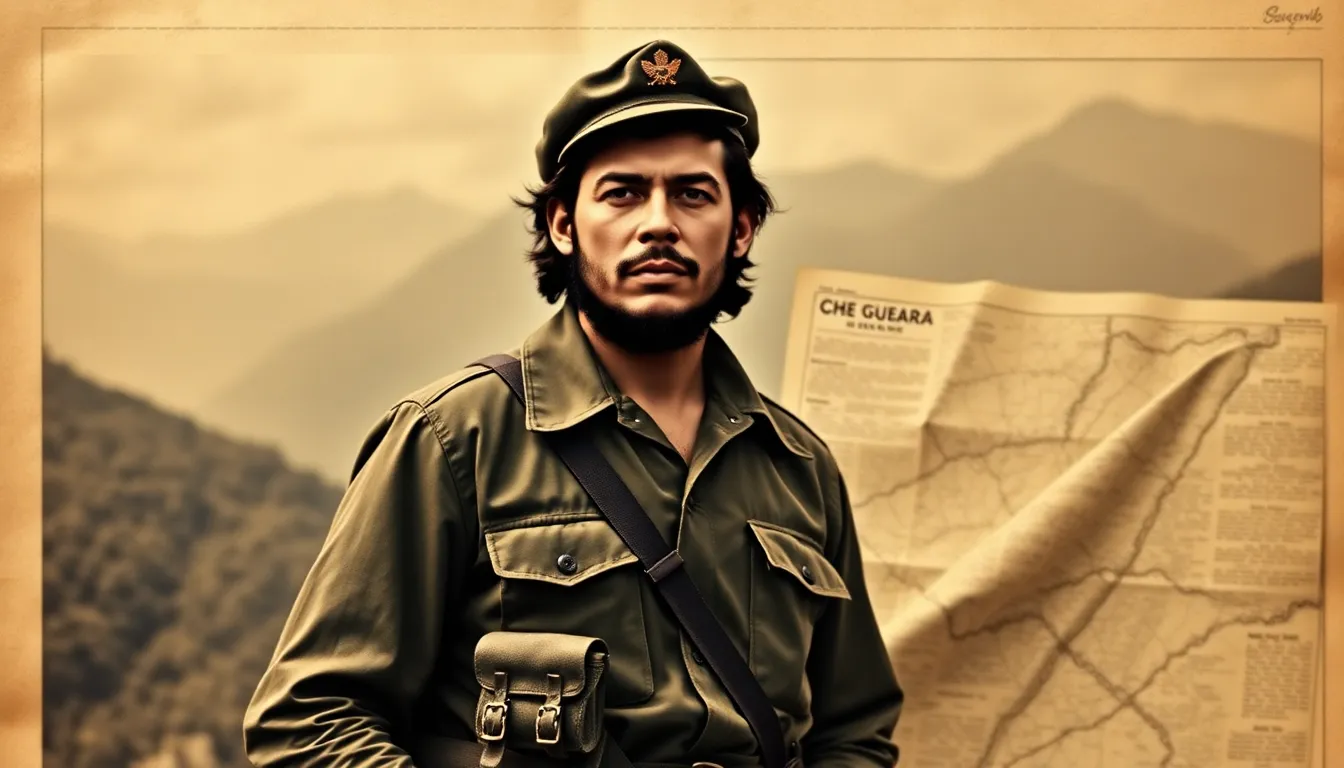
Following his death, Che Guevara became an iconic figure in both left‑wing movements and popular culture. His image—most famously the Alberto Korda photograph taken in 1960—has been reproduced on murals, t‑shirts, and protest posters worldwide. The Cuban government institutionalized his memory through schools, streets, and monuments bearing his name; the Che Guevara Mausoleum in Santa Clara houses his remains and serves as a pilgrimage site.
Academically, Guevara’s legacy is the subject of divergent interpretations. Marxist scholars emphasize his contributions to guerrilla theory, his emphasis on the role of the peasantry, and his vision of a “new man” devoted to collective well‑being. Revisionist historians, however, critique his authoritarian tendencies, the lack of democratic accountability in his revolutionary practice, and the human cost of his campaigns.
In recent decades, a reassessment of Guevara’s military decisions has emerged, focusing on the practicality of his strategies in contemporary asymmetrical warfare. Military analysts cite his emphasis on mobility, decentralized command, and political indoctrination as precursors to modern insurgent doctrines, while also noting the failures of his Bolivian and Congolese ventures as cautionary examples of over‑idealistic planning.
Che Guevara remains a polarizing figure: revered as a revolutionary martyr by many leftist movements, condemned as a violent extremist by opponents, and studied as a complex case study in insurgency and revolutionary leadership. His impact on 20th‑century revolutionary praxis, as well as his enduring cultural symbolism, ensure that scholarly debate about his life and actions will continue.