Early Life and Formation
James Arthur Lovell Jr. was born on March 25, 1928, in Cleveland, Ohio, to James A. Lovell Sr., a mechanical engineer, and Mabel (Gable) Lovell, a schoolteacher. Growing up during the Great Depression, Lovell was exposed to a family culture that prized technical skill and disciplined work ethic. He attended West High School, where his aptitude for mathematics and physics emerged early, and he earned a scholarship to the United States Naval Academy in Annapolis, Maryland.
At Annapolis, Lovell excelled academically and athletically, graduating in 1950 with a Bachelor of Science in electrical engineering. His senior thesis on aircraft navigation systems foreshadowed his later career in aerospace. Upon commissioning as an ensign in the United States Navy, he entered flight training at Naval Air Station Pensacola, earning his wings in 1951. Over the next decade, Lovell flew the Grumman F9F Panther and the Douglas A‑1 Skyraider, accumulating more than 5,000 flight hours and qualifying as a naval aviator, a skill set that would prove essential for the precision required in astronautics.
During his naval service, Lovell completed a master’s degree in aerospace engineering at the University of Southern California in 1960, studying orbital mechanics and guidance systems. His academic work, combined with operational experience as a test pilot at the Naval Air Test Center in Patuxent River, Maryland, positioned him as a prime candidate when NASA opened its astronaut selection to military pilots in 1962.
Exploration Context and Ambitions
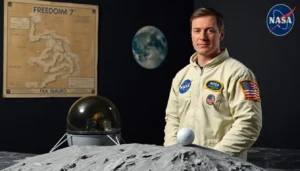
The early 1960s marked a pivotal moment in human exploration: the Cold War competition between the United States and the Soviet Union spurred the Space Race, a geopolitical contest that elevated spaceflight to national priority. President John F. Kennedy’s 1961 declaration to land a man on the Moon before the decade’s end crystallized a massive governmental and scientific effort. Within this context, astronauts were framed as modern explorers, inheriting the legacy of maritime and terrestrial pioneers while confronting entirely new frontiers of vacuum, radiation, and microgravity.
Lovell’s personal ambition aligned with this national agenda. He expressed a deep curiosity about the Earth’s place in the cosmos and a desire to push the limits of human endurance and technology. In interviews, he stressed that his motivation was not fame but the challenge of applying his engineering training to solve problems that could ensure the safety and success of future crews. The prospect of orbiting another celestial body presented an unprecedented logistical and physiological test, and Lovell volunteered for missions that promised to expand NASA’s understanding of long‑duration spaceflight.
Major Expeditions and Journeys
Lovell’s NASA career began with his selection as part of NASA Astronaut Group 3 in October 1963, a cohort that included future Apollo commanders such as Frank Borman and Jim A. Swigert. After completing the rigorous astronaut training program—covering orbital mechanics, spacecraft systems, and zero‑gravity simulations—Lovell was assigned as pilot on Gemini 7 in December 1965. Gemini 7 performed the first long‑duration flight (14 days) in Earth orbit, providing valuable data on crew health and spacecraft life‑support systems.
In August 1968, Lovell served as command module pilot for Apollo 8, the first crewed mission to leave Earth orbit, travel to the Moon, and return. Alongside commander Frank Borman and lunar module pilot William Anders, Lovell helped navigate the spacecraft on a free‑return trajectory, completing ten orbits of the Moon. Apollo 8’s mission demonstrated that the Saturn V launch vehicle, the Service Module propulsion, and the onboard navigation computers could operate safely in deep space. The iconic Earthrise photograph taken by Anders during this mission provided a powerful visual symbol of humanity’s emergent planetary perspective.
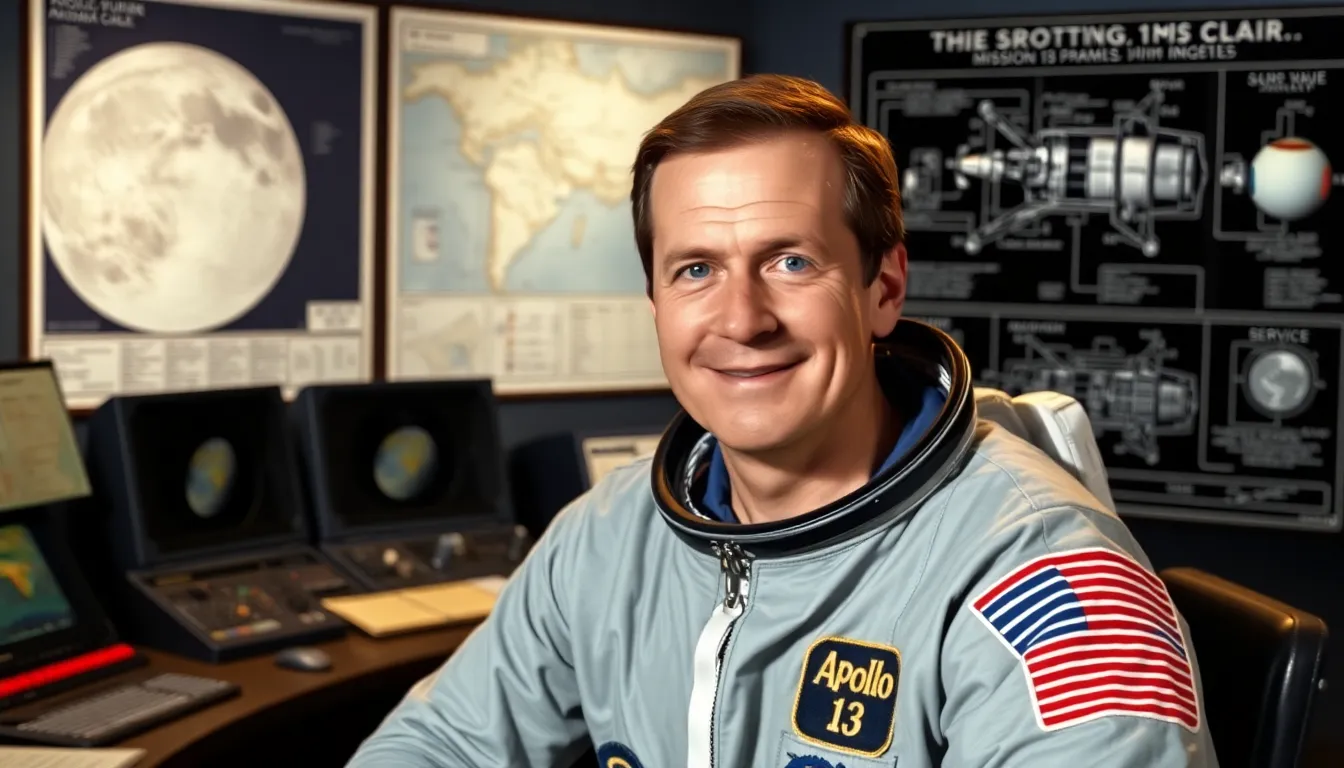
The pinnacle of Lovell’s exploratory career came with the Apollo 13 mission, launched on April 11, 1970, with Lovell commanding, Jack Swigert as command module pilot, and Fred Haise as lunar module pilot. The crew’s objective was to land in the Fra Mauro highlands of the Moon. However, an oxygen tank explosion in the service module on April 13 crippled the spacecraft, causing loss of electrical power, propulsion, and life‑support capabilities. Lovell’s leadership in the crisis, combined with ground‑based mission control’s problem‑solving, led to the improvisation of a split‑capacitor fuel cell, the use of the lunar module as a lifeboat, and a successful return trajectory that brought the crew safely home on April 17.
After Apollo 13, Lovell’s subsequent missions were limited. He was assigned as backup commander for Apollo 14 and later served in senior NASA management roles, including Director of Flight Crew Operations, where he contributed to the development of the Space Shuttle program and later the International Space Station’s crew‑selection policies.
Risks, Companions, and Controversies
Spaceflight in the 1960s and 1970s was inherently high‑risk. The Apollo 13 accident underscored the danger of hardware failure in an environment where even minor malfunctions could become fatal. The explosion was traced to a combination of design flaws in the oxygen tank’s heater and procedural oversights in pre‑flight testing. While the incident prompted extensive engineering reviews and redesigns of the Service Module, it also sparked public debate about the safety of manned lunar missions, especially as the United States faced waning public enthusiasm and increasing fiscal scrutiny of the space program.
Lovell’s crew members played crucial roles in the mission’s survival. Jack Swigert, who had just replaced Thomas K. Mattingly due to a potential exposure to a measles outbreak, demonstrated composure during the emergency, while Fred Haise’s expertise in the lunar module systems proved vital in sustaining life support. The ground team, led by flight director Gene Kranz, employed a “failure is not an option” ethos that has become a case study in crisis management. Their collaborative problem‑solving, including the construction of a carbon‑dioxide scrubber using only available materials, highlighted the importance of interdisciplinary expertise.
Controversially, some critics argued that NASA’s rapid schedule and inadequate testing of critical components contributed to the accident. In subsequent hearings, congressional committees scrutinized NASA’s procurement and quality‑assurance practices, leading to reforms that improved the reliability of later missions, such as Skylab and the Space Shuttle. However, no evidence suggests that Lovell or his crew concealed information about the incident; their debriefings and subsequent memoirs have been consistent with the technical findings released by NASA.
Legacy and Historical Impact
Jim Lovell’s career encapsulates a transformative era in human exploration. His participation in Apollo 8 helped establish the feasibility of lunar orbit and contributed to the cultural imagination of seeing Earth as a fragile sphere in space. The Apollo 13 mission, while a failure to achieve its primary landing objective, became a landmark demonstration of human ingenuity, teamwork, and resilience under extreme duress. The mission’s safe return reinforced public confidence in NASA’s ability to manage crises, influencing policy support for subsequent ventures, including the Space Shuttle and International Space Station.
Beyond the operational achievements, Lovell’s personal narrative has been preserved in multiple formats: his 1994 memoir “Lost Moon: The Perilous Voyage of Apollo 13,” the 1995 film “Apollo 13” directed by Ron Howard, and numerous oral histories archived by the NASA Historical Office. These sources have provided scholars with primary accounts of crew dynamics, decision‑making processes, and the psychological toll of spaceflight emergencies.
In recognition of his contributions, Lovell has received numerous honors, including the NASA Distinguished Service Medal, the Presidential Medal of Freedom (awarded to the Apollo 13 crew in 1978), and induction into the U.S. Astronaut Hall of Fame. His presence on advisory boards for aerospace firms and educational institutions has continued to shape the next generation of explorers, emphasizing a philosophy that prioritizes rigorous preparation, transparent communication, and adaptive problem‑solving.
In the broader historical context, Lovell’s story illustrates the shift from early, government‑driven competitions to modern, collaborative exploration efforts that involve international partners and commercial entities. The lessons learned from Apollo 13 are routinely cited in contemporary mission-planning documents for Artemis, the Lunar Gateway, and future manned Mars expeditions, cementing Lovell’s legacy as both a participant in and a teacher of space exploration.