Early Artistic Beginnings
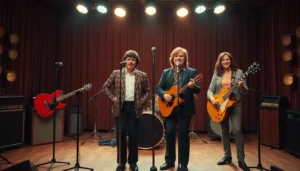
The Ventures originated in Tacoma, Washington, in 1958 when guitarist Bob Bogle and bassist Don Wilson reunited after serving in the United States Navy. Both musicians had been active in local dance bands during the early 1950s, absorbing the burgeoning rock‑and‑roll sound that emanated from the Pacific Northwest. Upon their discharge, they recruited guitarist Don Wilson (no relation) and drummer Howie Johnson, forming a quartet that initially performed under the name The Moonlanders before adopting the moniker The Ventures in 1960.
The early line‑up honed their craft by playing at high school dances, nightclubs, and regional television programs. Their repertoire consisted mainly of popular rock standards, but they soon began experimenting with instrumental arrangements that highlighted Bogle’s distinctive twangy lead guitar and Wilson’s rhythmic bass lines. The group’s first recordings were produced at Gene Autry’s Golden West Studios, resulting in the regional hit “The Twister” (1959), which demonstrated their affinity for melodic hooks and clean guitar tones.
Influences and Creative Voice
The Ventures drew inspiration from a variety of sources. Early on, they were influenced by the surf‑oriented guitar work of Dick Dale and the instrumental pop of The Shadows from the United Kingdom. Jazz guitarists such as Wes Montgomery also informed Bogle’s chord voicings, while the rhythmic sensibilities of R&B acts like The Four Lads contributed to their tight, danceable grooves. The combination of these elements forged a distinctive sound that blended surf rock’s reverb‑laden leads with pop‑structured melodies, making their music accessible to both teen audiences and adult listeners.
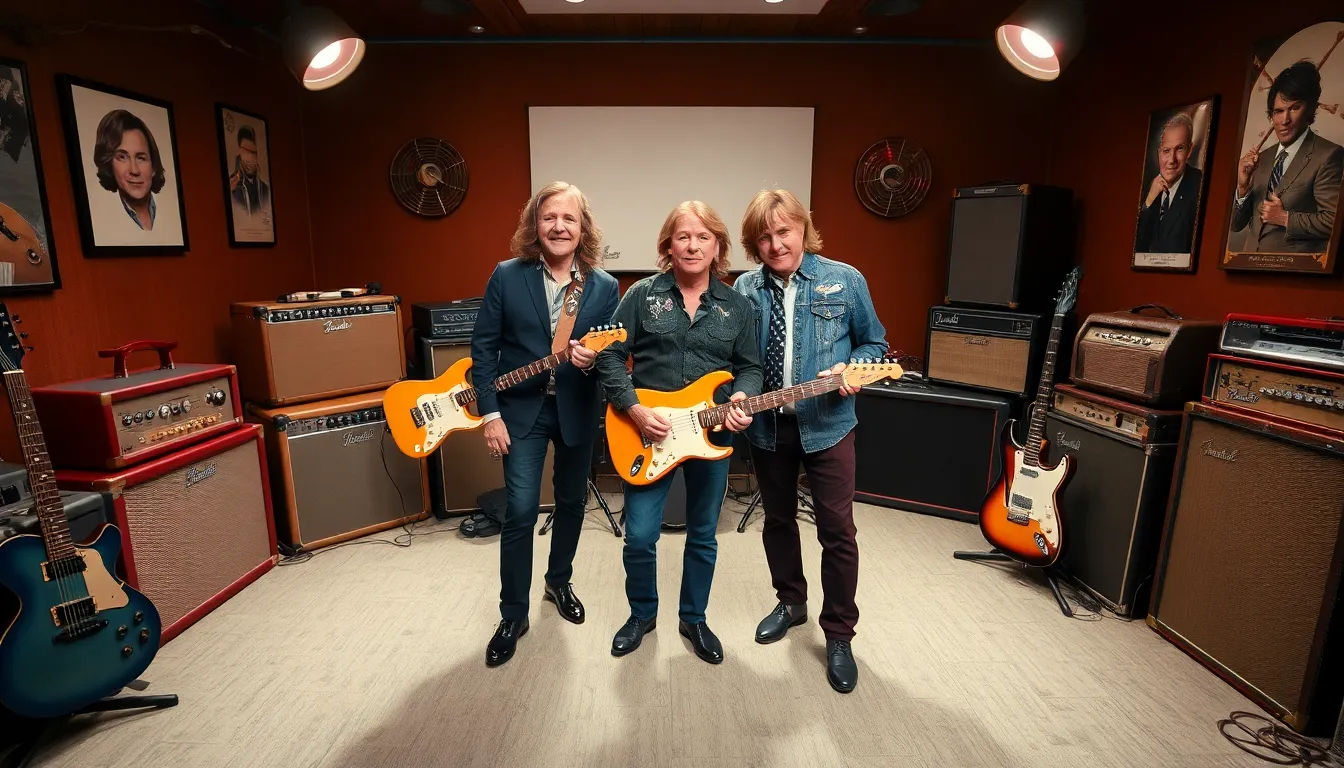
By the early 1960s, the band had solidified a creative voice that emphasized instrumental storytelling. Their use of clean Fender guitars—particularly the Telecaster and Stratocaster—paired with tight double‑track recordings created an airy, expansive feel. The Ventures’ approach often involved interpreting vocal standards as instrumentals, allowing the melody to stand on its own without lyrical content. This method proved pivotal in establishing the group as a vehicle for showcasing guitar technique and compositional skill.
Major Works and Breakthroughs
The Ventures’ breakthrough arrived with the release of “Walk, Don’t Run” (1960), an instrumental penned by Wilson based on Benny Goldman’s “Walk, Don’t Run” and styled after the jazz‑rock hybrid of Jimmy Raney. The single reached No. 2 on the Billboard Hot 100, propelling the band onto national television programs such as “American Bandstand” and “The Ed Sullivan Show”. The success of “Walk, Don’t Run” led to a string of chart‑topping singles, including “Perfidia” (1960), “Night Rider” (1961), and “Hawaii Five‑O” (1969).

In 1962, The Ventures released the landmark album Walk, Don’t Run, which cemented their reputation as instrumental virtuosos. The record featured a blend of surf‑era tracks, Latin‑flavored numbers, and novel arrangements of contemporary pop songs. Their 1966 album The Ventures’ Greatest Hits became one of the best‑selling instrumental compilations of the decade, while the 1970 release Ventures in Concert showcased their live prowess, highlighting extended improvisations and audience interaction.
Beyond the United States, The Ventures enjoyed immense popularity in Japan, where their 1965 Japanese‑market album Foreign Press Trip sparked a surf‑rock craze that persisted for decades. Their influence in Asia led to a prolific touring schedule, resulting in over 5,000 concerts worldwide—a figure that underscored their status as one of the most toured instrumental groups in history.
Collaborations and Evolution
Throughout their five‑decade career, The Ventures collaborated with a variety of producers, record labels, and musicians. Early recordings were overseen by Joe Saraceno at Liberty Records, whose production emphasized clear separation of guitar tracks. In the late 1960s, the group partnered with producer Michael Cushman, who encouraged the incorporation of emerging electronic effects, such as the talk box and early synthesizer textures, evident on the 1971 album Substitute Band.
The Ventures also fostered a mentorship role, inviting younger guitarists onto their tours. Notably, they collaborated with Japanese guitarist Takeshi Kuwahara in the 1980s, bridging East‑West surf cultures. The band’s lineup evolved over time: original members Bogle (who left in 1966) and Wilson remained core anchors, while drummers and lead guitarists rotated, including members such as Nokie Miller, who contributed to the iconic “Miller‑style” double‑pick harmony leads that defined many later recordings.
During the 1990s, The Ventures embraced digital recording techniques, reissuing classic tracks with remastered fidelity and participating in tribute albums that featured contemporary rock acts covering their hits. Their willingness to adapt technologically kept their sound relevant across generational shifts, allowing their music to appear in film soundtracks, television commercials, and video games.
Awards, Reception, and Legacy
The Ventures have received numerous awards acknowledging their contributions to popular music. In 2008, they were inducted into the Rock and Roll Hall of Fame, cited for “pioneering the instrumental rock format and influencing countless guitarists worldwide.” The band also earned a Grammy nomination for Best Pop Instrumental Performance for their 1993 album Surf R evision. Their commercial success includes over 100 million records sold worldwide, making them one of the best‑selling instrumental groups in history.
Critical reception has generally praised the group’s consistency, technical proficiency, and ability to evolve without abandoning their core aesthetic. While some critics in the late 1970s labeled their later work as “nostalgic,” subsequent retrospectives have highlighted the band’s adaptability and its role in shaping guitar‑driven genres ranging from garage rock to post‑punk.
The Ventures’ cultural legacy is evident in the work of artists such as The Beach Boys, Dick Dale, and modern surf‑rock revivalists like The Hot Saxons. Their signature guitar tones have been emulated using Fender Telecasters equipped with vintage reverb units, and their instructional books on guitar technique remain in print. In Japan, a dedicated fan culture still celebrates the group through annual tribute festivals, and many Japanese rock musicians cite The Ventures as a primary influence.
As of the early 2020s, The Ventures continue to tour under the leadership of Don Wilson, who remains the longest‑serving member. Their ongoing presence on the concert circuit underscores the enduring appeal of instrumental rock and the timelessness of their melodic approach.