Early Artistic Beginnings
Michael James Monarch was born on July 5, 1948, in Santa Rosa, California, United States. Raised in a middle‑class household, his father worked as a mechanic while his mother was a schoolteacher. Music entered the Monarch household early; his mother played the piano and encouraged her children to explore basic music theory. By the age of eight, Michael showed a keen interest in the guitar, borrowing a six‑string from a neighbor and teaching himself chords from popular records of the era.
During his teenage years, Monarch attended Santa Rosa High School, where he participated in the school’s jazz band and formed his first rock group, the Rhythm Rascals. The band performed at local teen dances and small clubs in the North Bay area, providing Monarch with his first experience of live amplification and audience interaction. In 1965, after graduating, he moved to San Francisco to immerse himself in the burgeoning counter‑cultural music scene. He took informal lessons from local blues guitarist Paul Butterfield’s protégé, learning slide techniques that would later become a hallmark of his playing style.
Influences and Creative Voice
Monarch’s formative influences combined traditional blues, early British Invasion rock, and the West Coast psychedelic sound. He cited Muddy Waters, B.B. King, Chuck Berry, and the Rolling Stones as primary musical touchstones. The improvisational ethos of jazz guitarist Wes Montgomery also informed his phrasing, while the burgeoning psychedelic scene in San Francisco introduced him to extended modal exploration.
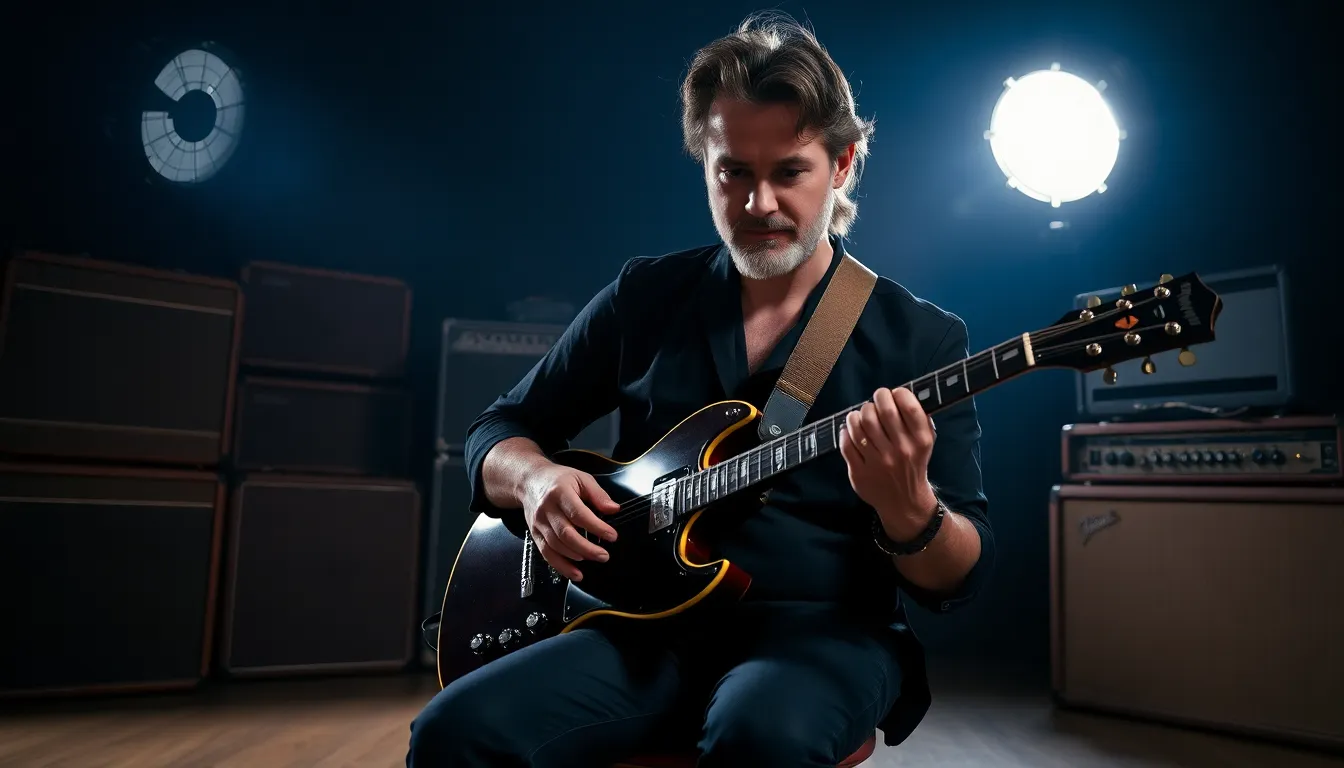
These diverse influences merged into a distinctive voice characterized by a crisp, single‑note attack, aggressive yet melodic bends, and a proclivity for power‑chord driven riffs. Monarch’s early exposure to both acoustic fingerpicking and electric slide gave him a flexible approach that could shift fluidly between clean blues passages and overdriven rock statements. By the late 1960s, he had developed a reputation among local musicians for his technical precision and his willingness to experiment with tone, often employing a Gibson SG through a Vox AC30 to achieve a bright, cutting sound.
Major Works and Breakthroughs
In 1967, while performing with a local outfit called The Fugitives, Monarch caught the attention of producer Gabriel Mekler, who was assembling a new hard‑rock act. Mekler invited Monarch to join the lineup that would become Steppenwolf, alongside vocalist John Kay Kay, bassist Rushton McKie, keyboardist Goldy Smith, and drummer Jerry Edmund Corbett. The group signed with ABC‑Dunhill and recorded their debut album, Steppenwolf, released in January 1968.
Monarch’s guitar work on the album’s opening track, “Born to Be Wild,” became instantly recognizable for its driving riff and the iconic opening bend that set the tone for what would later be described as early heavy metal. The single topped charts worldwide and cemented the band’s reputation as a leading force in the emerging hard‑rock genre. Following the success of the debut, Steppenwolf released The Second (1968) and At Last (1969), both of which featured Monarch’s contributions to tracks such as “Magic Carpet Ride,” “Screams of Dont Turn Away,” and “Tenderloin.”
Monarch’s tenure with Steppenwolf also included extensive touring across North America and Europe, where his electrifying stage presence—often highlighted by a Gibson Les Paul “Flying V” silhouette—earned him a devoted fan base. By 1970, after three studio albums and two major tours, internal tensions and creative differences led Monarch to depart the group. He was replaced by Larry Byrom, but the recordings he contributed to remain a defining component of Steppenwolf’s classic era.
Collaborations and Evolution
Post‑Steppenwolf, Monarch pursued a series of high‑profile collaborations that expanded his stylistic range. In 1971 he joined singer‑songwriter Terry Reid’s backing band, contributing guitar work to the critically acclaimed album River (1973). The sessions demonstrated Monarch’s adaptability, as he navigated Reid’s blend of folk‑rock and soul‑inflected ballads.
Throughout the 1970s, Monarch worked as a studio musician for a variety of Atlantic and A&M Records projects, including sessions with blues vocalist John Lee Hooker and rock group The Hudson Valley Riot. He also formed the short‑lived group The Weak with former Steppenwolf drummer Jerry Corbett, releasing a self‑titled EP in 1975 that explored more progressive rock structures and experimental soundscapes.
In the 1980s Monarch shifted toward production, co‑producing albums for emerging hard‑rock acts such as The Outriders and contributing to the studio engineering of the 1984 compilation Steppenwolf: The Early Years, Vol 1. His production style emphasized a raw, live feel, favoring analog tape saturation over the heavily processed digital sounds dominant at the time.
Monarch continued to perform intermittently into the 1990s and 2000s, reuniting with former Steppenwolf members for anniversary tours and guest appearances. Notably, he participated in the 1999 “Born to Be Wild” tribute concert, where he shared the stage with contemporary guitarists such as Slash and Joe Satriani, underscoring his lasting influence on successive generations of rock musicians.
Awards, Reception, and Legacy
While Monarch has not amassed a lengthy list of personal awards, his work has been recognized through collective accolades. Steppenwolf’s debut album was inducted into the Grammy Hall of Fame in 1995, a testament to its enduring cultural impact. Additionally, the group’s inclusion in the 2018 Rock and Roll Hall of Fame “Award‑for‑Excellence” ceremony, where Monarch performed via video link, highlighted his role in the band’s historic achievements.
Critical reception of Monarch’s guitar work has remained consistently positive. Music historians cite his riff on “Born to Be Wild” as a seminal moment in the evolution of hard‑rock guitar, predating the genre’s explosion in the 1970s. Rolling Stone’s 2012 “Greatest Guitar Riffs” list placed the track within the top 30, specifically noting Monarch’s minimalist yet powerful approach.
Beyond recordings, Monarch’s influence can be traced through the playing styles of guitarists in the 1980s glam‑metal scene and the early 1990s grunge movement, both of which adopted his emphasis on crunchy distortion and melodic lead lines. Interviews with artists such as Eddie Van Halen and Lenny Kravitz reference Monarch’s early work as an inspirational touchstone.
In terms of cultural legacy, Monarch is regarded as a bridge between the blues‑rooted rock of the early 1960s and the amplified, riff‑driven metal that dominated later decades. His contribution to the sound that defined a generation of road‑trip anthems—particularly the phrase “heavy metal thunder” from “Born to Be Wild”—has entered the broader lexicon, cementing his place in popular music history.