Early Artistic Beginnings
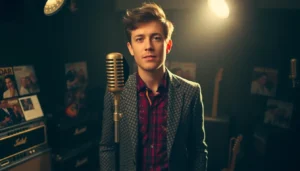
Aubrey Drake Graham was born on October 24, 1986, in Toronto, Ontario, Canada, to a Jewish mother, Sandi Graham, and an African‑American father, Dennis Graham, a former Motown backup drummer. Raised in the multicultural neighborhood of Forest Hill, Drake attended Forest Hill Collegiate Institute, where he began acting in school productions and later secured a recurring role on the Canadian teen drama Degrassi: The Next Generation (2001‑2009). While his early public profile was derived from acting, Drake simultaneously cultivated an interest in music, recording mixtapes for friends during high school.
In 2006, after completing high school, Drake enrolled at Vaughan Road Academy, where he met future collaborators and producers, most notably Noah “40” Finch, who would become his longtime chief sound engineer. Drake’s first mixtape, Room for Improvement (2006), featured modest production but hinted at a melodic rap style that blended emotive lyricism with Toronto’s burgeoning hip‑hop scene. A second mixtape, Comeback Season (2007), garnered local radio play on the campus‑based station CKLN-FM and attracted the attention of Lil Wayne’s Young Money Entertainment, leading to Drake’s signing in 2009.
Influences and Creative Voice
Drake’s artistic voice reflects a hybrid of influences from R&B, soul, and hip‑hop. He frequently cites the soulful stylings of Aaliyah, the storytelling of The Notorious B.I.G., and the emotive vulnerability of Kanye West’s 808s & Heartbreak as formative. Additionally, Toronto’s diverse musical landscape—ranging from Caribbean dancehall to Canadian indie rock—contributed to his genre‑fluid approach. His early exposure to acting also informed his lyrical focus on narrative and persona, allowing him to switch fluidly between the “Toronto’s boy” image and the “global star” archetype.
These influences converged in Drake’s signature style: melodic rap that juxtaposes heartfelt confession with braggadocious punchlines, underscored by atmospheric, bass‑heavy production. Producer Noah “40” Finch’s minimalist, ambient soundscapes—characterized by low‑frequency sub‑bass, reverberated synths, and muted drums—became synonymous with the Drake brand, cementing a distinctive auditory signature that persists across his discography.
Major Works and Breakthroughs
Drake’s commercial breakthrough arrived with his third mixtape, So Far Gone (2009), which spawned the hit single “Best I Ever Had” (Billboard Hot 100 #2) and earned a Grammy nomination for Best Rap Song. The mixtape’s success convinced Young Money to release his debut studio album, Thank Me Later (2010), debuting at number one on the US Billboard 200. Subsequent albums—Take Care (2011), Nothing Was the Same (2013), and Views (2016)—solidified Drake’s status as a global chart‑topping artist, each achieving multi‑platinum certification.
The focal point of this biography, Certified Lover Boy (2021), represents Drake’s seventh studio effort. Recorded over two years amid the COVID‑19 pandemic, the album comprises 21 tracks produced by a roster that includes 40, Metro Boomin, Cardo, and Boi‑1da. Lead singles such as “Way 2 Sexy” (feat. Future) and “Fair Trade” (feat. Travis Scott) debuted simultaneously, a strategic move that underscored Drake’s dominance on streaming platforms. Certified Lover Boy debuted at number one on the Billboard 200 with 613,000 album‑equivalent units, marking the largest opening week for a rap album in 2021.
Critically, the album garnered mixed reviews: while some praised its cohesive production and lyrical refinement, others noted a perceived formulaic approach. Nonetheless, the record earned multiple certifications, including Platinum status in the United States, Canada, and the United Kingdom, and spawned several chart‑topping singles, reinforcing Drake’s commercial resilience.
Collaborations and Evolution
Collaboration has been a cornerstone of Drake’s career. Early partnerships with Lil Wayne and Nicki Minaj on tracks like “BedRock” and “Make Me Proud” introduced him to a broader Southern hip‑hop audience. The “What a Time to Be Alive” (2015) mixtape with Future demonstrated an embrace of trap aesthetics, while the 2018 album Scorpion highlighted a dual‑disc structure separating rap and R&B, showcasing his versatility.
For Certified Lover Boy, Drake enlisted a diverse array of collaborators, ranging from veteran R&B vocalists such as SZA (“No Friends In the War”) to Caribbean dancehall artists like Lil Baby (“Girls Want Girls”). The album’s production also reflected an evolution toward more polished, sample‑rich soundscapes, integrating interpolations of classic R&B (e.g., “Girls Want Girls” references “Two Man Band” by Sade). These collaborations illustrate Drake’s ability to navigate and synthesize emerging trends while maintaining a recognizable artistic core.
Awards, Reception, and Legacy
Throughout his career, Drake has amassed a substantial trophy cabinet, including four Grammy Awards, twenty‑two Billboard Music Awards, and a record‑tying number of Billboard Hot 100 entries for a solo artist. Certified Lover Boy earned nominations for Best Rap Album at the 2022 Grammy Awards, though it did not secure a win. Commercially, the album contributed to Drake becoming the first artist to surpass 50 billion on‑demand streams in the United States.
Beyond metrics, Drake’s influence permeates music, fashion, and internet culture. His lyrical focus on emotional vulnerability has been credited with reshaping mainstream rap’s thematic boundaries, fostering a generation of artists who prioritize melodic introspection. The “Drake effect”—a term used to describe the rapid rise of tracks that mimic his vocal cadence and production style—has been documented in academic studies of contemporary pop music trends.
Critics have highlighted both praise and controversy. While many applaud his charitable initiatives, such as the OVO (October’s Very Own) Foundation’s support for youth arts programs in Toronto, some observers critique his lyrical content for perpetuating materialistic and gendered stereotypes. Nonetheless, Drake remains a pivotal figure in 21st‑century popular music, and Certified Lover Boy stands as a testament to his sustained relevance and adaptability.
Looking forward, Drake’s ongoing collaborations, including forthcoming projects with emerging producers and his continued involvement in the OVO label roster, suggest that his artistic journey will continue to intersect with evolving musical landscapes, ensuring that his legacy endures beyond any single album cycle.