Early Life and Formation
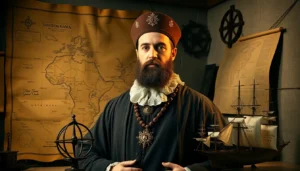
Sir Walter Raleigh was born in either 1552 or 1554 at Hayes, a manor near Plymouth in the county of Devon, England. He was the second son of Walter Raleigh, a modestly prosperous gentleman of the local gentry, and Catherine Champernowne, whose family owned estates in the southwestern peninsula. Little documentary evidence survives concerning Raleigh’s childhood, but contemporary accounts suggest he received a conventional education for a young gentleman of his class, likely at the local grammar school and later at the University of Cambridge where he may have attended Trinity College. His time at Cambridge exposed him to the humanist learning of the Renaissance, the burgeoning rhetoric of English nationalism, and, crucially, the adventurous narratives of earlier explorers such as John Cabot and Sir Francis Drake.
Raleigh’s formative years were also marked by a practical apprenticeship in the martial arts of the Tudor court. In the 1570s he entered the service of Sir Humphrey Gilbert, a noted seafarer and explorer, and participated in early privateering voyages to the Azores and the Caribbean. These experiences honed his seamanship, navigation, and knowledge of the Atlantic currents, while also forging a network of patronage that would later prove essential to his own expeditions. His marriage in 1580 to the wealthy widow Elizabeth Throckmorton, reputedly a Lady of the Bedchamber to Queen Elizabeth I, further solidified his position within the courtly elite and provided the financial foundation for his future ventures.
Exploration Context and Ambitions
The late sixteenth century was a period of intense competition among European powers for overseas trade, territorial claim, and the acquisition of precious metals. Spain’s wealth from its American colonies, especially from gold and silver mines in Mexico and Peru, fueled a frenzy of speculation across the continent. In this climate, the legend of El Dorado—a fabled kingdom of limitless gold said to lie somewhere beyond the known frontiers of South America—captured the imagination of many English adventurers desperate to challenge Spanish hegemony.
Raleigh’s ambition to discover El Dorado emerged from a confluence of personal, political, and economic motivations. Personally, he was driven by the classic Tudor ideal of the ‘Queen’s brave soldier‑explorer’ who could win glory for himself and augment the crown’s standing. Politically, the English Crown, under Elizabeth I, sought to undermine Spanish dominance by establishing an English presence in the New World, either through colonisation or by disrupting Spanish supply lines. Economically, the promise of gold was a decisive lure; a successful discovery could finance further privateering, colonisation, and the expansion of English maritime commerce.
Raleigh’s search was also shaped by contemporary reports from Indigenous peoples and earlier European explorers. In 1526, Spanish conquistador Pedro de Ledesma reported hearing of a richly endowed region called “Manoa” from natives near the Orinoco. Later, the 1569 expedition of the Spanish friar Luis de Góngora Castellanos described a “land of gold” deep within the Guiana basin. These accounts, filtered through the hallmarks of myth, formed the intellectual backdrop against which Raleigh plotted his voyages.
Finally, the personal rivalry with Sir Francis Drake, who had already proven his capability to raid Spanish treasure fleets and to navigate the Pacific coast of South America, provided an additional competitive edge. Raleigh’s desire to eclipse Drake’s feats spurred him to aim for a more spectacular venture—finding the legendary city itself.
Major Expeditions and Journeys
First Expedition (1583‑1585)—Raleigh’s inaugural attempt to locate El Dorado began in 1583 when he secured a royal licence from Queen Elizabeth I to explore “the ocean that lies beyond the lands of the Portuguese.” He assembled a crew of roughly 150 men, including seasoned mariners, soldiers, and a handful of Indigenous translators recruited from previous voyages to the West Indies. The expedition set sail from Plymouth aboard the Raleigh and the auxiliary ship Tom, heading for the Caribbean.
After a stopover in the island of Dominica for provisions and repairs, the fleet ventured southward along the coast of present‑day Venezuela. Their aim was to locate a suitable river mouth that might lead them inland to the fabled golden lands. By late 1584, the expedition reached the Orinoco delta, where they engaged in extensive negotiations with the local Carib tribes. The Indigenous peoples warned of hostile “Mannon” (a term the English interpreted as “gold”) peoples who guarded an interior region laden with riches.
Ultimately, the first expedition stalled due to a combination of disease (particularly dysentery), dwindling supplies, and friction with local chieftains who resisted further inland incursion. After a harrowing winter spent on the coast, Raleigh ordered a return to England in early 1585. The journey back, though fraught with storms, produced valuable cartographic data, especially mapping the Orinoco’s estuary, which would later inform subsequent English and Dutch voyages.
Second Expedition (1594‑1595)—Undeterred, Raleigh organised a second, more ambitious venture, this time with the direct financial backing of Queen Elizabeth herself, who contributed a modest sum of £8,000 in exchange for a share in any potential gold. The fleet comprised the newly commissioned warship Elizabeth, a galley called Flora, and several smaller support vessels. The crew count rose to over 200, including the noted navigator Sir John Clements and an Indigenous guide from the Kalina (Carib) nation who claimed intimate knowledge of the interior river systems.
The fleet departed in April 1594, sailing to the mouth of the Essequibo River in present‑day Guyana. Here, Raleigh established a provisional base, constructing a small fortification named “Fort Raleigh.” From this outpost, a series of land expeditions were launched, employing both European soldiers and Indigenous scouts to navigate dense rainforest terrain.
The most notable overland party, led by Clements, entered the interior via the Rupununi region and reached a series of waterfalls later identified as the “Falls of the Golden River.” The expedition’s chronicles describe a striking waterfall with mineral‑laden cliffs that gave a golden sheen when struck by sunlight. While no actual gold was uncovered, the party retrieved a modest amount of pyrite, which they mistakenly interpreted as indicative of larger veins.
Meanwhile, a parallel exploration party, guided by the Kalina scout, attempted to follow a purported “silver river” mentioned by earlier Spanish reports. This group was ambushed by a coalition of Indigenous groups who defended their territory fiercely, resulting in significant casualties among the English soldiers. The conflict underscored the volatile nature of cross‑cultural encounters and forced Raleigh to reconsider his approach.
By the summer of 1595, after months of limited success, dwindling morale, and mounting pressure from the English Crown for a timely return, Raleigh ordered the expedition home. They returned to England with a handful of mineral samples, a richly illustrated map of the Guiana interior, and a detailed journal documenting the geography, flora, fauna, and Indigenous societies encountered.
Later Ventures (1600‑1602)—Following the second expedition, Raleigh’s focus shifted toward colonisation rather than outright treasure hunting. He secured a charter to establish a settlement on the northern coast of the Guiana highlands, hoping that a permanent English presence would enable more systematic exploration of the interior. In 1600, the settlement of “Raleigh’s Hope” was founded near the estuary of the Essequibo River. However, the colony faced severe hardships: outbreaks of malaria, scarcity of food, and continual hostility from local populations forced its abandonment within two years.
Despite the failure of the settlement, Raleigh’s later voyages contributed significantly to the English knowledge of the South American tropics. His logs were published posthumously in the work The Discoverie of the Golden City (1614), a compilation that blended factual observation with the romanticized narratives popular in early modern England.
Risks, Companions, and Controversies
The pursuit of El Dorado was fraught with extreme hazards. Tropical diseases, especially malaria and yellow fever, claimed the lives of many crew members across Raleigh’s expeditions. Contemporary ship logs indicate mortality rates as high as 35% during the longest jungle forays. Moreover, the dense rainforest environment presented logistical nightmares: unpredictable river currents, steep terrain, and navigation challenges compounded by a lack of accurate maps.
Raleigh’s companions ranged from experienced seafarers such as Sir John Clements to Indigenous guides whose knowledge was indispensable yet often under‑recorded in English accounts. Notably, the Kalina guide in the 1594‑95 expedition—identified in some sources as “Manuel” but whose full name is uncertain—provided critical translations of local topography, warning the English of territorial boundaries and sacred sites. Recent scholarship emphasizes the agency of such Indigenous participants, challenging earlier portrayals that cast them merely as “enigmatic natives.”
Financially, Raleigh’s voyages placed a heavy burden on the Elizabethan treasury. The Crown’s funding was justified by the promise of gold, yet the returns were minimal. Critics at the time, including members of the Privy Council, questioned the wisdom of continual investment in a speculative venture that yielded little material wealth.
Ethically, Raleigh’s actions have been reassessed within the broader context of colonial exploitation. His attempts to claim uninhabited lands, establish forts, and intimidate Indigenous communities mirror the expansionist policies employed by Spanish and Portuguese colonisers. Modern historians note that while Raleigh did not establish a lasting settlement, his incursions contributed to the destabilisation of local societies and opened the Guiana region to subsequent European exploitation.
A further source of controversy concerns the authenticity of Raleigh’s accounts. His published journal, edited after his death, contains embellishments—most famously the description of a “golden waterfall” that later scholars argue may have been a misinterpretation of pyrite‑stained rocks. The blending of fact and folklore in his narratives bolstered his legend but also made it difficult for later scholars to separate verifiable data from promotional myth‑making.
Finally, Raleigh’s overall reputation suffered after his political downfall in England. In 1603, following the death of Elizabeth I, he fell out of favour with King James I, leading to his imprisonment and eventual execution in 1618 on charges unrelated to his exploration endeavors. Nonetheless, his legacy as an early English explorer of South America persisted.
Legacy and Historical Impact
Walter Raleigh’s attempts to locate El Dorado left an indelible imprint on the cartographic and exploratory knowledge of the Guiana highlands. The maps produced from his journeys, especially the detailed riverine charts of the Essequibo and Rupununi basins, were incorporated into later Dutch and English atlases and remained reference points for subsequent expeditions well into the eighteenth century.
Scientifically, his observations contributed early European understandings of tropical ecology. Descriptions of flora such as the “cacao tree” and “cassava” in his journals pre‑dated the widespread adoption of these crops in European cuisine. Moreover, his ethnographic notes on the Kalina, Carib, and Arawak peoples provided one of the earliest English perspectives on Indigenous cultures of the Guianas, albeit filtered through a colonial lens.
Culturally, Raleigh’s narrative of the search for a golden city permeated English literature and the imagination of the public. Poets and playwrights referenced his exploits, and his posthumously published journal inspired later adventurers, including the Dutch explorer Jacob van Heemskerck and the British naturalist Alexander von Humboldt, who would later travel the same regions and correct many of Raleigh’s misconceptions.
From a modern historiographical standpoint, scholars reassess Raleigh’s legacy by emphasizing both his contributions to geographic knowledge and the problematic aspects of his colonial ambitions. While he did not succeed in finding a literal El Dorado, his efforts highlighted the limits of European knowledge in the New World and underscored the importance of Indigenous collaboration in exploration.
In contemporary popular memory, Raleigh is often eclipsed by figures such as Sir Francis Drake or Sir Walter Scott’s fictionalized portrait of the explorer. However, academic interest in his expeditions has resurged in recent decades, leading to new archaeological surveys of the former Fort Raleigh site and a re‑evaluation of his diaries, which are now digitised by the British Library for scholarly access.
Overall, Walter Raleigh’s quests exemplify the blend of ambition, myth, and emerging scientific inquiry that characterised the Age of Exploration. His life story offers a nuanced case study of how personal aspiration, royal patronage, and the allure of untapped wealth drove European powers into remote, often hostile environments, shaping the global map and the histories of countless Indigenous peoples.