Early Life and Formation
Edwin Eugene “Buzz” Aldrin Jr. was born on January 20, 1930, in Glen Ridge, New Jersey, United States, to Edwin Eugene Aldrin Sr., a United States Army officer, and Marion (Moon) Aldrin. The Aldrin family moved frequently due to his father’s military postings, giving young Edwin exposure to disciplined environments and a sense of mobility that would later echo in his own exploratory career.
At age eleven, Aldrin attended the United States Naval Academy Preparatory School, and in 1947 he entered the United States Military Academy at West Point, New York. He graduated in 1951 with a Bachelor of Science in Mechanical Engineering, ranking second in his class. His West Point education emphasized rigorous engineering principles, leadership, and physical endurance—foundational skills for the later demands of high‑altitude flight and spaceflight.
After commissioning as a second lieutenant in the United States Air Force, Aldrin entered pilot training at Williams Air Force Base, Arizona, where he earned his pilot wings in 1952. He flew the F‑86 Sabre during the Korean War, completing 66 combat missions and earning the Distinguished Flying Cross, the Air Medal with oak leaf clusters, and the Korean Service Medal. The combat experience honed his ability to operate under extreme stress and refined his technical proficiency with jet aircraft, both critical for the rigorous Apollo training program.
Aldrin pursued advanced graduate studies at the Massachusetts Institute of Technology (MIT), where he earned a Master of Science in Astronautics in 1963 and a Ph.D. in Astronautics in 1966. His doctoral dissertation, “Line‑of‑Sight Guidance for Manned Lunar Landing,” introduced a mathematical framework that later influenced the Lunar Module’s guidance software. This academic achievement positioned Aldrin as one of the first astronaut‑scientists combining operational flight experience with rigorous aerospace research.
Exploration Context and Ambitions
The Cold War rivalry between the United States and the Soviet Union defined the geopolitical backdrop of the 1960s. After Sputnik (1957) and Yuri Gagarin’s orbital flight (1961), President John F. Kennedy’s 1961 challenge to land a man on the Moon before the decade’s end mobilized national resources for a massive, technologically driven exploration program. Aldrin’s personal ambition aligned with this national thrust; he saw space as the next frontier for human adventure, comparable to the Age of Exploration centuries earlier.
Aldrin’s expertise in orbital mechanics and his engineering mindset made him a natural fit for the emerging Manned Spaceflight program. He believed that lunar exploration could expand scientific knowledge—particularly lunar geology and the dynamics of planetary bodies—while also demonstrating the United States’ capacity for complex, coordinated ventures. His vision extended to long‑term habitation and the potential for humanity to become a “multi‑planetary species.”
Major Expeditions and Journeys
Project Gemini – Gemini 12 (1966)
Selected in 1963 as part of NASA’s third astronaut group, Aldrin completed his first spaceflight as pilot of Gemini 12, launched on November 11, 1966. The mission lasted 4 days, 1 hour, and 56 minutes and included three extravehicular activities (EVAs). Aldrin’s EVA technique—a methodical “stand‑up” approach using a hand‑hold and a tether—addressed the difficulties experienced in earlier Gemini EVAs and contributed to the development of the Apollo lunar EVA protocol.
Apollo 11 – Lunar Landing (July 1969)
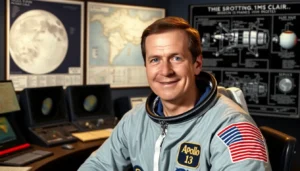
In 1969, Aldrin served as lunar module pilot for Apollo 11, the first crewed mission to land on the Moon. Launched on July 16, 1969, aboard Saturn V rocket NCC‑102, the crew—Commander Neil Armstrong, Pilot Michael Collins, and Lunar Module Pilot Aldrin—entered lunar orbit on July 19. On July 20, Armstrong and Aldrin descended in the Lunar Module Eagle, touching down in the Sea of Tranquility at 20:17 UTC. Aldrin stepped onto the lunar surface at 02:04 UTC, becoming the second human to do so.
During the 21‑hour surface stay, Aldrin and Armstrong conducted a 2‑hour, 15‑minute EVA, collecting 47.5 kg of lunar samples, deploying the Early Apollo Scientific Experiments Package, and photographing the terrain. Aldrin’s “I’m going to step into the light”—the only remaining audio recording from the EVA—has become a historically documented moment, preserving the human voice in a non‑Earth environment.
Post‑Apollo Advocacy and Engineering Work
After retiring from NASA and the Air Force in 1971, Aldrin engaged in several ventures that kept the spirit of exploration alive. He helped design the “Aldrin Cycler” concept, a theoretical Earth‑Mars transport trajectory that could reduce the propellant cost of interplanetary travel. He also pursued commercial aerospace initiatives, including co‑founding the Space Operations Company to promote private spaceflight.
Risks, Companions, and Controversies
Buzz Aldrin’s career was marked by substantial risks. His combat missions in Korea exposed him to anti‑aircraft fire and the perils of close air combat. In the Gemini and Apollo programs, he faced the ever‑present danger of launch failure, equipment malfunction, and life‑support system breakdowns. The Apollo 11 Lunar Module’s descent engine “throttled” nearly to the point of depletion, prompting a manual “fly‑by” maneuver that required Aldrin’s precise navigation skills.
Aldrin’s “companion” network included fellow astronauts—Neil Armstrong, Michael Collins, and his Gemini 12 commander James Lovell—who shared training, simulations, and the psychological pressures of mission success. The “crew” dynamic was highlighted in the rigorous isolation testing at the NASA Manned Spacecraft Center, where Aldrin’s interpersonal skills helped maintain group cohesion.
Controversies also surround Aldrin’s public persona. In the 1990s, he claimed to have been physically assaulted by a man purported to be a “paranoid” suspect, a story later found to be exaggerated, leading to criticism of his credibility. Additionally, Aldrin’s outspoken advocacy for commercial spaceflight has occasionally clashed with NASA’s more cautious, federally funded approach, sparking debates over the role of private enterprise in human exploration.
From an ethical standpoint, Aldrin’s participation in the Apollo program has been examined within the broader context of the Space Race, a competition steeped in Cold War geopolitics. While the Moon landing did not displace any indigenous populations—since the Moon lacks permanent inhabitants—the program’s resources have been scrutinized regarding opportunity costs and the prioritization of scientific research over other social needs on Earth.
Legacy and Historical Impact
Buzz Aldrin’s contribution to human spaceflight extends beyond the historic footsteps on the lunar surface. His technical innovations—particularly in guidance, navigation, and EVA procedures—remain embedded in contemporary astronaut training and spacecraft design. The “Aldrin Cycler” concept influences modern Mars mission studies such as NASA’s “Cycler Trajectory” analyses and private company plans like SpaceX’s Mars architecture.
Publicly, Aldrin has become an iconic figure, recognizable for his signature “Moon suit” and his “lunar boots” photographs. He authored several popular‑science books, including “Return to Earth” (1973) and “Mission to Mars: My Vision for Space Exploration” (2013), which have helped inspire new generations of engineers, scientists, and explorers.
His honors include the Presidential Medal of Freedom (1971), the Congressional Gold Medal (2011), the NASA Distinguished Service Medal (1970), and induction into the United States Astronaut Hall of Fame (1995). These recognitions reflect both his personal achievements and his symbolic role as a pioneer of the Space Age.
In the broader narrative of exploration history, Aldrin bridges the epoch of early aviation with the modern era of orbital and deep‑space travel. He exemplifies the transition from nationalistic competition to a more collaborative, commercial, and interdisciplinary approach to venturing beyond Earth’s confines. As humanity looks toward establishing a sustained presence on the Moon and eventually Mars, Aldrin’s technical insights and advocacy continue to shape policy, engineering, and public perception.