Early Life and Influences
Malala Yousafzai was born on 12 July 1997 in the Swat Valley of the North-West Frontier Province (now Khyber Pakhtunkhwa), Pakistan. She grew up in a relatively educated family: her father, Ziauddin Yousafzai, was a schoolteacher and later a headmaster of a local school that promoted girls’ education. The Yousafzai household valued learning, and Malala was encouraged to read and write from a young age. The Swat Valley, before the rise of Taliban influence in the late 2000s, enjoyed a vibrant civil society, but the region later experienced violent attempts to impose a strict interpretation of Sharia law, which included a ban on girls’ education. These developments shaped Malala’s awareness of the vulnerability of education rights and forged her early resolve to advocate for change.
Entry Into Activism or Reform
Malala’s first public foray into activism came in 2009, when she was just 11 years old. Under the pen name “Gul Makai,” she wrote a blog for the BBC Urdu service describing life under the Taliban’s edicts and her determination to continue schooling. The blog, published while she was still attending the Khushal Girls High School, drew international attention to the suppression of education in Swat. The decision to speak publicly was supported by her father, who had begun organizing local advocacy for girls’ schools. By 2011, Malala had appeared on national television programs, articulating the right of every child to education. These early media appearances positioned her as a youthful voice emerging from a conflict zone.
Major Campaigns and Public Work
After the 2009 blog, Malala’s activism intensified. In 2011, she co‑founded the non‑governmental organization Small Steps Project, which aimed to support the education of girls in Swat and surrounding regions. In 2012, the Taliban attempted to silence her by targeting her on 9 October while she was returning home from school, causing serious injuries. The attack sparked a global outpouring of support and amplified her platform. While recovering in the United Kingdom, Malala co‑authored the memoir “I Am Malala: The Girl Who Stood Up for Education and Was Shot by the Taliban” (2013), which became a bestseller and further solidified her status as an international advocate.
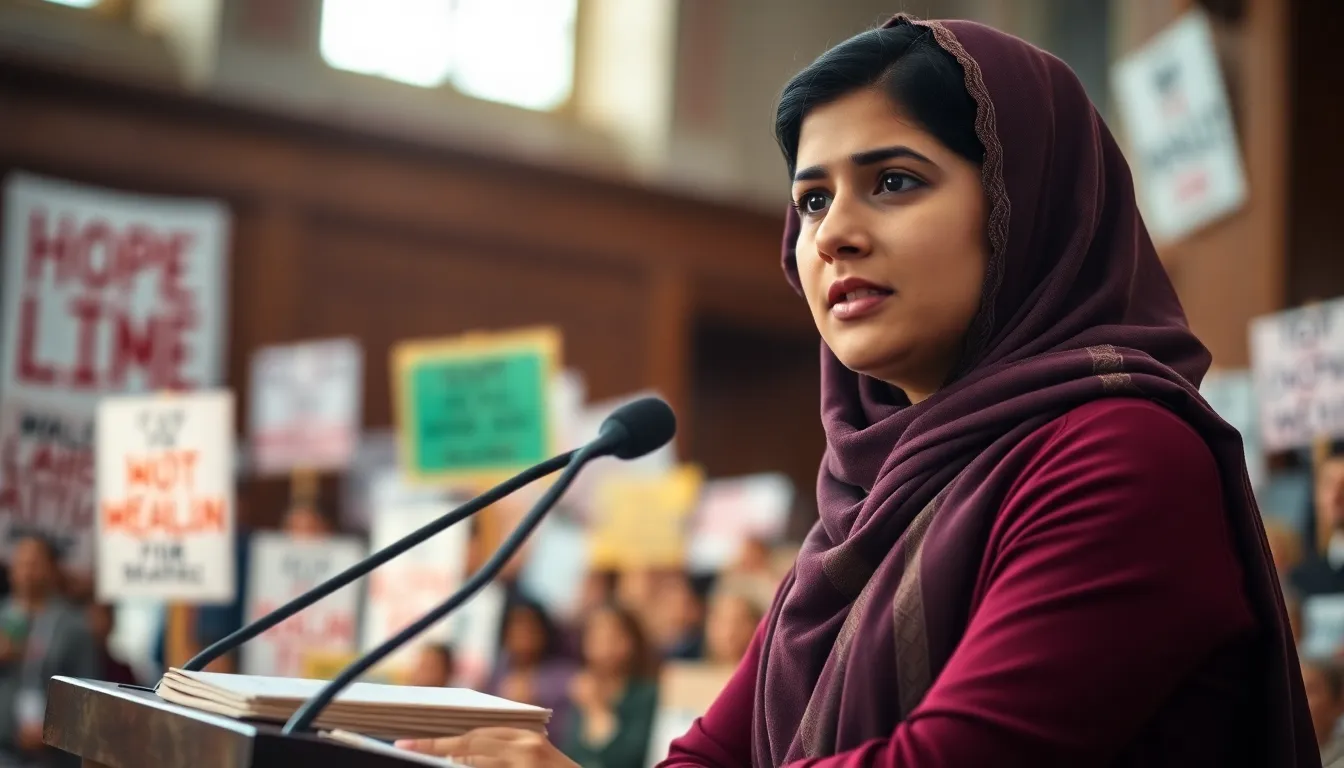
In 2013, Malala helped launch the Malala Fund, an organization dedicated to amplifying the voices of girls worldwide and securing funding for education projects. The Fund operates in multiple countries, including Pakistan, Nigeria, Kenya, and the United States, and has partnered with NGOs, governments, and private donors to influence policy and expand school access. Malala has addressed the United Nations General Assembly multiple times, most famously on 12 July 2013, her 16th birthday, which was declared “Malala Day” by the UN Secretary‑General. She also served as a United Nations Messenger of Peace for Girls’ Education, a role that enabled her to advise on international development agendas.
Malala’s advocacy extended to the highest levels of global governance. In 2014, at age 17, she became the youngest recipient of the Nobel Peace Prize, sharing the honor with Indian children’s rights activist Kailash Satyarthi. The Nobel Committee cited her “struggle against the suppression of children and young people and for the right of all children to education.” In subsequent years, she has testified before the U.S. Congress, convened round‑table discussions with world leaders, and contributed to United Nations reports on Sustainable Development Goal 4 (quality education). In 2017, she enrolled at the University of Oxford, graduating in 2020 with a degree in Philosophy, Politics, and Economics, thereby reinforcing her credibility as a scholar‑activist.
Ideas, Methods, and Leadership Style
Malala’s activism blends personal narrative, strategic international advocacy, and institutional partnership building. Her public speeches often employ a narrative style that foregrounds lived experience, which resonates with global audiences and humanizes policy debates. She has consistently emphasized non‑violent resistance, citing the power of education as a tool for social transformation rather than resorting to militant tactics. The Malala Fund’s methodology includes three pillars: (1) advocacy for policy reforms, such as national education budgets and gender‑sensitive curricula; (2) direct investment in community‑level school projects; and (3) amplifying grassroots voices through media and public speaking. By leveraging high‑profile platforms—including the UN, the Nobel ceremony, and major media interviews—Malala has positioned herself as a bridge between local activists and international institutions.
In terms of coalition building, Malala has cultivated alliances across political and cultural divides. She works with governments in the Global South to improve education standards while also engaging private sector partners for funding. Her leadership style is collaborative; the Malala Fund’s board comprises activists, education specialists, and business leaders, reflecting a multi‑sectoral approach.
Opposition, Criticism, and Controversies
Malaria’s visibility has attracted criticism from various quarters. Some Pakistani political factions have accused her of representing Western interests or of politicizing the education issue for personal gain. The Taliban, which attempted her assassination, has consistently denounced her as a symbol of foreign influence. In the United Kingdom, a few commentators have questioned the allocation of funds raised by the Malala Fund, suggesting that more transparent reporting is needed. Nevertheless, independent audits of the Fund’s finances have shown that a substantial portion of donations are directed toward school construction, scholarships, and advocacy campaigns in target countries. The criticism often reflects broader debates about the role of celebrity activism in development work, rather than specific evidence of misconduct.
Malala has also faced scrutiny regarding her net worth. While she has not disclosed personal financial details, various media outlets have estimated her net worth based on book royalties, speaking fees, and endorsements. These estimates are unverified and vary widely; most reputable sources note that the bulk of her earnings are donated to charitable causes. Consequently, precise figures remain uncertain.
Legacy and Historical Impact
More than a decade after her first blog post, Malala’s impact can be measured in several dimensions. Educational enrollment data indicate that, in Pakistan’s former Swat region, the number of girls enrolled in secondary schools rose markedly after 2013, partially attributed to increased public awareness and policy changes inspired by her advocacy. Internationally, the Malala Fund has helped secure commitments from governments to increase education spending and to remove gender‑based barriers to school attendance. Her speeches at the UN have contributed to the framing of girls’ education as a human right within the Sustainable Development Goals and have influenced the language of subsequent international agreements.
Historically, Malala joins a lineage of young female activists whose personal experiences catalyzed broader social movements, comparable to figures such as Rosa Parks and Wangari Maathai. Scholars of contemporary human‑rights activism cite her as an example of how digital media, youth agency, and global governance intersect in the 21st‑century reform landscape. While the ultimate effectiveness of her initiatives will continue to be evaluated by future researchers, her role in reshaping global discourse on girls’ education is widely acknowledged.
As of 2024, Malala continues to work through the Malala Fund, speak at international forums, and support legislation that protects girls’ right to learn. Her biography remains a testament to the power of a single individual’s voice amplified through strategic advocacy, cross‑cultural alliances, and sustained commitment to a universal cause.