Historical Context
The mid‑eighteenth century Atlantic world was marked by imperial competition, mercantile expansion, and growing colonial dissent. In British North America, the Thirteen Colonies experienced increasing taxation and legislative restrictions after the Seven Years’ War (1756–1763). Policies such as the Stamp Act (1765) and the Townshend Acts (1767) provoked organized protests, most notably in Massachusetts, where a network of merchants, artisans, and political agitators coalesced into the Sons of Liberty. The ideological climate blended Enlightenment ideas of liberty with practical grievances concerning trade and representation. It was within this volatile milieu that Paul Revere emerged as both a craftsman and a political actor, contributing to the escalating confrontation that culminated in the American Revolution (1775–1783).
Early Life and Formation
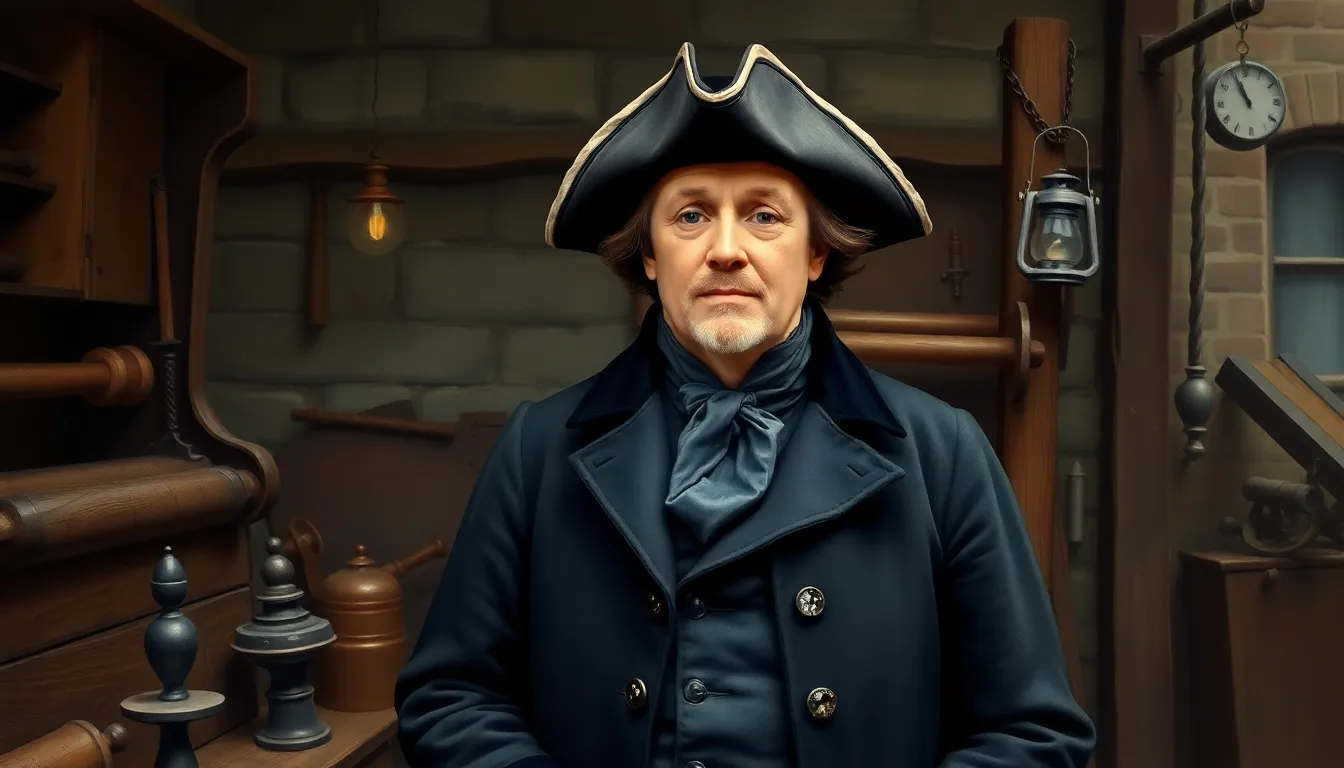
Paul Revere was born on January 1, 1735, in Boston, then part of the Province of Massachusetts Bay. He was the fourth of eight children of Apollos Revere, a silversmith of French Huguenot descent, and Deborah Hitch. The Revere family belonged to the modest middle class; they were neither aristocratic nor impoverished, which afforded young Paul access to apprenticeships and literacy. At age 14, Revere entered the shop of his maternal uncle, William Bradford, a prominent silversmith, where he learned the technical and artistic skills of metalworking. In 1751, he opened his own shop on Boston’s North End, producing silverware, pewter, and later, copper and brass items.
Revere’s early education was largely informal, consisting of reading the Bible, basic arithmetic, and occasional lessons from local schoolmasters. His broader intellectual formation was shaped by the vibrant print culture of Boston: newspapers such as the Boston Gazette and pamphlets by Samuel Adams and James Otis exposed him to radical political thought. By the early 1750s, Revere was already participating in civic events, such as marching in militia drills, which reflected the colony’s semi‑militarized society.
Historical records of Revere’s childhood are fragmentary; most details derive from later memoirs, family letters, and the accounts of contemporaries like John Adams, who noted Revere’s reputation as a “steady, industrious youth.”
Role in Major Events
Revere’s first significant political activity occurred during the Stamp Act crisis of 1765. He helped organize a boycott of British stamped paper, distributing printed pamphlets and rallying other craftsmen. In 1767, he joined the Sons of Liberty, a secretive group that coordinated resistance to the Townshend Acts. Revere’s skills as a silversmith proved useful: he forged metal insignia, such as the “Liberty Tree” emblem, and created the first American-made copper currency, the “Pawtucket copper,” in 1775, illustrating how artisans contributed to the nascent republican economy.
The most celebrated episode of Revere’s life is the “Midnight Ride” of April 18, 1775. Acting on intelligence from British General Thomas Gage, Revere, along with fellow riders William Dawes and Samuel Prescott, rode from Boston to Lexington and Concord to warn colonial militia of an impending British expedition. While popular legend emphasizes Revere’s solitary, heroic dash, primary sources, including Revere’s own later testimony and the British dispatches, reveal a coordinated effort among multiple riders. Nevertheless, Revere’s ride achieved its immediate objective: colonial forces were mobilized in time to confront the British at the battles of Lexington and Concord, the opening engagements of the Revolution.
After the ride, Revere served as a messenger for the Massachusetts Committee of Safety, delivering intelligence across the colony. He also participated directly in the siege of Boston (1775–1776), helping to supervise artillery placements on Dorchester Heights, which forced the British evacuation.
In the later war years, Revere’s contributions shifted toward material support. He operated a foundry that cast cannons and manufactured ammunition for the Continental Army. His experience in metallurgy allowed him to produce the first brass cannon in America, the “Revere cannon,” although it saw limited field use due to logistical constraints.
Following the Treaty of Paris (1783), Revere returned to his trade but expanded his business interests. He founded the Revere Copper Company in 1801, pioneering large‑scale copper rolling in America. This enterprise supplied copper for shipbuilding and the emerging U.S. Treasury, positioning Revere as a key figure in early American industrialization.
Allies, Opponents, and Debate
Revere’s allies were numerous and reflected the intertwined nature of political, economic, and social networks in Revolutionary Boston. He maintained close ties with leading patriots such as Samuel Adams, John Hancock, and Joseph Warren. These relationships were reinforced by shared commercial interests; many of Revere’s clients were wealthy merchants who financed the resistance.
Conversely, Revere attracted the enmity of loyalists and British officials. The British commander, General Gage, listed Revere among the “most dangerous” insurgents. Loyalist pamphleteers accused him of inciting mob violence during the 1770 Boston Massacre investigations, though there is no direct evidence linking him to the event.
Historical debate often centers on the extent of Revenue’s personal agency in the Midnight Ride. Early nineteenth‑century biographies, most famously Henry Wadsworth Longfellow’s 1861 poem “Paul Revere’s Ride,” elevated Revere to a singular hero, eclipsing the contributions of Dawes and Prescott. Contemporary scholarship, such as the works of scholars like Gary B. Nash and Hiller B. Zobel, emphasizes the collective nature of colonial intelligence networks, casting the ride as a coordinated operation rather than a lone dash. These reinterpretations illustrate how national myth‑making can eclipse nuanced historical analysis.
Revere also faced criticism for his post‑war business practices. Some contemporaries accused him of profiteering during the war, especially concerning the sale of copper to the Continental Navy. The evidence is mixed; financial records show both legitimate contracts and occasional over‑charging, reflecting the chaotic wartime economy.
Legacy and Interpretation
In the immediate aftermath of the Revolution, Revere remained a respected community leader. He served as a lieutenant colonel in the Massachusetts militia, a delegate to the Massachusetts Constitutional Convention (1779), and a city alderman. His copper rolling operation continued until his death on May 10, 1818, at the age of 83.
The symbolic power of Revere’s ride grew throughout the nineteenth century, particularly during the era of American nation‑building. Longfellow’s poem, school curricula, and popular commemorations—such as the 1875 centennial of the Revolution—kept the image of Revere as a patriotic sentinel alive. Monuments erected in Boston’s Old North Church and the Paul Revere House museum (preserved as a historic site since 1908) institutionalized his legacy.
Modern historians view Revere as a multifaceted figure: a skilled artisan, an astute businessman, a committed revolutionary, and a creator of early American industrial capacity. Recent scholarship investigates his role in the development of American material culture, emphasizing his copper rolling innovations as precursors to the United States’ later industrial rise.
The question of Revere’s net worth remains debated. Estimates based on probate inventories suggest that at his death he possessed assets valued at roughly $15,000–$20,000 in early‑nineteenth‑century dollars, equivalent to several hundred thousand dollars today when adjusted for inflation and economic growth. While not a member of the colonial aristocracy, Revere achieved a comfortable middle‑class status.
In popular memory, the phrase “The British are coming!”—though likely apocryphal—continues to encapsulate the urgency and drama of the revolutionary moment. Academic discourse, however, cautions against conflating legend with documented fact, encouraging readers to appreciate both the mythic and the material contributions of Paul Revere to the American founding.