Education and Scientific Formation
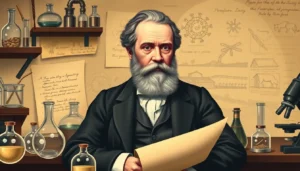
Edward Jenner was born on 17 May 1749 in Berkeley, a market town in Gloucestershire, England, the seventh of eight children of Reverend James Jenner, a vicar, and his wife, Mercy Felton. The Jenkinson family valued education; Edward attended the local parish school where he learned Latin, Greek, and basic arithmetic, typical of a clerical household. In 1765, at the age of sixteen, he entered the King’s School in Berkeley, a small grammar school that provided a classical curriculum and limited exposure to natural philosophy.
Jenner’s first formal encounter with medicine came through an apprenticeship with a local surgeon‑apothecary, Daniel Ludlow, in 1766. The apprenticeship system was the primary pathway into the medical profession in 18th‑century England, allowing aspiring physicians to acquire practical skills in anatomy, pharmacology, and surgical techniques under the supervision of experienced practitioners. Jenner proved adept at dissecting specimens and showed a particular fascination with the skin diseases that were common in rural communities.
In 1770, Jenner moved to London to study at St George’s Hospital, one of the leading teaching hospitals. Although St George’s did not grant formal degrees at that time, it offered rigorous clinical instruction under physicians such as Dr. John Hunter, a pioneering anatomist and surgeon whose lectures on comparative anatomy profoundly influenced Jenner’s scientific outlook. Hunter advocated empirical observation and experimental verification—principles that Jenner would later apply to his work on immunity.
During his London years, Jenner also attended lectures at the Royal Society and the Royal College of Physicians. He was introduced to the latest debates on inoculation (variolation), an early method of inducing immunity by introducing material from smallpox sores. The practice, imported from Ottoman Turkey, was controversial due to its associated risks of severe disease and death. Jenner’s exposure to these discussions sparked his curiosity about safer alternatives, setting the stage for his later experiments with cowpox.
Research Career
Returning to Gloucestershire in 1775, Jenner established a successful medical practice in the village of Cirencester. His reputation as a compassionate physician grew quickly, and he served a broad clientele ranging from wealthy landowners to impoverished laborers. The rural setting provided Jenner with a unique observational platform: smallpox outbreaks were frequent, yet the surrounding farms also kept cows, creating natural opportunities to compare disease patterns between humans and livestock.
In 1775 Jenner married Catherine Kingscote, the daughter of a local corn merchant. The couple had six children, though only two survived to adulthood—a personal tragedy that deepened Jenner’s commitment to reducing mortality from infectious disease. By the early 1790s, Jenner had gained the confidence of local farmers and began systematic observations of a peculiar phenomenon: milkmaids who had contracted cowpox—a mild disease affecting cattle—seemed to be immune to smallpox.
Motivated by these observations, Jenner designed a simple yet groundbreaking experiment. On 14 May 1796, he took material from a cowpox sore on the hand of Sarah Nelmes, a local milkmaid, and inoculated James Phipps, an eight‑year‑old son of Jenner’s gardener. After the cowpox infection resolved, Jenner later exposed Phipps to material from a smallpox patient. The child did not develop smallpox, providing the first documented evidence that cowpox could confer protection against the deadlier disease.
Jenner meticulously recorded his methodology, noting the source of the cowpox material, the timing of the inoculation, and the subsequent exposure to smallpox. His approach combined clinical observation with controlled experimentation—a hallmark of modern scientific method. Over the next several years, Jenner repeated the procedure on more than 20 subjects, including his own son, and documented consistent protective outcomes.
In 1798, Jenner published his findings in the pamphlet “An Inquiry into the Causes and Effects of the Variolae Vaccinae” (commonly known as “The Inquiry”). The work sparked intense debate across Europe, as traditional physicians grappled with the implications of deliberately introducing animal disease into humans. Despite criticism, Jenner’s method quickly attracted supporters, and he was elected a Fellow of the Royal Society in 1792, a recognition of his contributions to medical science.
Discoveries, Inventions, and Methods
The central discovery attributed to Edward Jenner is the principle of vaccination—derived from the Latin “vacca” for cow—using a live, attenuated virus from an animal host to induce immunity in humans. Unlike variolation, which used smallpox itself and carried a mortality rate of up to 2 %, Jenner’s cowpox inoculation had a dramatically lower risk profile, with only mild local reactions in most cases.
Jenner’s method involved three key steps: (1) the extraction of lymph from a cowpox lesion; (2) the insertion of the lymph into a superficial skin incision on the human recipient; and (3) a period of observation to ensure the development of a mild cowpox infection, which conferred immunity. He standardized the dose of cowpox material by using a thin brass needle to scrape pus from the lesion, a technique that ensured reproducibility across different practitioners.
While Jenner did not file patents—patenting was uncommon for medical procedures of his era—his work effectively created a new medical technology that spread globally. He advocated for the distribution of cowpox material through a network of licensed “vaccinators” who could replicate his technique. By 1802, the British government had purchased Jenner’s vaccine stocks for public inoculation campaigns, marking the first state‑sponsored vaccination program.
Beyond vaccination, Jenner contributed to the broader field of epidemiology. He kept detailed mortality records, comparing smallpox death rates before and after the introduction of vaccination in various English counties. His statistical assessments demonstrated a clear decline in smallpox fatalities, providing early evidence for the public‑health impact of immunization.
Publications, Recognition, and Debate
“An Inquiry into the Causes and Effects of the Variolae Vaccinae” (1798) remains Jenner’s most cited work. It combined narrative description of his experiments, a discussion of the immunological theory (then nascent), and practical instructions for other physicians. The Inquiry went through several editions, each expanded with additional case studies and responses to critics.
Jenner also authored “The History of Cowpox and Smallpox” (1800), a comprehensive account that placed his findings within a broader historical context, tracing the practice of variolation from Asia to Europe. In 1805, he published “The Natural History of the Cowpox and Smallpox,” which detailed the virology of the two diseases based on the limited microscopy of the time.
The scientific community’s response was mixed. While many physicians, especially in Britain and North America, embraced vaccination, others—most notably the French physician François Marie Masson and the English surgeon Benjamin Moseley—questioned the safety and ethical implications of using animal disease in humans. Debates centered on the lack of a mechanistic understanding of immunity, concerns about cross‑species infection, and the potential for vaccine-induced disease. Over time, systematic clinical trials and the eventual isolation of the vaccinia virus (the modern vaccine strain) resolved many of these controversies.
Jenner received several honors for his work. In 1802, the British Parliament awarded him a £5,000 pension, a substantial sum that reflected the national importance of his discovery. He was elected a Fellow of the Royal Society (FRS) in 1792 and later received the Royal Society’s prestigious Copley Medal in 1807. Internationally, he was invited to present his findings to the French Academy of Sciences and the American Philosophical Society, reflecting the worldwide impact of his research.
Impact on the Field
Edward Jenner’s vaccination technique fundamentally altered the trajectory of public health. By providing a practical, low‑risk method to confer immunity, Jenner enabled the first large‑scale disease‑prevention campaigns. Smallpox, once responsible for an estimated 300–500 million deaths in the 20th century, was declared eradicated by the World Health Organization in 1980—an outcome directly traceable to Jenner’s initial work.
Jenner’s legacy extends beyond smallpox. The concept of vaccination inspired subsequent developments, such as Louis Pasteur’s rabies vaccine (1885) and later the polio vaccines of the 1950s. Modern immunology acknowledges Jenner as the “father of immunology,” a title that underscores his role in establishing the principle that exposure to a harmless form of a pathogen can prime the immune system for future defense.
In the realm of policy, Jenner’s success prompted governments to adopt vaccination as a public‑health imperative. The Vaccination Act of 1840 in Britain, mandating smallpox vaccination for infants, can be seen as a direct legislative descendant of Jenner’s discovery. Moreover, his emphasis on empirical observation and reproducibility set methodological standards for clinical trials that persist in contemporary medical research.
While Jenner’s personal wealth remained modest—he never amassed significant fortune from his medical practice or the vaccine—his intellectual legacy generated immeasurable societal value. Contemporary estimates place the economic benefit of smallpox eradication in the trillions of dollars, a testament to the far‑reaching consequences of his 1796 experiment.
Personal Life and Later Years
After the publication of his Inquiry, Jenner continued to practice medicine in Cirencester while maintaining correspondence with physicians worldwide. He married Catherine Kingscote in 1775; the couple endured the loss of several children, a common tragedy in the 18th‑century. Of their six children, only two—Robert and Lydia—survived to adulthood. Jenner’s personal losses reinforced his determination to reduce mortality from infectious disease.
In his later years, Jenner received numerous honorary degrees, including an LL.D. from the University of Oxford (1809) and an M.D. from the University of Edinburgh (1813). He served as a mentor to younger physicians, promoting the importance of scientific rigor and public service.
Edward Jenner died on 26 January 1823, at the age of 73, in his home in Berkeley. He was buried in the parish churchyard of St. Mary’s, Berkeley. Posthumously, his legacy has been commemorated through statues, plaques, and the naming of the Jenner Institute at the University of Oxford, which focuses on vaccine development.