Early Artistic Beginnings
Mel (Merrill) Taylor was born on July 27, 1933, in the Bronx, New York City, to a working‑class family of Irish‑American descent. His father, James Taylor, worked as a steelworker, while his mother, Margaret, sang in local church choirs. The household was modest, but music was a constant presence; the family owned a battered upright piano and a second‑hand reel‑to‑reel record player that played swing and early rhythm‑and‑blues records.
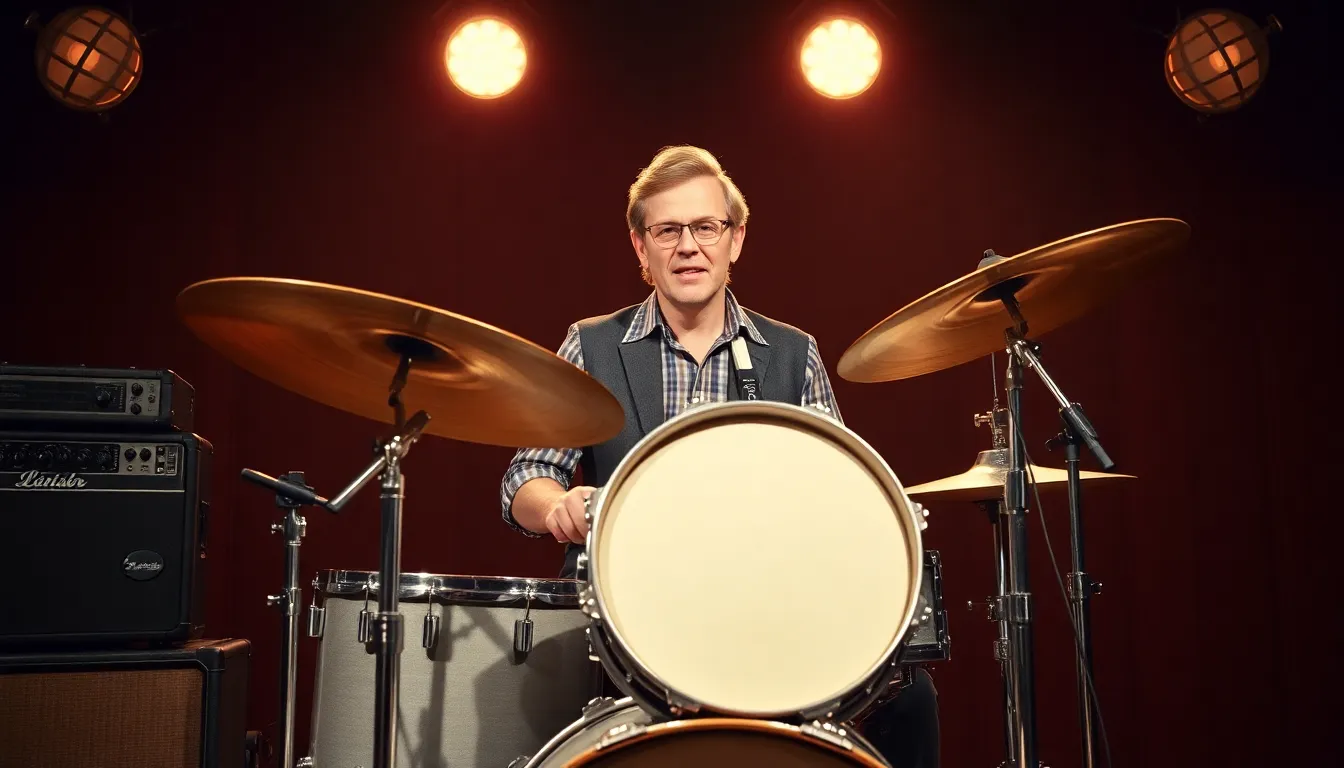
Taylor’s first exposure to percussion came at the age of eight, when his elementary school music program assigned him the snare drum for a marching band performance. He was instantly captivated by the drum’s capacity to drive rhythm and create dynamic contrast. Encouraged by his music teacher, he began taking private lessons with a local drum instructor, learning rudiments and basic jazz patterns.
During his teenage years, Taylor absorbed the sounds of big‑band swing, bebop, and the emerging rhythm‑and‑blues scenes of 1940s New York. He attended the High School of Music & Art (now part of the Fiorello H. LaGuardia High School of Music & Art and Performing Arts), where he studied both music theory and percussion. At 15, he earned his first paying gig, playing drums for a local dance hall that featured swing bands and early rock ‘n’ roll acts.
After graduating in 1951, Taylor briefly served in the United States Army, where he performed with an Army band stationed in Germany. The experience broadened his musical horizons, exposing him to European folk rhythms and the burgeoning rock scene in post‑war Europe. Upon discharge in 1953, he returned to New York and immersed himself in the city’s vibrant club circuit, playing with a succession of R&B and early rock ensembles, including the rhythm section of a touring Bill Haley & His Comets outfit.
Influences and Creative Voice
Taylor’s early influences were eclectic. He cited Gene Krupa’s showmanship, Buddy Rich’s technical virtuosity, and the innovative swing feel of Jo Jones as foundational drummers. In addition, the raw power of early rock drummers such as Hal Blaine and the syncopated grooves of Caribbean calypso music left a lasting imprint on his developing style.
By the late 1950s, Taylor began to absorb the surf music wave that was emerging on the West Coast. Though he was based in New York, recordings by Dick Dale, The Beach Boys, and The Ventures (then an up‑and‑coming instrumental group) circulated widely through radio and record stores. The Ventures’ tight, reverb‑heavy guitar lines and crisp, driving drum patterns resonated with Taylor’s own desire for a more propulsive percussive approach.
In interviews, Taylor often spoke of his desire to blend the precision of jazz drumming with the raw energy of rock ’n’ roll. He sought a “big sound” that would cut through amplified guitars, using larger drum heads, heavy sticks, and a distinctive approach to the ride cymbal that emphasized accentuated backbeats. This synthesis of jazz finesse and rock power became his signature voice.
Major Works and Breakthroughs
Mel Taylor’s career changed dramatically in 1962 when The Ventures, needing a new drummer after a brief hiatus, invited him to audition after seeing his dynamic performance at a club in New York. He secured the position, replacing Don Wilson’s friend, Howie Johnson. Taylor’s first recording with The Ventures was the instrumental single “The Color Of Serenity” (1962), which showcased his bold fills and thunderous kick.
His breakthrough came with the 1963 album Surfing, where his tracks such as “Moonfire” and “The Rider” highlighted a more aggressive drumming style that complemented the band’s surf‑rock guitar leads. Critics noted the album’s “blazing percussion” as a defining element in the surf genre. The same year, The Ventures performed at the Hollywood Bowl, and Taylor’s stage presence—executing barrel rolls while playing – earned him the nickname “The King of the Drum Kit.”
Throughout the 1960s, Taylor appeared on dozens of The Ventures’ releases, including the seminal Walk, Don’t Run (1964), Knock Me Out! (1965), and the live album Surfing USA (1966). On the 1968 single “Mystic Voyage,” his use of double‑stroked tom rolls and syncopated snare patterns demonstrated an evolution toward psychedelic rock percussion.
In 1972, after a decade with The Ventures, Taylor embarked on a solo career, releasing his first solo album, Mel Taylor, on the GNP label. The record featured instrumental covers of contemporary pop hits, with Taylor’s drumming as the focal point. The lead single, a drum‑centric rendition of The Carpenters’ “Rainy Days and Mondays,” charted modestly on the Billboard Easy Listening list.
He followed with Mel Taylor & The Dynamics (1975), a more rock‑oriented album that incorporated funk grooves and early disco beats. “The “Dynamics” era marked his willingness to experiment beyond surf rock, embracing emerging styles while retaining his powerful percussive core.”
Taylor continued to record sporadically into the 1980s, collaborating on the instrumental album Back to the Surf (1985) with former Ventures guitarist Nokie Edwards, a nostalgic homage to the genre that launched his fame.
Collaborations and Evolution
Beyond his work with The Ventures, Taylor contributed to recordings by numerous artists. In 1965, he provided session drums for surf guitarist Al Fujimura’s album Surf Dreams. In 1970, he played on a track for pop singer Bobby Vinton, showcasing his adaptability to ballads and pop arrangements.
During the 1970s, Taylor formed a short‑lived super‑group called The Drum‑Masters, featuring fellow percussionists from the era, including Hal Blaine and Louie Cochran. Their 1973 live album captured experimental percussion duels and improvisational pieces that prefigured later drum‑solo trends in rock.
His later years saw a shift toward mentoring younger musicians. He served as an instructor at the Los Angeles Drum Academy from 1988 to 1994, where he emphasized dynamic control, hand‑technique, and the importance of “playing for the song.” Several notable drummers, such as Vinnie Colaiuta and Chad Smith, have cited Taylor’s instructional clinics as influential.
Throughout his career, Taylor’s equipment choices evolved. Early on, he favored Ludwig kits and Zildjian cymbals, later switching to larger Slingerland drums and Sabian cymbals to achieve a broader tonal palette. He was known for customizing his drum heads with double‑coated layers to produce a deeper, sustained low‑end, a practice that other drummers imitated in the 1970s.
Awards, Reception, and Legacy
While primarily recognized for his contributions to surf rock, Taylor earned several honors for his broader impact on drumming. In 1991, the Modern Drummer Hall of Fame inducted him as a “Legendary Performer,” citing his “unparalleled power and showmanship.”
Critics have consistently praised Taylor’s ability to blend technical skill with visceral energy. A 1970 review in Rolling Stone described his work with The Ventures as “the rhythmic engine that propelled surf into mainstream consciousness.” Retrospective analyses in the 21st century highlight his influence on hard‑rock drummers such as John Bonham and later surf‑revivalists like The Mermen.
Beyond professional accolades, Taylor’s cultural legacy lives on through his distinctive on‑stage stunts, like playing a drum solo while standing on a surfboard or spinning a cymbal with his foot—a visual that inspired later performance drummers in visual‑rock acts.
Mel Taylor passed away on July 9, 1996, in Ventura, California, from a heart attack at the age of 62. At the time of his death, his net worth was not publicly disclosed, and estimates vary widely; most reputable sources note that the figure is not publicly verified.
Today, his recorded work continues to be reissued on deluxe vinyl and streaming platforms, ensuring that new generations encounter his thunderous beats. Tribute concerts, such as the 2015 “Mel Taylor Tribute” held in Los Angeles, feature contemporary drummers performing his classic solos, underscoring his enduring influence on percussion culture.