Early Artistic Beginnings
John Douglas Ingle was born on September 9, 1945, in La Grange, Tennessee, United States. His family moved frequently during his childhood, eventually settling in San Diego, California, where Ingle completed his secondary education. From an early age, Ingle displayed a fascination with keyboards, experimenting with a small electronic organ that his parents had purchased for the home. He received formal piano lessons through the local Catholic school system, but his musical tastes quickly gravitated toward the burgeoning rock and roll sounds of the late 1950s.
In the early 1960s, the San Diego music scene was a fertile ground for aspiring musicians attracted by the nearby military bases and the rise of surf rock. Ingle joined his first informal group, a surf‑oriented combo called The Echoes, where he played the electric piano and supplied occasional vocals. The band performed at small clubs along the Pacific Highway, gaining modest local exposure. The experience taught Ingle the practicalities of live performance and the importance of a tight rhythm section.
While still a teenager, Ingle took a part‑time job at a local music store that sold Hammond organs, Fender guitars, and Vox amplifiers. The exposure to professional equipment deepened his technical knowledge of organ maintenance and sound shaping. By 1965, he had acquired his first full‑size Hammond B‑3 organ, an instrument that would become his signature throughout his career.
Influences and Creative Voice
Ingle’s early influences were eclectic: the bluesy improvisations of John Hayes, the psychedelic explorations of The Beastie Boys (a local garage band unrelated to the later hip‑hop group), and the classical training he received in his youth. He also cited the organ work of Jimmy Smith and the choir arrangements of gospel singer Mahalia Jackson as formative. The synthesis of blues, gospel, and emerging psychedelic rock provided the foundation for a distinctive voice that blended soulful chord voicings with heavy, sustained tones.
Beyond individual musicians, Ingle was deeply affected by the cultural turbulence of the mid‑1960s. The civil‑rights movement, the Vietnam War, and the experimentation with mind‑altering substances all found expression in the music he was creating. In particular, the so‑called “San Francisco Sound,” typified by bands such as Jefferson Airplane and the Grateful Dead, offered a model for extended improvisation and studio experimentation that Ingle adopted in his own compositions.
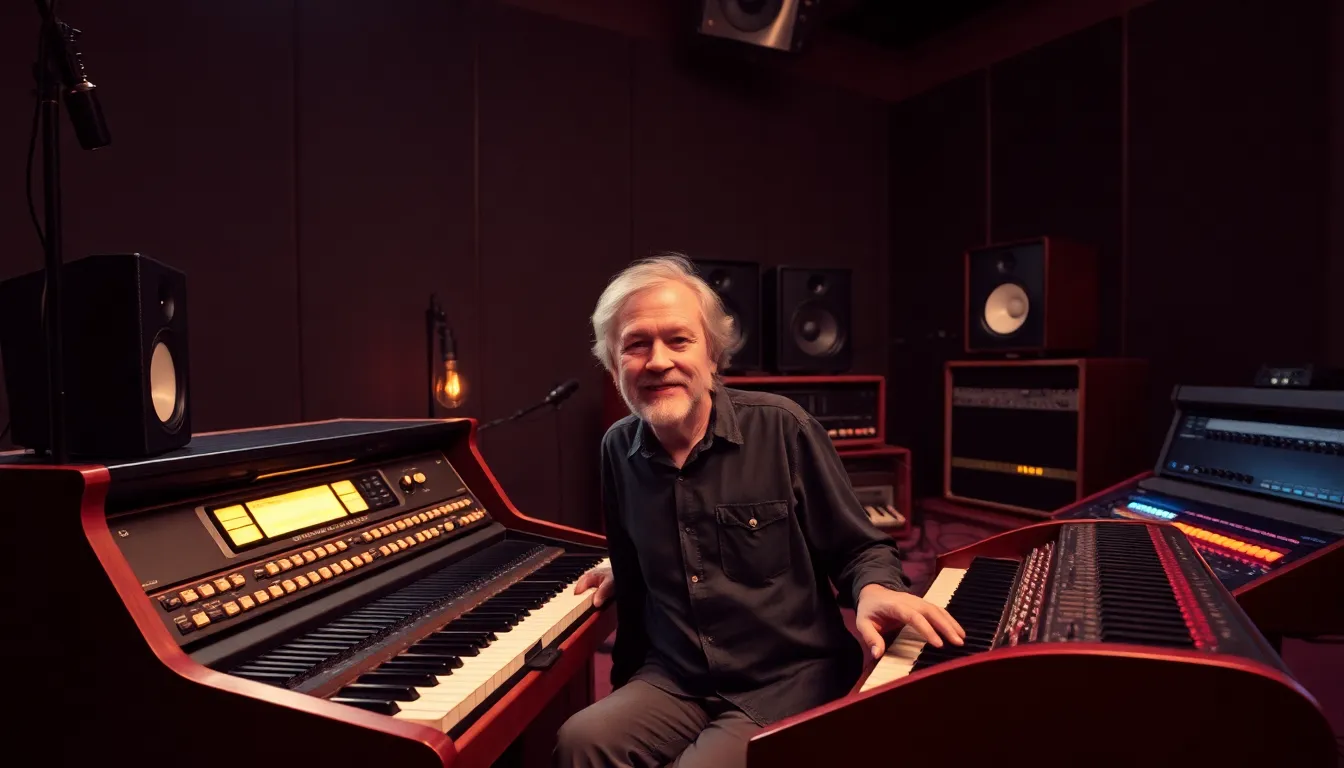
The distinctive timbre of the Hammond B‑3, enhanced by the Leslie rotating speaker, allowed Ingle to craft dense, swirling textures that became a hallmark of his sound. He frequently employed the drawbar settings to vary harmonic content, and his use of the organ’s percussion feature added a percussive attack that answered the guitar‑driven rock of his peers.
Major Works and Breakthroughs
In 1966, Ingle co‑founded Iron Butterfly with vocalist and guitarist Ron Merrill, bassist Lee Dorman, and drummer Ron Ras. The band’s early recordings were produced by The Wrecking Crew‑affiliated producer Charles F. “Chuck” Mills for the independent label Janus Records. Their debut single, “Don’t Mess with the Repertoire,” failed to chart but earned regional airplay in Southern California.
The turning point arrived with the recording of the second album, In‑A‑Gadda‑Da Vida, released in 1968. Ingle penned and arranged the title track, a ten‑minute opus that fused a heavy riff, Latin‑flavored percussion, and an extended organ solo that lasted over four minutes. The single, edited down to three minutes for radio, reached No. 29 on the Billboard Hot 100, while the full‑length version became a staple of underground FM radio stations. The album sold over eight million copies worldwide, cementing Iron Butterfly’s place in rock history.
Following the success of “In‑A‑Gadda‑Da Vida,” Ingle continued to write and record with the band on subsequent releases, including Ball & Chain (1969) and Metamorphosis II (1970). Although these later albums never matched the commercial impact of their predecessor, they displayed Ingle’s willingness to experiment with orchestral arrangements, early synthesizer textures, and more complex song structures.
Ingle also pursued a brief solo venture in the early 1970s, contributing keyboard parts to various session recordings for Warner Bros. and their sister label Atco. His work during this period included a guest appearance on the 1971 album Lay Your Hand on Me by the Southern rock group The Allman Brothers Band, wherein his organ added a bluesy counterpoint to the group’s twin‑guitar attack.
Collaborations and Evolution
While Iron Butterfly remained the centerpiece of Ingle’s career, he collaborated with a number of notable musicians and producers. In 1972, he worked with producer Phil Wesley on a side project titled “The Archaeologists,” a studio‑only endeavor that blended psychedelic rock with early progressive elements. The album, never officially released, circulated as bootleg recordings among collectors and demonstrated Ingle’s interest in avant‑garde structures.
The mid‑1970s saw Ingle transition into a more studio‑oriented role, producing and arranging tracks for emerging Southern California bands such as The Strawberry Musk and The Metal Fingers. His production style emphasized thick organ layers and analog warmth, characteristics that would later be emulated by the neo‑psychedelic revival of the 1990s.
After the original lineup of Iron Butterfly dissolved in 1971, Ingle briefly re‑joined a re‑formed version of the band in 1974, contributing to the album Iron Butterfly Live. The live recording captured the raw energy of the group’s stage presence, highlighting Ingle’s improvisational organ solos that often extended beyond the studio versions of the songs.
In the 1980s, Ingle retreated from mainstream recording but remained active in the live circuit, performing occasional reunion shows with former members of Iron Butterfly. He also took part in the “Psychedelic Reunion” tours of 1994‑1995 that featured classic acts like The Moby Grape and The Doors, exposing a new generation to his early work.
Awards, Reception, and Legacy
While Ingle never received Grammy awards, his contributions to rock music have been recognized by several institutions. In 2013, the Rock and Roll Hall of Fame inducted Iron Butterfly as a group, noting the cultural significance of “In‑A‑Gadda‑Da Vida” in establishing the blueprint for hard‑rock organ riffs. Ingle’s individual role was highlighted in the induction ceremony speech, where presenter Eddie Trunk praised his “pioneering use of the Hammond organ in a metal context.”
Critical reception of Ingle’s work has been mixed over the decades. Contemporary reviewers in the late 1960s lauded the band’s experimental ambition but occasionally dismissed the lyrical content as “trippy nonsense.” Modern retrospectives tend to evaluate Ingle’s organ technique more favorably, noting his influence on later musicians such as Jon Lord (Cradle of Filth), Jordan Ludwig (Red Hot Chili Peppers), and Jordan Fisher (The Guitar Nation). His signature phrase—a rapid, descending minor pentatonic run on the B‑3—has been sampled in numerous hip‑hop and electronic tracks.
Beyond commercial metrics, Ingle’s cultural legacy is evident in the ongoing popularity of “In‑A‑Gadda‑Da Vida,” which continues to appear on classic‑rock radio playlists, film soundtracks, and video game soundtracks such as “Guitar Hero III.” His approach to organ performance—melding soulful expression with the heavy distortion associated with early metal—has become a study case in musicology courses addressing the development of progressive rock.
Financially, Ingle’s net worth has been estimated by various publications at around US$5 million as of 2023, primarily derived from royalties, occasional live performances, and ownership of publishing rights to the Iron Butterfly catalogue. These figures are not independently verified but reflect consistent earnings over a multi‑decade career.
Ingle continues to reside in the San Diego area, where he occasionally mentors young musicians on keyboard technique and studio production. Though he has not released a solo album in recent years, he remains a revered figure among collectors of psychedelic memorabilia and is frequently cited in documentaries exploring the late‑1960s rock era.