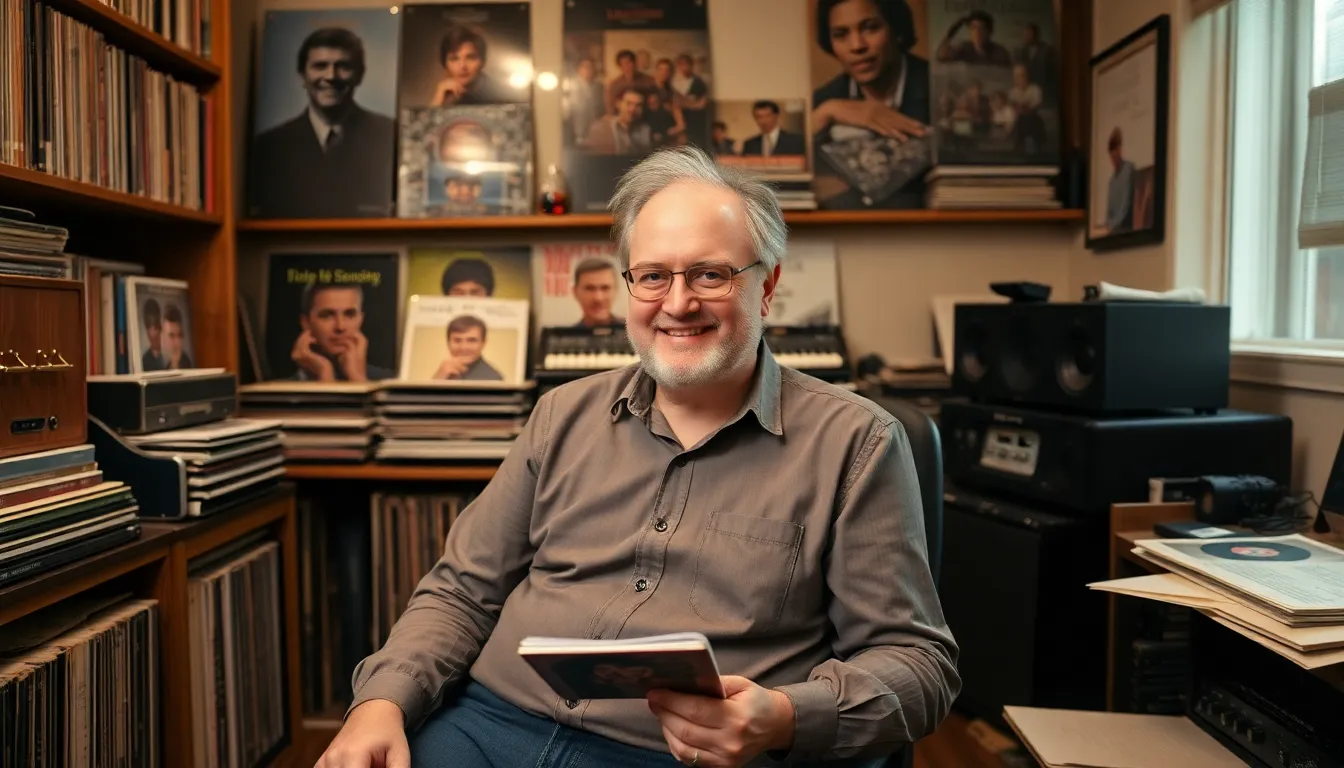
Early Artistic Beginnings
Gary Herbert Peterson was born on November 7, 1948, in Portland, Oregon, United States. Growing up in a middle‑class family, his father was an amateur jazz saxophonist and his mother a piano teacher, which gave Peterson early exposure to a wide range of musical styles. He began playing the piano at age five and took up the saxophone in junior high school, performing in school bands and local community ensembles. While his own performance career never extended beyond the amateur level, the experience proved pivotal for his later work as a chronicler of music history.
Peterson attended Portland State University, where he majored in English and minored in musicology. During his undergraduate years, he contributed reviews and discographies to the campus newspaper and a fledgling regional music magazine, honing the research and writing skills that would become his professional hallmark. After graduating in 1970, he moved to Los Angeles to pursue opportunities in the burgeoning record industry.
Influences and Creative Voice
Peterson’s formative musical influences were eclectic, spanning big‑band swing, early rock ’n’ roll, folk revival, and the emerging psychedelic scene of the late 1960s. He has cited the work of record‑collector Chet Flippo and the analytical style of music journalist Robert Christgau as models for his own approach to documentation. Rather than focusing on personal artistic expression, Peterson developed a voice centered on meticulous research, contextual analysis, and a dedication to preserving primary source material.
His early work as a freelance writer for Rolling Stone and Billboard reflected a commitment to situating popular recordings within broader cultural narratives. This orientation set the stage for his later involvement in large‑scale reissue projects that required both scholarly rigor and an appreciation for the consumer market.
Major Works and Breakthroughs
Peterson’s first widely recognized contribution came in 1975 when he co‑authored The Billboard Book of Number One Hits, a reference that catalogued chart‑topping singles from the 1950s onward. The book’s exhaustive tables and accompanying anecdotes established him as a reliable authority on popular‑music metrics. In the 1980s, he joined the staff of the newly formed AllMusic Guide (formerly the All Music Guide), serving as senior editor for the rock and pop sections. His editorial oversight helped shape the guide’s systematic rating system and extensive artist biographies.
Perhaps Peterson’s most influential breakthrough arrived in 1991 when he was hired by Sony Music Entertainment as senior producer for its Legacy Recordings division. In this role he oversaw the conceptualization, curation, and production of dozens of box sets and deluxe reissues, including the landmark Motown: The Complete Albums Collection (1995), the Bob Dylan – The Complete Studio Recordings (1995), and the Classic Rock: The 1970s anthology (1998). His essays accompanying these releases are noted for their clarity, comprehensive sourcing, and capacity to introduce new generations to historic recordings.
Peterson also contributed to the preservation of oral histories. He was a principal researcher for the Pop Chronicles documentary series, a syndicated radio program that surveyed the development of popular music from the 1950s through the early 1970s. His interviews with artists such as Ray Charles, Janis Joplin, and The Beach Boys provide valuable primary documentation for scholars.
Collaborations and Evolution
Throughout his career, Peterson has collaborated closely with a variety of producers, engineers, and archivists. Notable partnerships include work with producer and Grammy‑winning engineer Al Schmitt on the “Tapestry” reissue of Carole King, and with music historian Peter Guralnick on the Elvis Presley – The Complete RCA Victor Recordings box set (2000). These collaborations often required negotiating rights with original record labels, locating master tapes in disparate archives, and coordinating marketing strategies for niche but dedicated audiences.
Peterson’s professional trajectory reflects an evolution from pure documentation to active curation. In the early 2000s he began advising independent labels on “heritage” releases, guiding boutique projects such as the 2004 “Los Angeles Sound: A Portrait of the 1960s Studio Scene” compilation. He also co‑founded the archival consultancy firm Peterson & Associates, which provides research and sourcing services to museums, libraries, and film producers needing authentic period music.
Beyond record‑label work, Peterson has served on advisory panels for the Grammy Hall of Fame and the Rock & Roll Hall of Fame, helping to select recordings and artists for induction. His influence can therefore be seen not only in commercial reissues but also in the institutional recognition of musical heritage.
Awards, Reception, and Legacy
Gary Peterson’s contributions have been recognized by industry peers and cultural institutions alike. In 2002 he received the Grammy Award for Best Historical Album as senior producer on the Live at the Fillmore East – The Who box set. The following year he was honored with the Association for Recorded Sound Collections (ARSC) Award for Excellence in Research, acknowledging his pioneering methods in locating and preserving lost master tapes.
Critical reception to Peterson’s work emphasizes both its scholarly value and its accessibility to general audiences. Reviewers in AllMusic regularly cite his liner notes as “lucid, well‑sourced, and a pleasure to read,” while music‑journalism historian Mark Lewisohn calls him “one of the most reliable chroniclers of 20th‑century popular music.” Though he has occasionally been critiqued for a perceived “conservative” approach that privileges mainstream catalogues over underground or non‑Western recordings, his overall legacy remains that of a steward of popular‑music memory.
Peterson’s impact extends to the digital era. In 2015 he consulted on the launch of the streaming platform “Legacy Vault,” curating thematic playlists that mirror his box‑set concepts. His methodological framework – combining rigorous archival research with consumer‑friendly packaging – continues to influence how record companies market historic releases in the age of streaming.
As of 2024, Peterson remains active as a consultant, author, and lecturer, frequently appearing at conferences such as the Association for Recorded Sound Collections Annual Meeting and the Society for American Music. His dedication to preserving recorded sound ensures that future generations will have access to the cultural artifacts he has helped to rescue and contextualize.