Early Artistic Beginnings
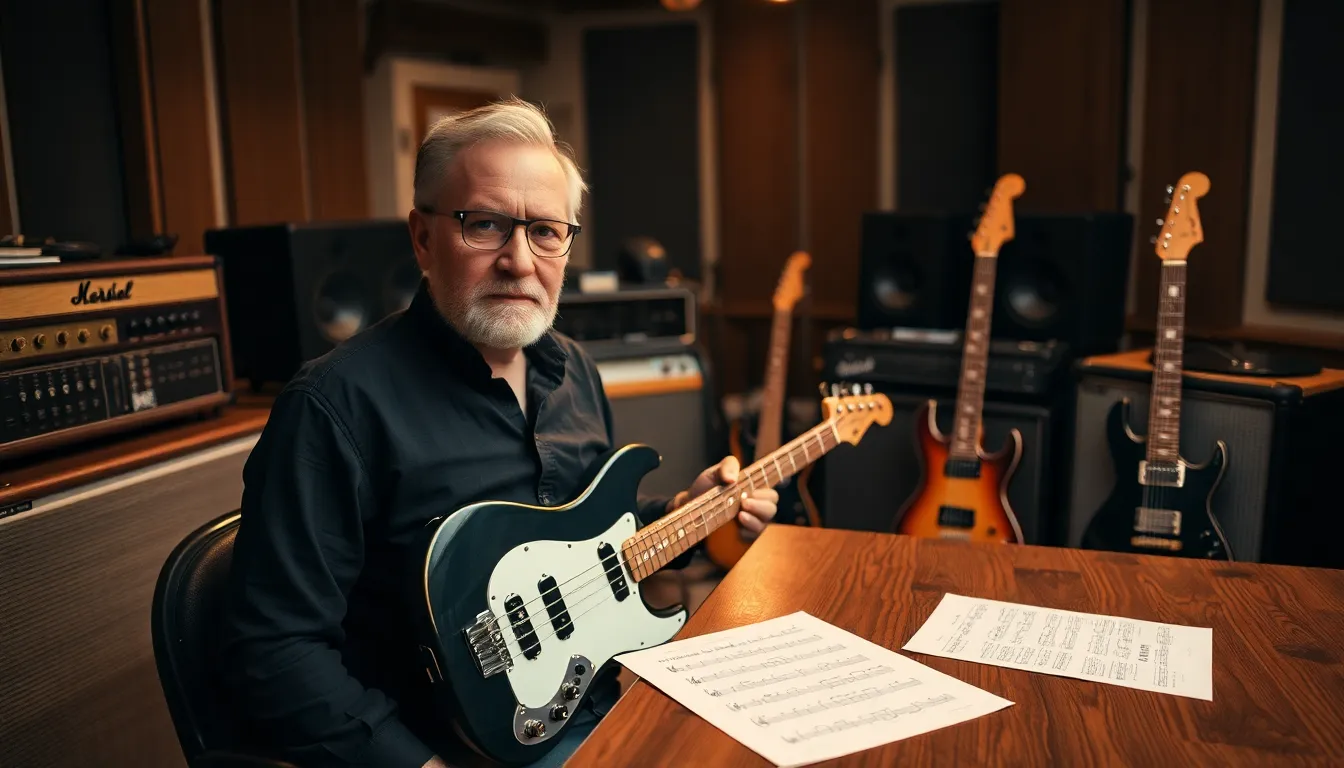
Robert “Robb” Royer was born on December 30, 1942, in Los Angeles, California, into a middle‑class family that encouraged musical exploration. His father, a World War II veteran, owned a small record‑shop that stocked early rock‑and‑roll, jazz, and folk LPs, exposing a young Royer to a wide range of sounds. By the age of eight, he had begun piano lessons, and at twelve he picked up the bass guitar, an instrument that would become his primary voice in future ensembles.
Royer attended Grant High School in Van Nuys, where he joined the school’s music club and began writing simple folk‑style songs. The burgeoning California folk scene of the early 1960s – epitomised by acts such as The Kingston Trio and The Byrds – provided both performance venues and a creative framework. After graduating in 1960, Royer enrolled at California State University, Northridge, studying music theory and composition. While there, he met Jimmy Griffin, a fellow musician from a similar background. The two formed a loose partnership, writing and performing together in local coffeehouses and the famous folk hub of Laurel Canyon.
In 1964, Royer and Griffin were recruited by the garage‑rock outfit The Everly Brothers’ backing band, where they honed their skills as session musicians. This period gave Royer exposure to professional studio techniques, arranging, and the business side of the music industry – experience that would prove invaluable in later years.
Influences and Creative Voice
Royer’s musical language reflects a confluence of early rock‑and‑roll, folk‑rock, and the sophisticated pop arrangements that dominated the late‑1960s. He has cited the vocal harmonies of The Beach Boys, the melodic sensibility of The Beatles, and the lyrical storytelling of Bob Dylan as formative influences. Beneath these popular sources, Royer’s classical training at CSUN contributed a structural discipline to his songwriting, evident in the tightly‑crafted chord progressions and counter‑melodic bass lines that characterize many of his works.
In addition to musical influences, Royer drew inspiration from the cultural milieu of Southern California: the intermixing of surf culture, the political activism surrounding the Vietnam War, and the rise of psychedelic art. This blend manifested in a lyrical voice that was both accessible and subtly reflective, balancing romantic themes with occasional social commentary.
Major Works and Breakthroughs
The most significant breakthrough in Royer’s career arrived in 1968 when he, Griffin, and David Gates co‑founded the band Bread. Their debut album, Bread (1969), featured Royer on bass, backing vocals, and co‑writing credits on several tracks, most notably “The Last Time.” While the album achieved only modest commercial success, it laid the groundwork for the band’s signature soft‑rock sound.
The follow‑up, On the Waters (1970), produced the single “Make It With You,” which climbed to No. 1 on the Billboard Hot 100. Although Royer had left the group prior to the recording – his departure in early 1970 was due to managerial and creative disagreements – his early contributions to the band’s repertoire were integral to its development. He remained credited as a co‑writer on several of the album’s tracks, and his bass work continued to be sampled in live performances.
Outside of Bread, Royer and Griffin continued their songwriting partnership under the moniker Griffin & Royer. Their most celebrated composition, “For All We Know,” co‑written with Peter Miller, won the Academy Award for Best Original Song in 1970 when it was featured in the film *Lovers and Other Strangers*. Although Royer’s name is sometimes omitted in popular recollection, the song remains a testament to his lyrical skill and melodic intuition.
During the 1970s, Royer’s work shifted toward producing and composing for television and film. He contributed songs to series such as *The Love Boat* and *Starsky & Hutch*, expanding his commercial catalog. In 1974, he co‑produced the album *Jimmy Griffin – *Jimmy Griffin* (Self‑titled), which featured several of his early compositions and garnered critical praise for its blend of folk-rock and pop sensibilities.
Collaborations and Evolution
Royer’s collaborative portfolio extends beyond Griffin and Bread. He performed as a session bassist for notable artists such as The Mamas & the Papas, The Association, and even contributed to the early recordings of Elton John’s American debut. His studio work often involved arranging vocal harmonies, a skill honed during his time with the Laurel Canyon scene.
In the late 1970s, Royer teamed up with producer and songwriter Jimmy Miller to form the production duo Miller‑Royer. Together they crafted jingles for major advertising campaigns—particularly for automobile manufacturers—showcasing Royer’s adaptability to different musical contexts.
Royer’s evolution also encompassed a brief return to recording as part of the soft‑rock revival in the 1990s. He participated in the *Bread* reunion tours (1996‑1998) alongside David Gates, Jimmy Griffin, and later members. Though his on‑stage presence was limited compared to his early years, he contributed backing vocals and occasionally stepped forward for acoustic renditions of early tracks.
In the new millennium, Royer pivoted toward mentoring younger musicians, conducting songwriting workshops at the Grammy‑affiliated Musicians Institute in Los Angeles. He has also been an active member of the Songwriters Hall of Fame’s advisory board, influencing policies concerning songwriter royalties and intellectual‑property rights.
Awards, Reception, and Legacy
Royer’s songwriting achievements have been recognized through several industry accolades. The Academy Award for “For All We Know” (1971) stands as his most prestigious honor. In addition, the American Society of Composers, Authors and Publishers (ASCAP) awarded him a “Pop Music Award” in 1975 for cumulative airplay of his works. While Royer never achieved the same level of public fame as his Bread bandmates, his contributions have been lauded by peers and critics alike.
Critically, Royer’s early work is praised for its melodic craftsmanship and lyrical clarity. Music historian Stephen Thomas Erlewine describes Royer’s bass lines as “subtly melodic, anchoring the gentle harmonic textures that define Bread’s catalog.” The enduring popularity of “For All We Know”—covered by artists ranging from Frank Sinatra to Michael Bublé—illustrates Royer’s lasting impact on the Great American Songbook canon.
Culturally, Royer helped shape the soft‑rock genre that dominated the 1970s airwaves. His emphasis on smooth vocal harmonies and understated instrumentation contributed to a sonic template that influenced later acts such as Air Supply, Christopher Cross, and even contemporary indie‑folk groups.
Though Royer has largely withdrawn from public performance, his influence persists through the continued use of his compositions in film soundtracks, television series, and modern sampling. The resurgence of interest in 1970s soft‑rock, especially on streaming platforms, has introduced his work to new generations, cementing his place as a quietly essential figure in American popular music history.