Early Artistic Beginnings
Bill Danoff (born December 7, 1946, Philadelphia, Pennsylvania) and Taffy Nivert (born September 19, 1948, Washington, D.C.) first met in the early 1970s while performing in Washington’s burgeoning folk‑rock scene. Danoff grew up in the suburbs of Philadelphia before moving to the District of Columbia, where he was drawn to the acoustic‑driven clubs of Georgetown and the University of Maryland’s student venues. He taught himself guitar, began writing lyrics steeped in rural imagery, and performed with various local ensembles, including a brief stint with the folk group The Four B’s. Nivert, a classically trained vocalist who sang in her church choir and later the folk group The Modern Folk Quartet, was known for her bright, crystalline tone and a penchant for close‑harmonized arrangements.
Both artists shared a love for the songwriting style of folk‑rock pioneers such as The Kingston Trio, The Mamas & the Papas, and early Bob Dylan. Their early collaboration took shape in the late‑1960s when they co‑wrote “Take Me Home, Country Roads” with friend John Denver—a song that would become a major hit for Denver in 1971 and, retrospectively, an early indicator of Danoff’s melodic sensibility. The success of that composition helped Danoff and Nivert secure publishing contracts and gave them the confidence to pursue a joint performing venture. In 1972 they formed the duo Fat City, performing locally and developing a repertoire that blended folk storytelling with pop‑oriented harmonies.
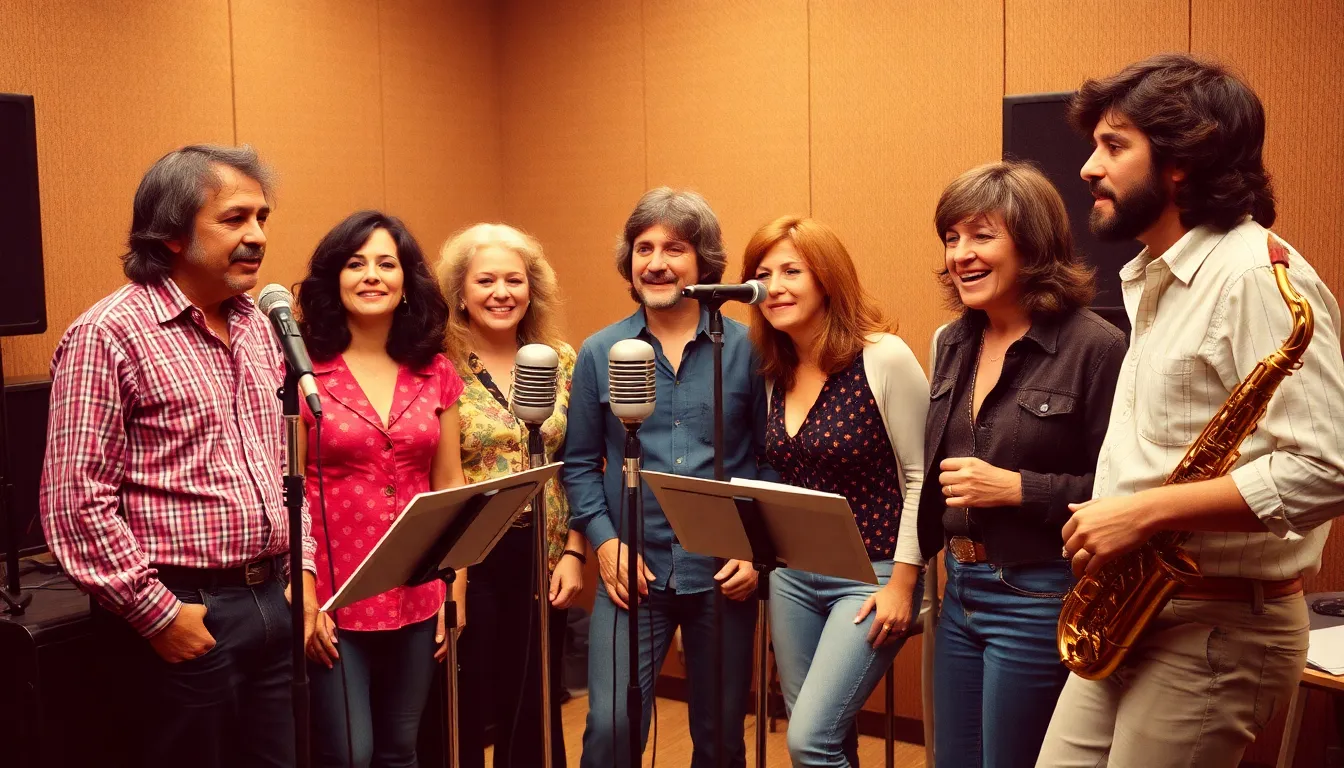
By 1975 the duo expanded their sonic palette, adding keyboardist Jon Carroll and bassist/trombonist John Starland (born John Terrence Smith). The quartet adopted the name Starland Vocal Band, a moniker that blended their expanding lineup with a desire to emphasize vocal harmony as the central instrument. Their first professional recording contract came from John Denver’s own label, Windsong Records, but the group soon signed a major‑label deal with A&M Records, which provided the resources needed for a full‑scale commercial launch.
Influences and Creative Voice
The Starland Vocal Band’s sound was rooted in the folk‑rock tradition of the early 1970s but was filtered through a glossy soft‑rock production aesthetic that was popular on contemporary AM radio. Their vocal approach—a seamless blend of Danoff’s baritone, Nivert’s soprano, Carroll’s tenor, and Starland’s baritone—mirrored the close‑harmony style pioneered by groups such as The Beach Boys and The Four Freshmen. Lyrically, the band leaned on American pastoral themes, love‑song optimism, and occasionally whimsical, light‑hearted subjects, reflecting the cultural mood of post‑Vietnam, pre‑disco America.
Danoff cited the songwriting of James Taylor and John Denver as formative, while Nivert’s vocal sensibility was shaped by the pop standards of the 1960s—particularly the harmonic sophistication of The Beatles’ later work. The group also absorbed influences from contemporary country‑pop acts like The Oak Ridge Boys and The Carpenters, an influence evident in their polished arrangements and use of orchestral strings arranged by noted composer‑arranger Marty Paich on their debut album.
Collectively, the quartet aimed to craft an “easy‑listening” yet musically competent sound that could appeal to both adult contemporary listeners and the younger pop audience. Their creative voice was thus a synthesis of folk‑rooted lyricism with a production sheen that was increasingly common on radio in the mid‑1970s.
Major Works and Breakthroughs
The band’s self‑titled debut album, Starland Vocal Band, was released in May 1976 on A&M Records. Produced by Tom Catalano (who had previously worked with Neil Diamond), the record featured a blend of original compositions by Danoff and Nivert and a few covers. The lead single, “Afternoon Delight,” a breezy uptempo track with suggestive lyrics about a romantic rendezvous, was released in June 1976. The song entered the Billboard Hot 100 in early July and rose to the summit on August 5, 1976, holding the number‑one position for two weeks. The single was certified gold by the RIAA, and its success propelled the album to a peak of #13 on the Billboard 200.
“Afternoon Delight” also earned the band a Grammy nomination for Best New Artist in 1977, though they lost to The Eagles. The same year A&M released the band’s second album, Rear View Mirror, which attempted to replicate the commercial formula of the debut while incorporating more country‑rock elements. Though the album received moderate airplay, its singles – “Crying in the Rain” and “That’s What I Got for You” – failed to chart in the Top 40, signaling a swift decline in mainstream visibility.
In 1977 the Starland Vocal Band attempted to leverage their popularity into television. They were featured in a short‑lived variety program, The Starland Vocal Band Show, broadcast on CBS for a single season of six episodes. The show combined musical performances with comedic sketches and guest appearances, but low ratings led to its cancellation after its initial run.
The band’s third studio effort, Late Night (1979), marked a stylistic shift toward a smoother adult‑contemporary approach. While critics praised the vocal harmonies and production quality, sales were limited, and the record failed to produce any charting singles. By the early 1980s the group’s commercial momentum had dissipated, and A&M terminated their contract in 1981. The quartet officially disbanded later that year, though Danoff and Nivert continued to write and record as a duo under the name The Starland Vocal Band.
Collaborations and Evolution
Beyond their own recordings, the members of Starland Vocal Band were active collaborators within the wider music industry. Danoff’s early partnership with John Denver remained a touchstone; the trio co‑wrote “Take Me Home, Country Roads,” which cemented Danoff’s reputation as a skilled lyricist. The band also recorded with producer Marty Paich, whose orchestral arrangements added a sophisticated layer to the vocal tracks and connected the group to the West Coast “soft‑rock” movement.
During the peak of their fame, the quartet performed as opening acts for established artists such as The Carpenters and Neil Diamond, exposing them to a broader audience. Their television appearances spanned late‑night talk shows (e.g., The Tonight Show Starring Johnny Carson), daytime variety programs, and the aforementioned short‑run sitcom, each offering a platform to showcase their vocal prowess.
After the disbandment, Danoff and Nivert returned to songwriting. They contributed several tracks to the soundtrack of the 1984 film Starlight and penned songs for other artists, including a 1991 duet with Alison Krauss titled “Sky’s The Limit.” Their later work reflected a matured perspective, moving away from the bubbly pop of “Afternoon Delight” toward more introspective folk narratives.
Individual members also pursued parallel careers: Bill Danoff released solo acoustic albums in the 1990s, while Taffy Nivert (later known as Taffy Danoff after marriage) performed as a backing vocalist for various country and pop acts. Their collaborative history illustrates a pattern common among 1970s soft‑rock ensembles—initial commercial breakthrough followed by a gradual transition to behind‑the‑scenes songwriting and occasional session work.
Awards, Reception, and Legacy
The commercial impact of “Afternoon Delight” remains the most enduring aspect of the Starland Vocal Band’s legacy. The song has been featured in numerous film soundtracks, most famously in the 2004 comedy Anchorman: The Legend of Ron Burgundy, rejuvenating public interest in the group’s work. It also appears in television series and advertising campaigns that capitalize on its upbeat, recognizable melody.
Critically, the quartet received mixed reviews. Contemporary music journalists praised the vocal harmony and production values but often dismissed the group as a novelty act, a perception reinforced by the song’s light‑hearted lyrical content. Retrospective assessments in the 2000s have been more generous, contextualizing the band within the soft‑rock era and recognizing their contribution to the vocal‑group tradition in American popular music.
In terms of formal recognition, the band was nominated for a Grammy (Best New Artist, 1977) and received a gold certification from the RIAA for “Afternoon Delight.” However, they never secured major industry awards beyond these acknowledgments.
The cultural memory of Starland Vocal Band is largely anchored to their singular hit, yet they have influenced a niche of contemporary a‑capella and vocal‑harmonic groups that cite 1970s soft‑rock vocal arrangements as a source of inspiration. Their ability to blend folk lyricism with polished pop production is occasionally referenced in academic discussions of American popular music’s transition from folk revival to adult contemporary formats in the mid‑1970s.
Although their net worth remains unverified in public financial disclosures, the band’s brief period of mainstream success provided them with royalties that continue to accrue via streaming platforms and repeated licensing of “Afternoon Delight.” The enduring airplay of that track ensures that the Starland Vocal Band maintains a modest, if niche, presence in the modern music landscape.