Early Artistic Beginnings
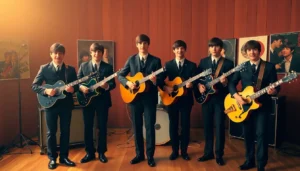
The Lovin’ Spoonful was formed in 1965 in the bohemian neighborhood of Greenwich Village, Manhattan, a crucible for folk, blues, and early rock experimentation. The founding members—John Sebastian (vocals, guitar, autoharp), Zal Yanovsky (lead guitar), Steve Boone (bass), and Joe Butler (drums, later vocals)—had each accumulated experience performing in local coffeehouses, clubs, and as session musicians. Sebastian, born in New York City in 1944, had grown up in a musically enriched household; his mother sang, and his father owned a record store where young John was exposed to a broad swath of traditional American folk, blues, and early rock & roll. Zal Yanovsky, a Canadian immigrant, arrived in New York in 1962 and cut his teeth with the folk‑blues group The Blues Magoos, while Boone and Butler were both active participants in the local folk scene, playing with various ensembles that performed at venues such as Cafe Wha? and The Bitter End.
The band’s first rehearsal took place in a modest loft on West 4th Street, where the members blended Sebastian’s acoustic folk sensibilities with Yanovsky’s electric guitar virtuosity. Their early repertoire consisted of original compositions and re‑interpretations of traditional material, reflecting a shared desire to create a sound that bridged the intimacy of folk storytelling with the energetic drive of rock and roll. The group quickly gained a following, securing a residency at the iconic Cafe Wha? and earning a reputation for tight vocal harmonies and spirited live performances.
Influences and Creative Voice
The Lovin’ Spoonful’s artistic voice was shaped by a confluence of American and British musical currents. Domestically, the group drew from the folk revivalists of the early 1960s—Bob Dylan, Pete Seeger, and Joan Baez—absorbing the narrative lyricism and acoustic instrumentation that defined the period. Simultaneously, the British Invasion, exemplified by The Beatles and The Rolling Stones, inspired the band to incorporate jangly electric guitars, pop sensibilities, and studio experimentation. Their sound also bore the imprint of Caribbean and Latin rhythms, an influence largely attributable to Yanovsky’s fascination with calypso and ska, and reflected in tracks such as “Do You Believe in Magic?” which paired a buoyant melody with syncopated percussion.
Beyond musical styles, the band’s lyrical content was informed by the social optimism and countercultural undercurrents of mid‑1960s America. Sebastian’s songs often celebrated quotidian wonder—children’s play, summer evenings, simple pleasures—while avoiding overt political messaging. This approach resonated with a broad audience seeking relief from the era’s mounting tensions, allowing their music to occupy a unique niche that was both accessible and artistically adventurous.
Major Works and Breakthroughs
The Lovin’ Spoonful’s breakthrough came with their debut single “Do You Believe in Magic?” released in July 1965 on Kama Sutra Records. The song climbed to No. 9 on the Billboard Hot 100, earning the group a Grammy nomination for Best New Artist and establishing them as a commercial force. Their follow‑up single, “You Didn’t Have to Be So Nice,” reached No. 10, cementing a pattern of high‑charting releases.
Their first album, Do You Believe in Magic (1965), showcased the band’s ability to blend whimsical lyricism with sophisticated arrangements. Tracks such as “Daydream”—which later became a No. 2 hit—exemplified a polished pop‑folk hybrid that appealed to both college radio and mainstream audiences. Subsequent albums, Daydream (1966) and Hums of the Lovin’ Spoonful (1966), expanded their sonic palette, incorporating more elaborate studio techniques, orchestration, and forays into baroque pop.
In 1967, the band achieved their greatest commercial success with “Summer in the City,” a gritty, urban‑themed track that contrasted sharply with their earlier breezy hits. Produced by fellow Village stalwart Erik Jacobsen, the song reached No. 1 on the Billboard Hot 100 and earned a Grammy for Best Contemporary (Rock & Roll) Recording. The recording’s innovative use of sound effects, double‑tracked vocals, and a driving electric organ signaled the group’s willingness to explore darker, more complex thematic material.
Touring extensively, The Lovin’ Spoonful performed at prominent venues such as Carnegie Hall, The Hollywood Bowl, and the 1967 Monterey Pop Festival, sharing stages with contemporaries like The Mamas & the Papas and The Byrds. Their live shows were noted for energetic stage presence and tight musicianship, contributing to their reputation as one of the era’s most reliable touring acts.
Collaborations and Evolution
Throughout their career, The Lovin’ Spoonful collaborated with a variety of prominent producers, songwriters, and fellow musicians. Erik Jacobsen, who produced their early recordings, was instrumental in shaping their polished studio sound. Later, the band worked with producers such as Jerry Ragovoy and George “Shadow” Morton, whose interventions added a richer, more experimental texture to later releases.
In 1968, internal tensions and changing musical trends prompted a shift in the group’s lineup. Zal Yanovsky departed abruptly during a tour of Japan, citing fatigue and personal strain. He was replaced by Jerry Yester, a multi‑instrumentalist who had previously worked with folk‑rock pioneer Tim Buckley. Yester’s addition broadened the band’s instrumental range, allowing for more sophisticated arrangements involving keyboards, mandolin, and orchestral embellishments. This period produced the album Everything Playing (1967), which featured a more psychedelic edge, though it failed to replicate earlier commercial successes.
After the group’s disbandment in 1969, members pursued divergent careers. John Sebastian embarked on a solo career, releasing the hit “Welcome Back” (the theme for the TV series *Welcome Back, Kotter*) and continuing to influence singer‑songwriters for decades. Steve Boone and Joe Butler formed the duo “The Spoons” before eventually re‑uniting with Sebastian for occasional reunion tours in the 1990s and 2000s, often under the banner “The Lovin’ Spoonful – The Original Members.”
Awards, Reception, and Legacy
The Lovin’ Spoonful earned a Grammy Award for Best Contemporary (Rock & Roll) Recording in 1967 for “Summer in the City,” and a Grammy nomination for Best New Artist the same year. Their early catalog received critical acclaim for its melodic craftsmanship and lyrical ingenuity, with reviewers highlighting the group’s capacity to translate folk authenticity into pop accessibility.
Retrospectively, music historians regard The Lovin’ Spoonful as pioneers of the American folk‑rock genre, crediting them with paving the way for later acts such as The Byrds, The Mamas & the Papas, and even contemporary indie‑folk groups. Their songs have been covered by artists ranging from The Carpenters to Paul McCartney, underscoring the enduring appeal of their melodies.
While the band never reclaimed the commercial dominance of their mid‑60s peak, their catalog continues to generate royalties, streaming revenue, and licensing fees—contributing to an estimated collective net worth that fluctuates around $15–$20 million, according to industry analysts. Their influence is evident in contemporary music curricula, where “Do You Believe in Magic?” and “Daydream” are frequently cited as exemplars of effective songcraft.
In recent years, The Lovin’ Spoonful has been inducted into the Rock and Roll Hall of Fame’s “Artists & Curators” category (2022) as part of a special tribute to folk‑rock innovators, cementing their status as cultural icons whose contributions echo across generations.