Early Artistic Beginnings
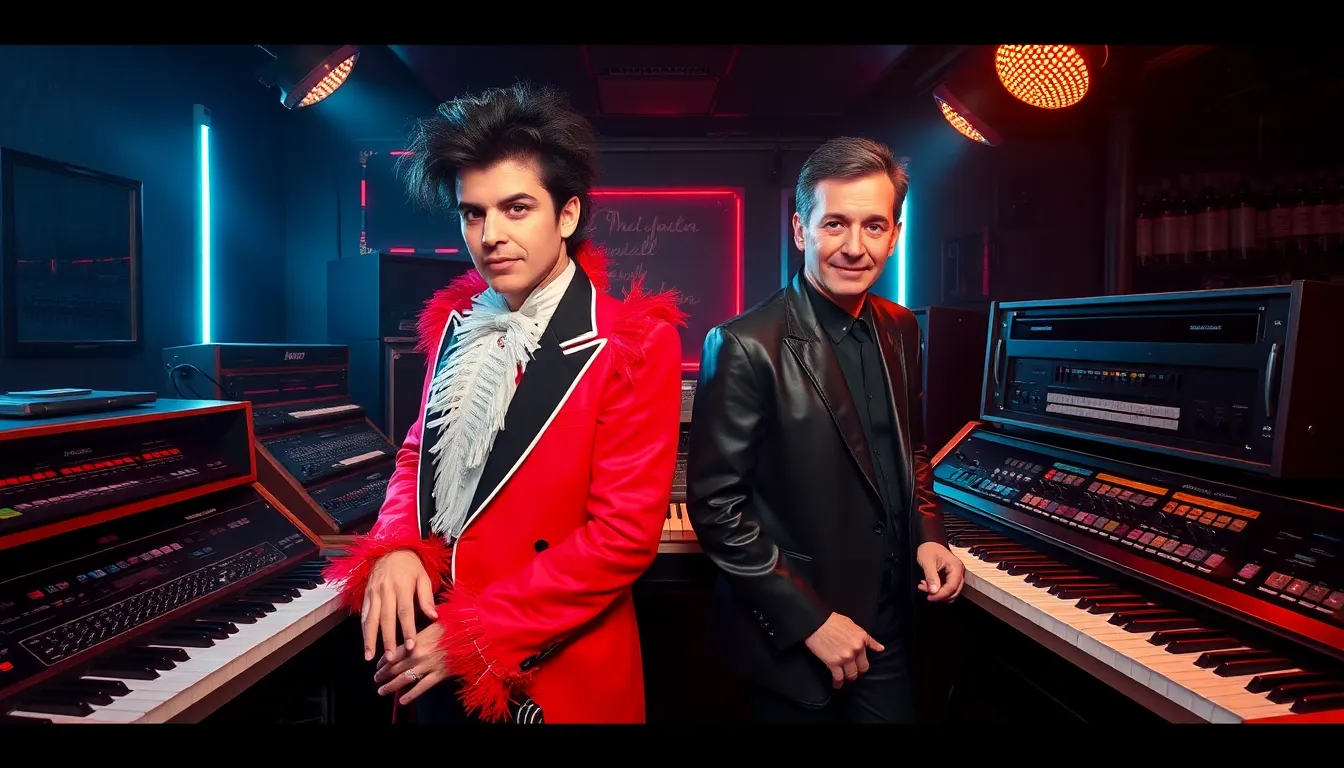
Soft Cell originated in Leeds, West Yorkshire, England, when Marc Almond (born 9 July 1957, Southport) and Dave Ball (born 7 October 1959, Northampton) crossed paths in the late 1970s. Almond, the son of a school headmaster, began singing in school choirs and gravitated toward the emerging club scene, while Ball studied art and music technology at Leeds Polytechnic, where he built rudimentary synthesizers. Both were immersed in the post‑punk underground that thrived in Leeds’ warehouses and university venues. Their first collaborative performances took place at the local club Leeds University Union in 1978, where they experimented with cheap analogue synths, drum machines, and Almond’s dramatic vocal delivery.
In 1979, the pair adopted the name Soft Cell, a reference to a biological term hinting at vulnerability and transformation. They secured a residency at the iconic Manchester club Futurama, where they refined a minimalist aesthetic that merged abrasive synth lines with pop‑song structures. Their early recordings, such as the self‑released EP Mutant Moments (1979), attracted the attention of independent label Some Bizzare, which would later become instrumental in launching their career.
Influences and Creative Voice
Soft Cell’s sound was shaped by a confluence of influences: early electronic pioneers like Kraftwerk and Brian Eno, the stark theatricality of David Bowie’s Berlin era, and the raw emotionality of early punk performers such as the Sex Pistols. Almond’s vocal stylings drew on cabaret, glam, and the flamboyance of the 1970s, while Ball’s synthesizer work reflected the minimalism of post‑industrial music. The duo also incorporated elements of Northern soul, a genre popular in Leeds clubs where Almond first heard American R&B records. This eclectic mix produced a sonic palette characterised by cold, arpeggiated synth motifs juxtaposed with emotionally charged, often androgynous vocal delivery.
Thematically, Soft Cell embraced subjects that were taboo for mainstream pop: sexuality, addiction, urban alienation, and the commodification of love. Their lyrics often employed irony and dark humor, positioning the duo as both chroniclers and critics of contemporary culture. This creative voice resonated with a generation navigating the early years of Thatcherite Britain and the rise of MTV’s visual emphasis on music.
Major Works and Breakthroughs
The band’s breakthrough arrived in 1981 with the release of their debut album Non‑Stop Erotic Cabaret. Produced by Mike Thompson and recorded at London’s Trident Studios, the album combined synth‑driven tracks with Almond’s flamboyant performance style. Its lead single, a synth‑heavy cover of Gloria Jones’s 1965 soul classic “Tainted Love”, skyrocketed to No. 1 on the UK Singles Chart and reached No. 8 on the US Billboard Hot 100. The song’s minimalist arrangement—driven by a single bass synth line and a relentless drum machine—became a template for 1980s synth‑pop.
Following the success of “Tainted Love”, Soft Cell released several further singles from the debut: “Memorabilia”, “Torch” and “Say Hello, Wave Goodbye”. The latter two showcased the duo’s ability to blend melancholy lyricism with danceable beats. In 1982, the second studio album Non‑Stop Ecstatic Dance (often referred to as The World We Live In and Live in Hamburg) displayed a more expansive production style, incorporating orchestral strings and a broader palette of electronic textures. Though it did not match the commercial heights of its predecessor, it cemented Soft Cell’s reputation as innovators willing to experiment beyond the confines of the synth‑pop formula.
Throughout the mid‑1980s, Soft Cell continued to release notable works, including the 1983 EP Non‑Stop Erotic Cabaret – Live, the 1984 single “Where the Heart Is”, and the 1985 album Heat – The seventies as a woman (later re‑issued as The Art of Moderna). Their music also appeared in film soundtracks, notably the 1983 horror movie Nightmare on the Hump, which helped broaden their international audience.
Collaborations and Evolution
Soft Cell’s collaborative history is marked by partnerships with both mainstream and avant‑garde artists. Early in their career, they worked with producer Mike Thompson, who helped refine their crisp electronic sound. In 1985, they contributed a remix of “Tainted Love” for the US label Atlantic Records, a version that incorporated funk‑inflected bass lines, reflecting Ball’s growing interest in American dance music.
After a hiatus beginning in 1984, Almond pursued a solo career, forming the enigmatic cabaret‑inspired group Marc Almond and The Willing Sinners and later releasing the critically acclaimed solo album Jacques (1989). Ball, meanwhile, co‑founded the industrial‑electronic band Now Sphinx and contributed to the project Fad Gadget. Despite their separate paths, the duo reconvened intermittently for special performances, most notably a 1990 one‑off show at the Wembley Arena where they performed “Tainted Love” alongside guest vocalist Nouvelle Jolie.
In 2000, Soft Cell released a compilation album The Very Best of Soft Cell, which reignited interest among a new generation of listeners. This resurgence culminated in a 2003 reunion tour, “Soft Cell: Returns”, featuring a revitalised stage show that incorporated contemporary visual effects, multimedia backdrops, and re‑imagined arrangements of classic tracks. The tour was documented in the live DVD Live at the O2 Academy – 2003 and received a nomination for the Q Awards “Best Live Act”.
Soft Cell’s later work, including the 2010 EP Suicide for Pleasure and the 2021 collaboration with the electronic duo Pet Shop Boys on the track “The Night of Love”, demonstrates their willingness to adapt to modern production techniques while preserving the stark aesthetic that defined their early recordings.
Awards, Reception, and Legacy
Commercially, Soft Cell sold over 10 million records worldwide, propelled largely by the global impact of “Tainted Love”. The single earned a Gold certification in the United Kingdom and the United States, and the debut album achieved Platinum status in the UK.
Critically, the band received mixed reviews initially; early British music press such as Melody Maker praised their daring lyrical content, whereas some US critics labelled them as “novelty synth‑pop”. Retrospective assessments, however, acknowledge Soft Cell’s role in shaping the aesthetic of dark, synth‑driven pop. Music historians cite them alongside contemporaries like Depeche Mode and Yazoo as key architects of the Second British Invasion of the early 1980s.
Soft Cell’s influence extends beyond chart success. Their theatrical presentation prefigured the flamboyance of later acts such as Erasure and Pet Shop Boys. The duo’s willingness to explore themes of sexual ambiguity and emotional vulnerability contributed to a broader cultural conversation about gender and identity in popular music. Moreover, “Tainted Love” remains a staple of 1980s nostalgia playlists and has been covered by artists across genres, from punk band Stiff Little to hip‑hop collective Run‑D.M.C.
In 2008, Soft Cell was inducted into the UK Music Hall of Fame alongside icons such as The Who and The Clash. The following year, the British Phonographic Industry honoured “Tainted Love” with a special “Silver Disc” for 25‑year longevity on the UK Singles Chart. Their oeuvre continues to be studied in university courses on popular music, and archival releases of early demo tapes provide scholars with insight into the evolution of electronic music production techniques.