Early Artistic Beginnings
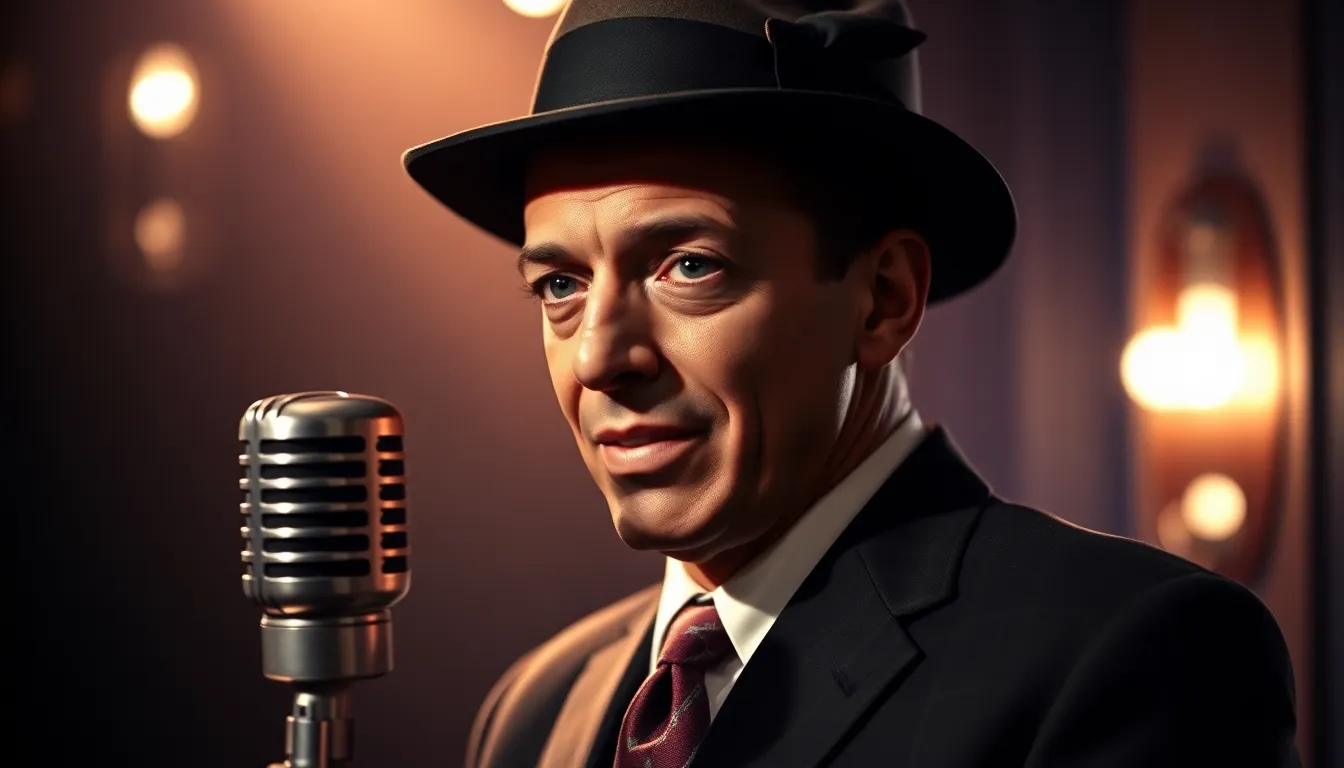
Francis Albert Sinatra was born on December 12, 1915, in Hoboken, New Jersey, to Italian immigrants Natalina (Buell) and Antonino “Tony” Sinatra. The family lived in a modest, working‑class neighbourhood where music was a staple of social life. Sinatra sang in the choir at St. Joseph’s School and was exposed early to the popular standards of the era through radio broadcasts and local performances. At the age of 13 he formed a small vocal group called the Hoboken Four, which won a talent contest and performed on the Major Bowes Amateur Hour in 1935, earning the group a national audience.
Following his brief stint with the Hoboken Four, Sinatra pursued a series of odd jobs while continuing to sing in local clubs. In 1939 he secured his first steady singing engagement at the Rustic Cabin in Englewood, New Jersey, where he performed for servicemen. This period of relentless gigging in the New York tri‑state area helped him develop a command of timing, phrasing, and an ability to read and adapt to a wide variety of band arrangements.
Influences and Creative Voice
Sinatra’s vocal style was shaped by a mixture of jazz, swing, and the burgeoning popular song tradition of the 1930s. He cited crooners such as Bing Crosby and Russ Columbo as early influences, but he also drew inspiration from swing-era bandleaders like Tommy Dorsey, with whom he would later record. The swing rhythm sections, horn arrangements, and improvisational sensibility of the big‑band era contributed to his distinctive “phrase‑slicing” technique, where he would subtly delay or anticipate beats to convey emotion.
Beyond music, Sinatra was deeply affected by the Italian American cultural enclave of Hoboken and the broader urban narrative of the Great Depression. These experiences gave his lyrics an undercurrent of yearning, resilience, and an ability to articulate the hopes of ordinary Americans. By the early 1940s he had refined a breath‑control method, often described as a “legato phrasing” that made his voice sound conversational yet dramatically potent.
Major Works and Breakthroughs
Sinatra’s first major recording contract came in 1943 with Columbia Records, resulting in hits such as “Night and Day” and “All or Nothing At All.” However, his breakthrough arrived after he joined the Tommy Dorsey Orchestra in 1940, where his solo on “Polka Dots and Moonbeams” garnered widespread attention.
In 1946 Sinatra left Dorsey’s band to pursue a solo career, signing with Capitol Records in 1953. Capitol released a series of critically acclaimed concept albums that reshaped the album format: In the Wee Small Hours (1955), a melancholy collection of nocturnal standards; Songs for Swingin’ Lovers! (1956), noted for its buoyant arrangements by Nelson Riddle; and Come Fly with Me (1958), a travel‑themed suite that showcased Sinatra’s charismatic storytelling.
His 1966 album Strangers in the Night produced the title track, which won three Grammy Awards and cemented his relevance in the rock‑and‑roll era. Simultaneously, Sinatra cultivated a successful film career, earning an Academy Award for Best Supporting Actor for his role as Johnny Fontane in From Here to Eternity (1953) and starring in classic movies such as Ocean’s 11 (1960) and The Man with the Golden Arm (1955).
Collaborations and Evolution
Sinatra’s artistic evolution can be charted through his collaborations with arrangers and producers. Nelson Riddle, whose arrangements emphasized lush string sections and nuanced brass, became a longtime partner during Sinatra’s Capitol years. Later, in the 1970s, Sinatra worked with Don Costa on the songs “My Way” (1969) and the album Sinatra: The Concert (1974). The 1980s saw him collaborating with contemporary artists, most famously with artists of the rock genre on the 1993 album Duets, which paired his voice with performers such as Bono, Freddie Mercury, and Barbra Streisand.
Throughout his career, Sinatra navigated shifting musical landscapes. In the 1940s, his style embodied the crooner tradition; the 1950s brought a sophisticated swing‑oriented approach; the 1960s incorporated more modern orchestration; and the 1990s demonstrated a willingness to blend his classic phrasing with contemporary pop sensibilities. His adaptability contributed to an artistic longevity that spanned five decades.
Awards, Reception, and Legacy
Frank Sinatra’s commercial success is reflected in over 150 million records sold worldwide. He earned 9 Grammy Awards, including a Lifetime Achievement Award (1966) and a Grammy Hall of Fame induction for several recordings. The Academy of Motion Picture Arts and Sciences recognized his acting with an Oscar, and he received the Presidential Medal of Freedom in 1985.
Critical reception has generally praised Sinatra’s interpretive depth, mastery of timing, and influence on vocal technique. Scholars note his role in establishing the “concept album” as a legitimate artistic format, while cultural historians emphasize his embodiment of the post‑war American dream. His nickname, “Ol’ Blue Eyes,” became a cultural signifier of mid‑century cool, and his stylistic choices continue to inform modern vocalists across genres.
Sinatra’s legacy endures through multiple channels: the continued popularity of the Great American Songbook, the influence on subsequent singers such as Tony Bennett, Michael Bublé, and contemporary pop vocalists, and the perpetual presence of his recordings in film, television, and advertising. The Frank Sinatra Center at the University of Nevada, Las Vegas preserves his archives, ensuring ongoing scholarly access.