Early Artistic Beginnings
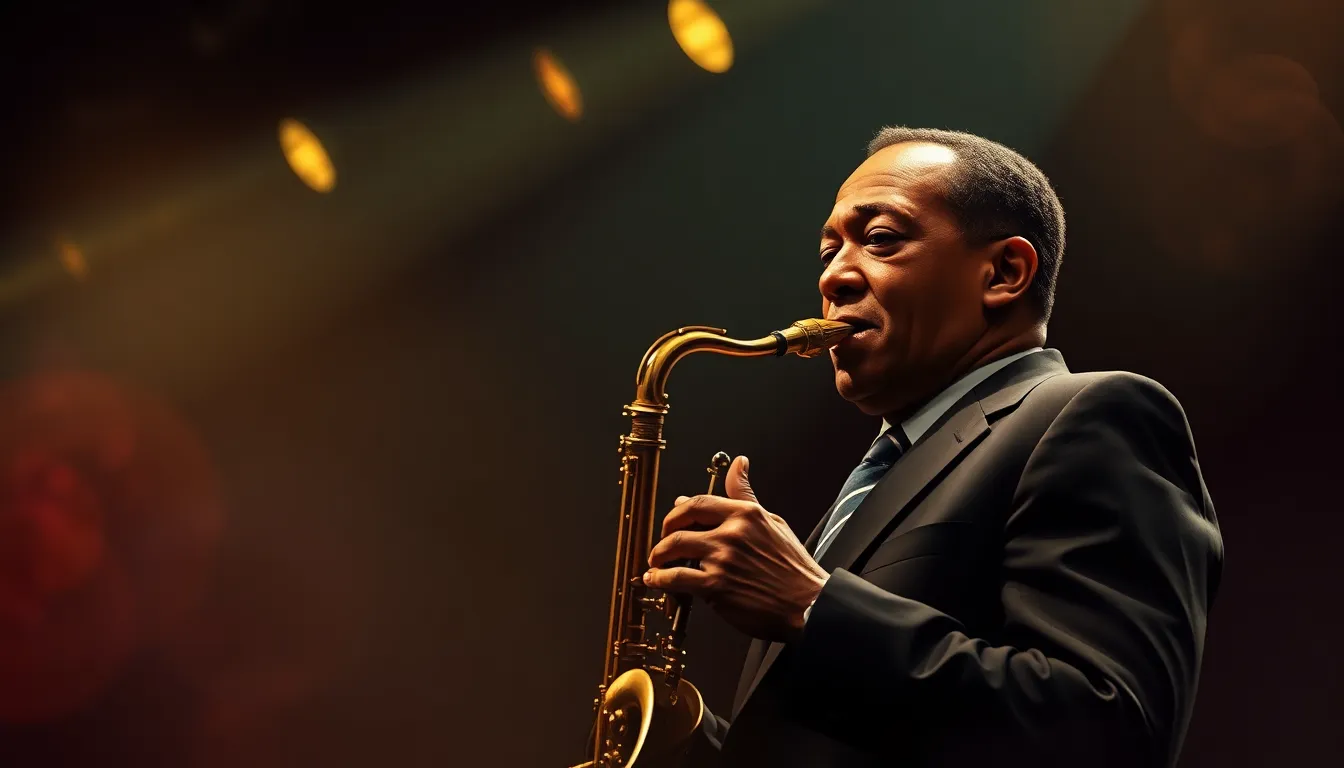
Charles Crawford Parker was born on August 29, 1920, in Kansas City, Kansas, and raised in the nearby West Bottoms district of Kansas City, Missouri. His family was modest; his father, Charles Parker Sr., worked as a Pullman porter, and his mother, Addie Parker, was a domestic worker. The Parker household was steeped in music: his mother sang spirituals, his father enjoyed listening to the radio, and his older brother, Chuck, brought home records of swing-era bandleaders.
At age five Parker received a clarinet as a Christmas gift and began informal lessons with a neighbor, but his attention quickly shifted to the saxophone after hearing a record by the legendary Lester Young. By the age of eleven he was performing publicly in local clubs, often sitting in for more seasoned musicians. The vibrant Kansas City jazz scene of the 1930s—characterized by extended jam sessions, high-energy swing, and a permissive environment for improvisation—provided a fertile training ground.
In 1935 Parker enrolled at the Kansas City Conservatory of Music, where he studied music theory and sight‑reading. Although formal instruction was brief, it reinforced his innate command of the instrument. The following year he joined the Jay McShann Orchestra, a professional big band that toured the Midwest. Playing with McShann’s group gave Parker exposure to a broader repertoire and the rigors of touring life, but he also began to experiment with faster tempos and more complex harmonic ideas that would later define bebop.
Influences and Creative Voice
Parker’s early influences were diverse. He admired the melodic fluidity of Lester Young, the harmonic daring of Coleman Hawkins, and the rhythmic drive of Count Basie’s rhythm section. In addition to saxophonists, Parker listened avidly to classical music, especially the works of Johann Sebastian Bach, whose contrapuntal techniques informed his later approach to improvisation.
While still a teenager, Parker was introduced to the pioneering recordings of pianist Art Tatum, whose astonishing technical facility demonstrated the possibilities of virtuosity. Equally important were the blues and gospel traditions of his upbringing, which supplied the emotive core of his phrasing.
By the early 1940s Parker had forged a distinctive musical voice: a rapid, fluid stream of notes built on extended chord tones, intricate rhythmic displacement, and a lyrical sense of swing that retained emotional depth. This voice emerged in part as a reaction against the commercial swing style that dominated radio, as Parker sought greater artistic freedom.
Major Works and Breakthroughs
Parker’s first widely recognized recording came in 1945 with the historic session for the Savoy label, alongside fellow innovators Dizzy Gillespie (trumpet), Curley Russell (bass), and Max Roach (drums). The tracks “Ko‑Ko,” “Billie’s Bounce,” and “Now’s the Time” displayed Parker’s complex harmonic approach and propelled bebop into the public eye.
In 1947 Parker joined the Gillespie‑driven “big band” for a series of high‑profile engagements, culminating in the historic Carnegie Hall concert recorded for the “Jazz at Massey Hall” session. The concert, featuring Parker, Gillespie, Bud Cowell, Charles Brown, and Max Roach, is considered one of the most important live jazz recordings of the era.
His 1949 album “Charlie Parker with Strings” (Verve Records) presented a striking synthesis of bebop improvisation and orchestral arrangements. Though initially met with skepticism, the recording demonstrated Parker’s willingness to bridge popular and avant‑garde sensibilities.
Later sessions for the “Bird” series of 1953‑1955, released posthumously, captured Parker’s final creative apex. Highlights include “Ornithology,” “Donna Lee,” and “Embraceable You,” each exemplifying his melodic ingenuity and harmonic daring.
Collaborations and Evolution
Parker’s career was marked by collaborations that both shaped and reflected his evolving artistry. Early work with the Jay McShann Orchestra grounded him in swing and blues forms. His partnership with trumpeter Dizzy Gillespie, beginning in 1945, formed the nucleus of the bebop movement. Together they pioneered chord‑scale theory, accelerated tempos, and asymmetric phrasing.
During the late 1940s Parker recorded extensively with pianist Thelonious Monk, bassist Oscar Parker III, and drummer Kenny Clarke, producing a string of sessions that explored more abstract harmonic structures. These collaborations coincided with Parker’s shift toward shorter, more intense improvisational statements.
In 1949 Parker played with a small ensemble that included Bud Powell (piano) and Curley Russell (bass). The group’s recordings for Mercury and Verve captured a more relaxed, lyrical side of Parker’s playing, emphasizing melodic clarity over the aggressive virtuosity of earlier bebop sessions.
Parker’s later years saw a resurgence of his “with strings” concept, most notably on the 1950 Verve releases. He also participated in the historic “Bird and Diz” session (1950), further cementing his status as a co‑founder of modern jazz.
Awards, Reception, and Legacy
During his lifetime, Parker received limited formal recognition. The jazz community viewed him as a revolutionary, but mainstream awards were scarce. Posthumously, he has been honored with a Grammy Hall of Fame induction (1972) for “Ornithology,” a Pulitzer Prize citation (1998) that recognized his impact on American music, and a U.S. Postal Service commemorative stamp (1995).
Parker’s influence extends across genre boundaries. Virtuosos such as John Coltrane, Miles Davis, and Ornette Coleman cited him as a primary inspiration. His approach to improvisation reshaped jazz pedagogy; the “Charlie Parker Method” of practicing arpeggios, scales, and bebop language remains a staple in music curricula.
Culturally, Parker symbolized the artistic struggle against racism and addiction. His battle with heroin addiction, well documented in biographies, highlighted the challenges faced by African‑American musicians in mid‑century America. Nonetheless, his artistic output created a template for artistic freedom and technical mastery that continues to inform contemporary jazz and beyond.
In the broader historical narrative, Parker is credited with establishing bebop as a legitimate art form, shifting jazz from dance‑hall entertainment to concert‑hall seriousness. His nickname, “Bird,” derived from a clipped version of “Birdman,” has become synonymous with the craft of improvisation itself.