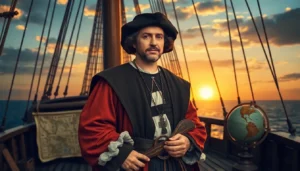
Historical Context
Edward Teach, commonly called Blackbeard, operated during the early 18th century, a period historians label the “Golden Age of Piracy” (c. 1650‑1730). The Atlantic world at this time was defined by the expansion of European colonial empires, the intensification of Atlantic trade, and frequent naval warfare stemming from the War of the Spanish Succession (1701‑1714). Privateering—state‑authorized piracy—blurred the line between lawful privateers and outlawed pirates. After the war, many privateers found themselves unemployed, and a sizable number turned to piracy, exploiting the power vacuum in the Caribbean and the Atlantic seaboard of North America. The Royal Navy, stretched thin and focused on European engagements, struggled to police the extensive coastline, allowing figures like Blackbeard to flourish for a few brief years before a concerted suppression effort began in 1718.
Early Life and Formation
Blackbeard’s exact birth details remain uncertain. Most contemporary scholarship places his birth between 1680 and 1685, with a probable birthplace of Bristol, England, though some sources suggest nearby Devon. His given name is recorded as Edward Teach (or Thatch), a name appearing in parish registers and later colonial documents. Little is known about his family or education; no baptismal record definitively matches his name, and contemporary accounts provide no details of his childhood. What is clear is that by his early twenties, Teach had ventured to the American colonies, likely drawn by the opportunities of maritime commerce and, eventually, the lucrative practice of privateering.
The first reliable documentary evidence of Teach’s seafaring career appears in the ship’s log of the privateer sloop *Adventure* (or *Adventure Galley*) under the command of the notorious pirate‑privateer Henry Every in 1716. Scholars such as Robert C. Ritchie argue that Teach’s early exposure to experienced buccaneers, particularly aboard the *Adventure* and later the *Royal James* under Captain Benjamin Hornigold, shaped his tactical approach and command style. Hornigold, a former privateer turned pirate, acted as a mentor, teaching Teach the importance of intimidation, disciplined crew management, and selective targeting of merchant vessels.
In the absence of direct documentary proof, historians must rely on circumstantial evidence, including court testimonies from captured pirates and contemporaneous newspaper reports, which frequently mention Teach’s burgeoning reputation for cruelty and theatricality in the early 1710s.
Role in Major Events
By 1716, Teach had likely assumed command of his own vessel, a sloop named the *Pearl*. His initial forays were modest, targeting small West Indian traders. The turning point came when he seized the French slave ship *La Concorde* near the Bahamas in late 1717. The capture yielded a heavily armed 300‑ton ship, which Teach rechristened the *Queen Anne’s Revenge*. He refitted the vessel with 40 guns, transforming it into a floating fortress capable of confronting larger merchantmen and naval frigates alike.
From November 1717 to early 1718, Blackbeard embarked on a campaign that covered the Southern Atlantic seaboard, the Caribbean, and the West Indies. Notable incidents include the blockade of Charleston, South Carolina, in May 1718. By anchoring his flagship in the harbor and demanding a ransom of 2,400 pounds in gold, he forced a brief but highly publicized surrender, illustrating both his audacity and his reliance on psychological warfare. While the episode was relatively bloodless, contemporary letters and accounts from Charleston merchants highlight the climate of fear that Blackbeard cultivated.
In August 1718, Blackbeard accepted a royal pardon offered by Governor Charles Eden of North Carolina, a move some scholars interpret as tactical, allowing him to regroup and avoid immediate naval retaliation. However, shortly after, he returned to piracy, hinting at the limited influence of colonial pardons.
The final chapter of Teach’s career unfolded in November 1718 when Lieutenant Robert Maynard of the Royal Navy, dispatched by Governor Eden, engaged Blackbeard off Ocracoke Island, North Carolina. Maynard’s two‑ship force, the *Keen* and *Pearl*, blockaded the *Queen Anne’s Revenge* (which had run aground weeks earlier). In a brutal close‑quarters battle, Blackbeard sustained multiple gunshot and sabre wounds before dying, according to the surviving crew’s testimony. Maynard’s report listed Blackbeard’s death as the decisive blow to the Golden Age’s most notorious pirate.
Throughout his career, Blackbeard’s net worth, as inferred from loot inventories and contemporary assessments, likely ranged between £5,000 and £30,000 (roughly equivalent to several million modern dollars). Precise figures remain speculative due to the limited accounting standards among pirate crews and the frequent redistribution of plunder.
Allies, Opponents, and Debate
Blackbeard’s most significant ally was Benjamin Hornigold, who introduced him to pirate governance and shared a partnership in several early raids. Hornigold later accepted a royal commission and abandoned piracy, a decision that caused tension among former cohorts. Another notable associate was Stede Bonnet, a gentleman‑turned‑pirate who briefly operated under Blackbeard’s command; their partnership dissolved after Bonnet’s capture and execution.
Opponents ranged from individual merchants to whole colonial administrations. The Royal Navy, particularly under the commands of Captains James Parker and Robert Maynard, represented institutional resistance; their eventual success in eliminating Blackbeard signaled a shift toward more aggressive anti‑piracy policies. Colonial governors such as Charles Eden (North Carolina) and Robert Johnson (South Carolina) also played dual roles—as protectors, occasionally complicit in facilitating pirate safe havens, and as later adversaries seeking to end piracy for political and economic stability.
Scholarly debate persists regarding Blackbeard’s motivations. Early 20th‑century romanticized accounts, such as those by Charles Lindley Barker, portrayed him as a charismatic anti‑hero. More recent historiography, including works by Marcus Rediker and Peter Earle, frames Blackbeard within the broader socioeconomic structures of the Atlantic world, emphasizing the fluidity between privateering, piracy, and colonial commerce. Some historians argue that Blackbeard’s theatrical image—his legendary beard, lit fuses, and fearsome demeanor—was a calculated marketing strategy to amplify his negotiating power, while others contend that such details are embellished by sensationalist pamphlets circulating in the colonies.
The paucity of primary sources—most surviving information derives from court records, admiralty reports, and contemporary newspaper accounts—necessitates cautious interpretation. For instance, the famed story of Blackbeard lighting slow‑matches in his beard to create a terrifying visage appears only in later pamphlets, raising questions about its literal accuracy.
Legacy and Interpretation
Blackbeard’s immediate legacy was the intensification of anti‑piracy operations across the Atlantic. His death prompted the Royal Navy to establish more permanent stations in the Caribbean and implement legal reforms, such as the 1718 Piracy Act, which broadened the scope of capital punishment for piracy.
In popular culture, Blackbeard endures as an archetype of the swash‑buckling pirate. His image proliferates in literature, film, and video games, often emphasizing exaggerated cruelty and supernatural traits. This romanticized portrayal, however, coexists with scholarly attempts to contextualize his life within the economic imperatives of the early 18th century Atlantic economy.
Modern academic interpretation has shifted toward viewing Blackbeard as a product of his environment—a mariner navigating the collapse of wartime privatised naval warfare, the lure of profit in the slave and sugar trades, and the porous legal boundaries of colonial ports. Recent archaeological investigations of the *Queen Anne’s Revenge* wreck site off Beaufort, North Carolina, have yielded artifacts that corroborate historical accounts of ship armament and provisioning, offering tangible evidence of Blackbeard’s operational capacity.
Overall, Blackbeard remains a focal point for discussions about piracy’s role in shaping early modern maritime law, the trans‑Atlantic economy, and the cultural imagination of rebellion against authority.