Historical Context
In the mid‑19th century, the United States was expanding westward, and Texas, having joined the Union in 1845, was a frontier of opportunity and conflict. The 1850s through the 1880s saw the rise of large cattle operations, the development of railroads, and the aftermath of the Mexican‑American War and the Civil War. The South Texas brush country, then sparsely populated and prone to raids from Native American groups and Mexican bandits, offered both challenges and prospects for ambitious entrepreneurs.
Early Life and Formation
Richard King was born on December 31, 1824, in New York City to John and Margaret King, Irish immigrants who had settled in the United States during the early 19th century. Little is recorded about his formal education; contemporary accounts suggest a modest upbringing and an early affinity for seafaring. At the age of 15, King left home to become a cabin boy aboard a merchant vessel bound for the Gulf of Mexico. Over the next decade, he acquired maritime experience, rising to the rank of captain and mastering navigation, trade, and the logistics of long‑distance commerce.
In 1846, amidst the Mexican‑American War, King secured a contract to transport troops and supplies for the U.S. Army. This contract brought him to Corpus Christi, Texas, where he witnessed the region’s economic potential. After the war, King decided to remain in Texas, capitalizing on his knowledge of the Gulf coast and the demand for goods and transport.
Role in Major Events
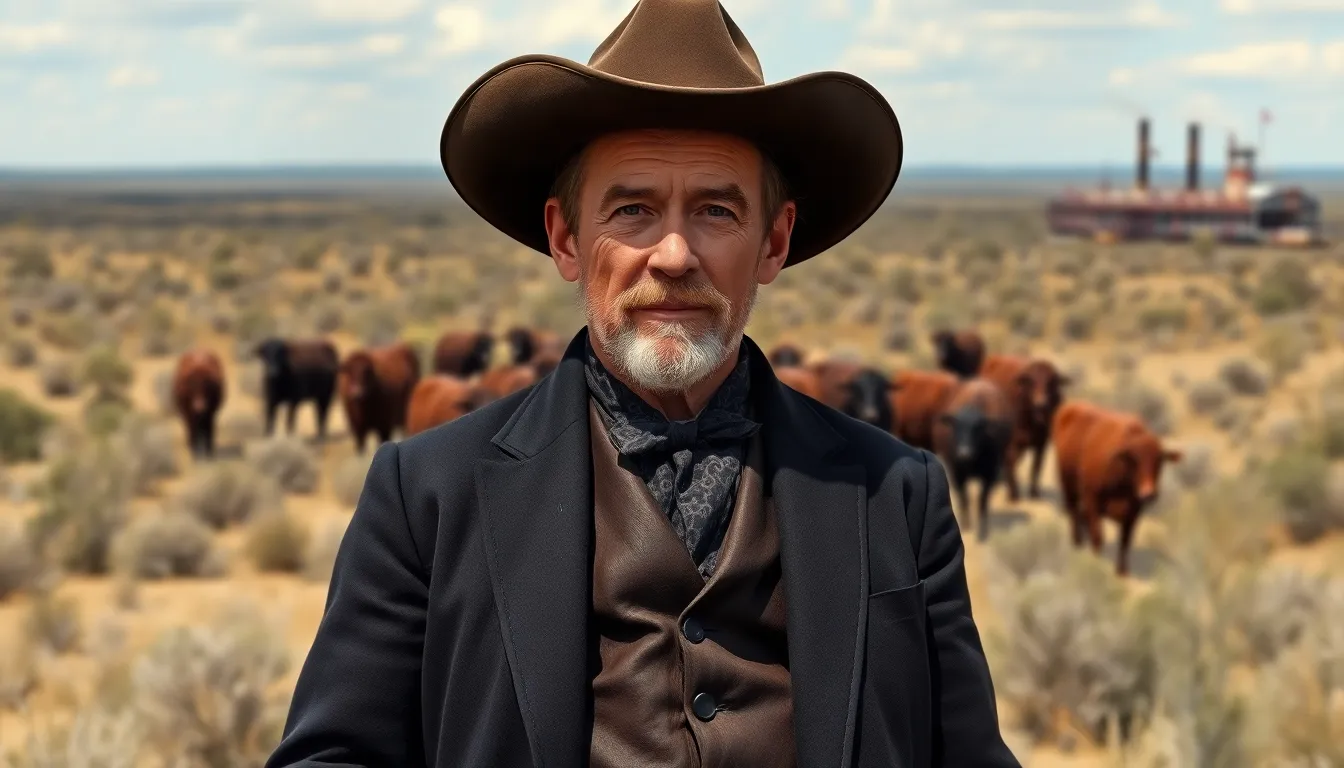
Founding of King Ranch (1853) – In partnership with a fellow Texan, Charles Stillman, King purchased a 15,500‑acre tract on the north bank of the Nueces River for $2,000. By 1854, King bought out Stillman’s interest and began to develop the property. Using a combination of cattle drives, agricultural experimentation, and innovative water management, the ranch soon expanded. By 1860, the enterprise encompassed over 30,000 acres and operated a fleet of steamboats on the Rio Grande, enabling the export of cattle and cotton to Mexico.
Civil War and Post‑War Expansion – Although Texas joined the Confederacy, King maintained a largely neutral commercial stance, focusing on supplying both Union and Confederate forces. After the war, he leveraged the renewed demand for beef in the North, establishing the famous “King Cattle” brand. By the 1870s, King Ranch had grown to over 600,000 acres, making it one of the largest privately held ranches in the United States.
Technological and Agricultural Innovation – King introduced Toluca (Spanish) cattle breeds, which proved resilient to the harsh brush country. He also instituted systematic fencing, water wells, and the planting of citrus and other crops, diversifying the ranch’s income streams. In 1879, King commissioned the construction of the first permanent ranch headquarters, the “King Ranch Headquarters,” a stone building that still stands as a historical landmark.
Political Involvement – King served intermittently on local county commissions and was a vocal advocate for railroad expansion into South Texas. His lobbying helped secure the 1880 charter for the Texas Mexican Railway, which later linked King Ranch to national markets.
Allies, Opponents, and Debate
King’s success generated both allies and antagonists. He cultivated relationships with local empresarios, Mexican merchants, and railroad magnates, such as Charles Morgan, who facilitated cross‑border trade. Conversely, he faced opposition from rival ranchers who accused him of monopolistic practices and from Indigenous groups who resisted the encroachment of settlers onto traditional hunting grounds.
Contemporary newspaper editorials sometimes portrayed King as a “land baron” exploiting laborers, including Mexican contract workers (often referred to as “braceros”). However, surviving correspondence indicates that King paid above‑average wages for the period and provided medical care at the ranch infirmary. The historiographical debate continues: some scholars emphasize King’s role in “civilizing” the frontier, while others focus on the displacement of Native peoples and ecological impacts of large‑scale ranching.
Legacy and Interpretation
Richard King died on April 14, 1885, in Corpus Christi, Texas, at the age of 60. He left an estate valued at approximately $13 million in 1885 dollars—equivalent to over $350 million today—primarily tied up in land, livestock, and commercial vessels. His son, Robert Henry King, inherited the ranch and continued its expansion, eventually reaching more than 1.3 million acres.
King Ranch remains a cultural and economic icon of Texas. The ranch has been cited in studies of American agribusiness, environmental history, and the mythologizing of the “Texas cowboy.” Modern historians view King as a complex figure who blended entrepreneurial acumen with the era’s colonial attitudes. The ranch’s contributions to cattle breeding, irrigation techniques, and cross‑border commerce have been extensively documented in scholarly works, including the biographies of James B. Gardner and the archival collections of the Texas State Library.
Today, the King Ranch operates as a diversified enterprise encompassing cattle, wildlife management, hunting preserves, and oil production. Its historic headquarters house a museum dedicated to the ranch’s history, and the name “King” continues to evoke the legacy of a 19th‑century pioneer whose influence shaped the economic geography of South Texas.